

Artificial intelligence (AI) has quietly moved marketing from static campaigns to systems that respond in real time. Teams are no longer guessing which message might resonate or waiting days to act on intent signals. Instead, they’re using AI to adapt as buyers engage.
Leading marketing and sales teams are already applying AI to optimize content, qualify demand, orchestrate campaigns across channels, and convert interest while it’s highest. The difference isn’t access to AI, but how intelligently it’s applied.
AI-native platforms like Spara are built to learn across channels and optimize for revenue outcomes—such as meetings booked and conversion rates—consistently outperforming retrofitted automation that was never designed for impact.
Below, we’ll break down where AI creates the most leverage in marketing today, the tools and use cases that matter, and the best practices teams use to turn AI into a reliable growth engine.
What is AI in marketing?
AI in marketing uses technologies like machine learning and natural language processing to analyze large volumes of customer data and act on it in real time. This makes it possible to automate tasks and create more personalized customer experiences. The result is stronger campaign performance, greater efficiency, and improved engagement.
Unlike basic automation, which follows fixed rules, AI-powered systems learn from data, adapt in real time, and optimize marketing efforts as customer behavior changes. Large language models (LLMs) like ChatGPT power generative AI tasks such as AI content creation and copywriting, while broader AI marketing tools operate at the application layer, handling prediction, optimization, and cross-channel orchestration.
Behind the scenes, AI analyzes customer data to detect intent, recognize patterns, and coordinate actions across channels.
For example, AI-driven workflows can trigger personalized email follow-ups, adjust website chatbot conversations based on questions or conversation tone, recommend content dynamically, or update lead scoring using predictive analytics.
Instead of relying on after-the-fact reporting, AI enables marketing teams to act at the moment of engagement, powering real-time responses across inbound conversations, content delivery, and buyer interactions.
What are the key benefits of using AI in marketing?
Understanding how to use AI for marketing starts with impact. AI-driven marketing improves the metrics leadership teams care about most, including:
Conversion rates
Speed-to-lead
Pipeline quality
Operational efficiency
Rather than rely on static rules or disconnected AI tools, modern marketing teams use AI-powered systems that analyze customer data, adapt in real time, and optimize decision-making across the funnel.
This is where AI-native platforms outperform retrofitted automation. When AI is at the core, rather than bolted onto legacy workflows, it can coordinate actions across channels, prioritize high-intent buyers, and turn engagement into a measurable pipeline. These advantages appear in four core areas.
1. Faster, more consistent responses that capture high-intent buyers
AI-driven systems engage prospects the moment intent appears. Real-time chatbots, AI email follow-ups, and automated workflows reduce response times from hours to seconds. This improves speed-to-lead and increases conversion rates across digital marketing and e-commerce touchpoints.
2. Higher-quality pipeline through more accurate qualification
Using machine learning and predictive analytics, AI marketing tools analyze customer behavior, historical data, and customer relationship management (CRM) signals to score and route leads more accurately.
As a result, marketing teams spend less time on low-intent leads and generate a pipeline that sales teams actually want.
3. Personalized customer experiences at scale
Generative AI and natural language processing enable personalized content creation, email marketing, and social media interactions tailored to each customer journey.
For instance, AI-generated messaging goes beyond static audience segments and adapts to the interest a buyer expresses, the questions they ask, and the context of prior interactions, such as what came up during a website chat.
AI can also adjust tone and urgency in real time, delivering on-brand experiences that feel relevant, timely, and consistent across marketing campaigns.
4. Unified conversations across chat, email, and voice
AI-native platforms orchestrate customer interactions across channels, maintaining context and intent. This unified approach improves customer experiences, streamlines marketing workflows, and turns engagement into actionable insights that drive revenue.
What types of AI tools do marketing teams use today?
Marketing teams learning how to use AI for marketing typically adopt a mix of AI tools that support strategy, execution, and optimization. Rather than replacing teams, these AI solutions automate repetitive tasks, surface actionable insights, and improve performance across the customer journey.
Most teams organize their AI marketing tools into a few core categories.
1. AI content generation and optimization tools
These tools support content creation, copywriting, and SEO by using generative AI and natural language processing. Marketing teams use AI-generated content to draft social media posts, landing pages, and email campaigns, then optimize outputs based on search engine optimization data, audience behavior, and brand voice guidelines.
Example: Tools like Jasper, Byword, or SEO-focused platforms help teams scale content production while continuously refining messaging based on performance data.
2. AI-driven analytics and forecasting platforms
AI-driven analytics tools analyze historical data and real-time signals to support predictive analytics, lead scoring, and market trend forecasting. These platforms help marketing teams make data-driven decisions around budget allocation, conversion rates, and pipeline forecasting.
Example: Platforms such as HubSpot or Salesforce use AI models to predict deal outcomes, surface high-intent leads, and forecast revenue more accurately.
3. AI-powered conversational tools for inbound engagement
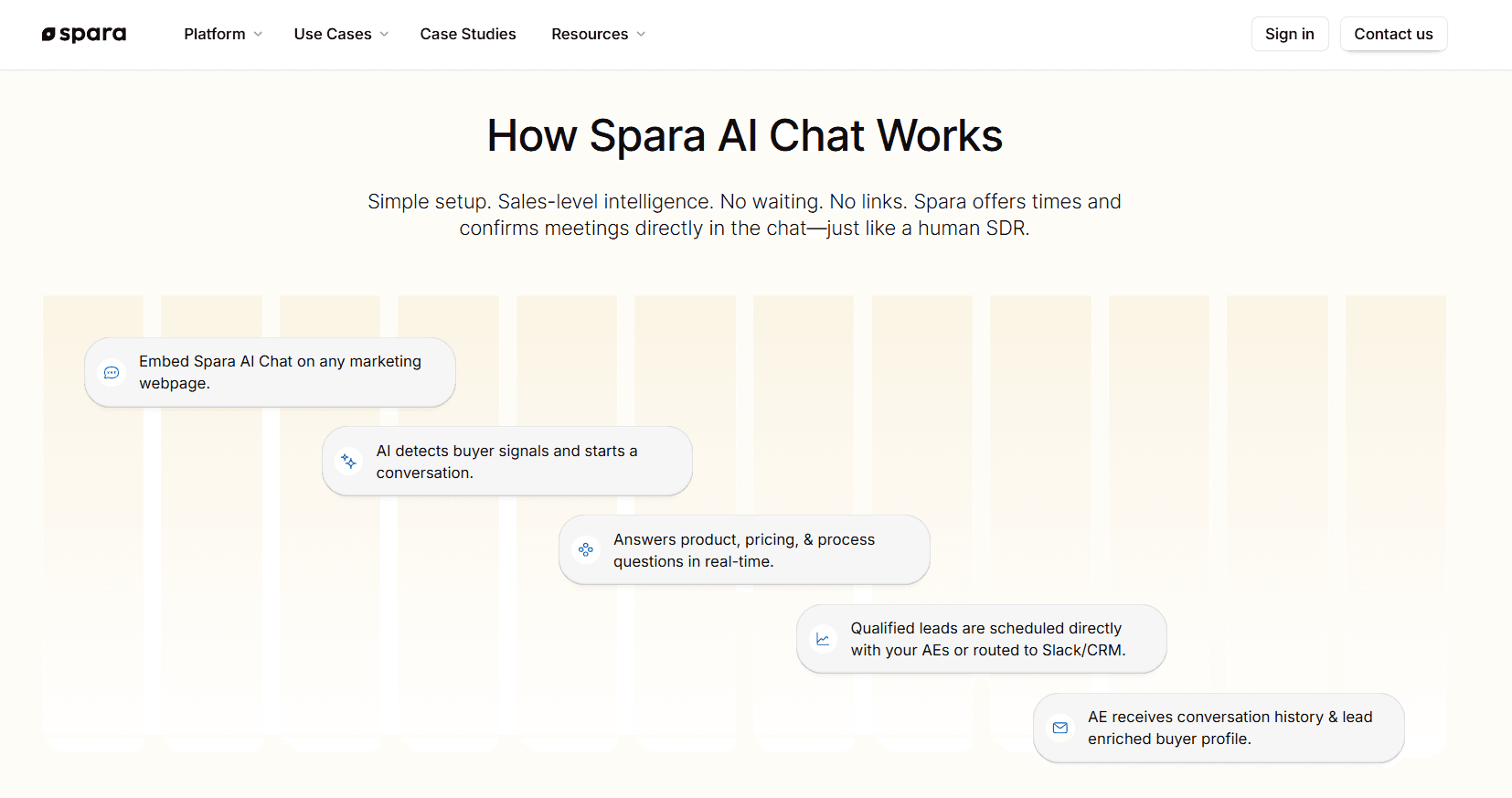
AI-powered tools handle inbound conversations across chat, email, and voice channels. These AI platforms detect intent, qualify leads, and route conversations in real time. By retaining conversation context across every channel, AI-native platforms eliminate handoff gaps and respond instantly at each touchpoint.
Example: Spara unifies chat, email, and voice workflows to enhance speed-to-lead and improve pipeline quality.
4. AI personalization engines
AI personalization engines tailor website experiences, email marketing, and content recommendations using customer data and audience segments. By adapting messaging dynamically, these tools help deliver consistent, high-quality customer experiences at scale.
Example: Platforms like Amazon’s recommendation engine or dynamic website personalization tools adjust content in real time based on browsing behavior and intent.
How can teams start using AI in their marketing workflows?
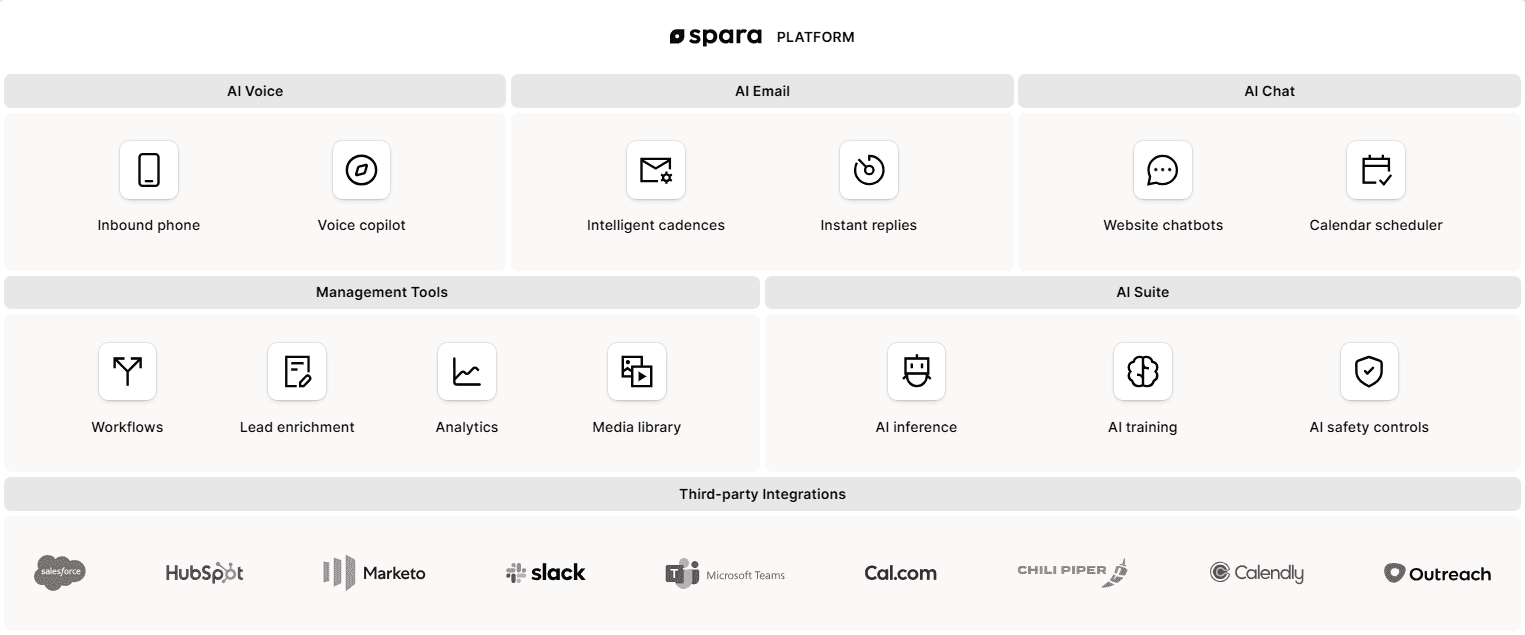
Teams figuring out how to use AI for marketing don’t need a full rebuild of their existing marketing stack or workflows. The most effective approach starts small, proves value quickly, and scales into more advanced AI-driven workflows as confidence grows.
These practical AI use cases help marketing and sales teams apply artificial intelligence without a heavy technical lift.
Automate timely responses to inbound inquiries
AI-powered chat, email, and voice tools respond the moment a prospect engages. For instance, an AI SDR can answer questions, send follow-ups, or book meetings in real time, improving speed-to-lead and protecting conversion rates when buyer intent is highest.
Use AI to qualify and route leads based on behavior and fit
AI marketing tools evaluate buyers based on what they do and say in real time, and not just who they are on paper. Instead of relying on static lead scores, AI analyzes customer behavior, firmographics, intent signals, and conversational context as interactions happen. This allows AI-driven systems to route high-intent prospects to sales immediately while directing low-fit or early-stage buyers to the right next step.
By qualifying leads during live conversations, teams reduce pipeline noise, prevent lead leakage, and ensure sales only engage when there’s clear buying intent.
Personalize marketing content and follow-up at scale
Generative AI enables personalized email marketing, content recommendations, and follow-ups that adapt to each buyer. Rather than relying on broad audience segments, AI-generated messaging responds to expressed interest, past interactions, and where someone is in their customer journey.
Analyze conversations and buyer behavior to refine messaging
AI-driven analytics surface patterns from customer interactions, helping marketing teams optimize copy, campaigns, and positioning using real buyer language and actionable insights.
4 best practices for using AI in marketing
Teams that see real results from artificial intelligence follow a few consistent principles. These best practices help marketing leaders move beyond experimentation and use AI in marketing in a way that protects brand trust, improves conversion rates, and strengthens alignment between marketing and sales.
1. Start with high-intent buyer moments that benefit from real-time responses
Focus AI-powered efforts where timing matters most. Inbound inquiries, pricing questions, demo requests, and repeat website visits signal active intent. AI tools that respond instantly prevent lead leakage, improve speed-to-lead, and support a zero-leak inbound motion where no buyer waits for a follow-up.
2. Choose AI systems that adapt to conversations rather than follow rigid scripts
Avoid automation built on fixed rules. AI-driven platforms that use machine learning and natural language processing adapt to how buyers communicate, detect intent shifts, and adjust responses in real time. This flexibility leads to better qualification, a higher-quality pipeline, and more natural customer interactions.
3. Ensure your AI aligns with brand voice, compliance, and quality guardrails
AI-generated content and conversations must reflect your brand voice and meet data privacy standards. The best AI marketing tools apply clear guardrails around messaging, compliance, and decision-making so teams can scale AI confidently without sacrificing quality or trust.
4. Integrate AI into existing workflows rather than adding “yet another tool”
AI delivers the most value when it integrates directly into CRM, marketing platforms, and sales workflows. Integrated AI platforms that connect chat, email, and voice keep marketing and sales teams aligned on the same customer data, and help marketing and sales operate as one system instead of siloed tools.
See how Spara helps marketing teams scale with AI
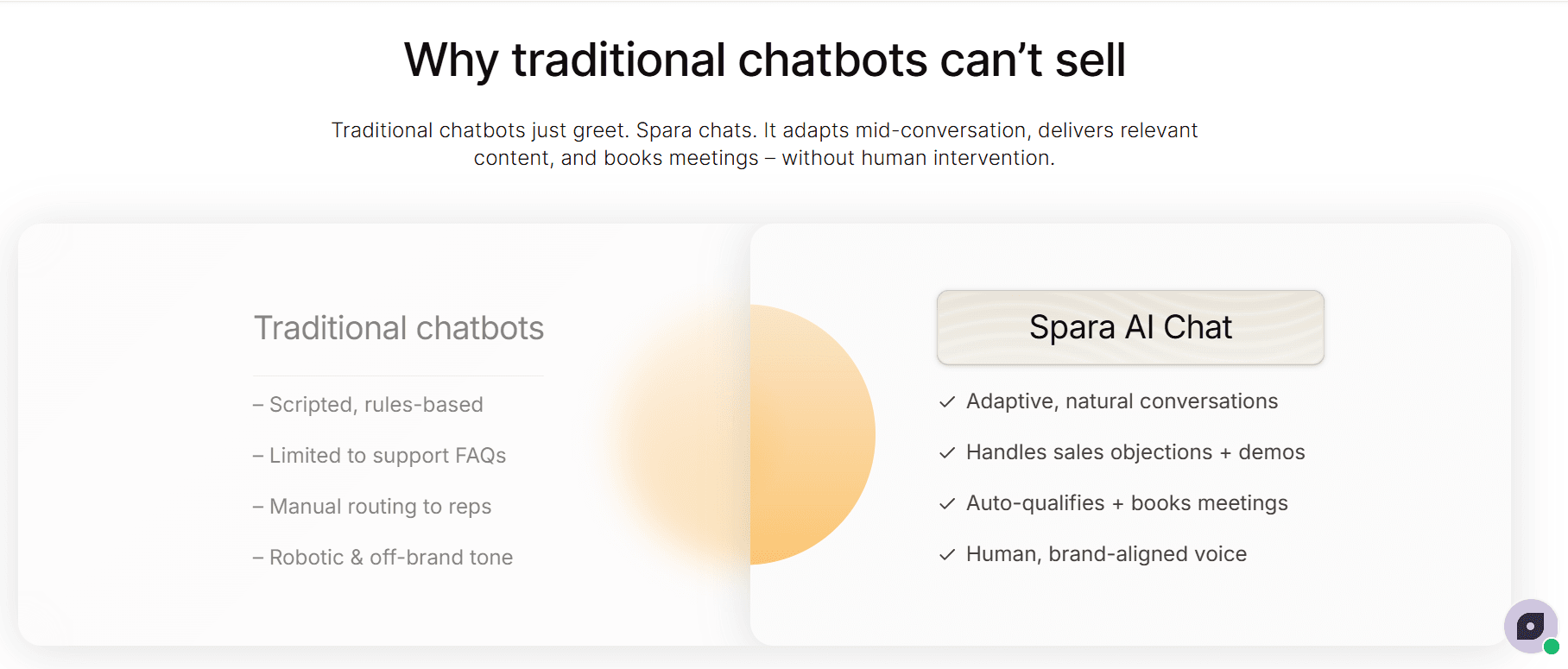
Knowing how to use AI for marketing is one thing. Turning it into consistent pipeline growth is another. Spara makes artificial intelligence practical by building AI-native agents specifically for go-to-market (GTM) workflows, so marketing and sales teams can act on intent the moment it appears.
Instead of layering AI onto disconnected tools, Spara unifies inbound engagement across chat, email, and voice to support a true zero-leak inbound motion. Every conversation stays connected, every lead gets a response, and every handoff between marketing and sales happens with full context.
With Spara, teams use AI-powered tools to:
Automate real-time conversations that protect speed-to-lead and conversion rates
Qualify and route demand accurately using AI-driven intent detection
Deliver personalized customer experiences without manual effort
Align marketing and sales around shared data, workflows, and outcomes
AI becomes transformative when it operates as part of the GTM system, not an experiment on the side.
Discover how Spara’s AI-native agents help automate conversations, qualify demand, and convert more inbound traffic.

Lauren ThompsonHead of Marketing, Spara
FAQs
Related posts
View all
GTM
How Matt Heinz aligns GTM teams to close more deals
Matt Heinz shares why sales and marketing alignment breaks when teams can’t move fast enough, and how real-time AI turns shared GTM strategy into action before buyers move on.
Mar 3, 2026
•
8 min read
GTM
What are the top AI sales assistant software tools in 2026?
Compare the best AI sales assistant software in 2026. Explore features, use cases, and how AI-native tools convert inbound demand into a qualified pipeline.
Mar 1, 2026
•
8 min read

GTM
Best conversational marketing software: A 2026 guide
Explore the best conversational marketing software in 2026. Learn how AI-native platforms improve engagement, qualification, and pipeline outcomes.
Mar 1, 2026
•
10 min read
Sign up for the latest from Spara
Subscribe to get more GTM insights straight to your inbox.