
Your sales team closes deals that start with website conversations. Prospects chat with AI, ask pricing questions before booking demos, and expect answers in seconds. The platform you choose to handle those conversations determines how many convert to high-quality pipeline.
Drift launched conversational marketing in 2015, turning static contact forms into live chat. Qualified launched in 2018 with native Salesforce integration and account-based marketing capabilities built specifically for enterprise teams.
But Drift and Qualified were built before AI agents could qualify leads through natural conversation, remember context across channels, and convert prospects without human intervention. AI-native platforms like Spara were designed for how buyers engage today, expecting intelligent responses across chat, email, and voice without repeating themselves.
This guide compares Drift and Qualified on AI capabilities, integration flexibility, implementation speed, pricing models, and conversion outcomes. You'll see where each platform wins, where architecture creates bottlenecks, and what AI-native technology means for inbound conversion.
Why sales leaders are re-evaluating Drift and Qualified
Drift and Qualified were built before large language models existed and added AI features afterward. This retrofitting approach means AI capabilities sit on top of infrastructure designed for rule-based chat flows. When prospects ask questions outside preset conversation paths, these systems escalate to human reps because the underlying architecture can't adapt.
AI-native platforms like Spara work differently. Its agents learn from your sales process, product documentation, and past conversations through integrations with your knowledge base and adjust qualification approaches based on how each conversation develops. This architectural difference determines whether your conversational platform handles nuanced buyer questions or breaks when prospects don't follow the script.
The SDR productivity problem compounds this technology gap. Your inbound volume grows while your SDR team's capacity stays flat, but manual workflows can't scale to match that growth. Each lead still needs individual attention, qualification, and follow-up to become high-quality pipeline.
As queue depth increases, response times stretch from minutes to hours. Meanwhile, prospects who expect immediate engagement move to competitors who respond instantly through AI SDR automation.
According to Salesforce's State of Service research, 50% of service cases are expected to be resolved by AI by 2027, up from 30% in 2025. Sales qualification and engagement are experiencing this same transformation. However, teams stuck on legacy platforms are watching it happen rather than benefiting from it.
Forrester's 2024 State of ABM research shows ABM programs deliver 21-50% higher ROI than non-ABM marketing efforts, with 23% of organizations reporting ROI improvements of 51-200%. Marketing teams and revenue leaders need conversational platforms that support these sophisticated GTM motions rather than just collecting contact information.
Beyond architectural limitations and productivity constraints, buyer expectations themselves have shifted from single-channel engagement to fluid multi-channel conversations. Prospects start questions in AI chat on Tuesday afternoon, send email follow-ups on Wednesday morning, and call on Thursday when they're ready to move forward.
The problem? Platforms built for one channel and later expanded to others treat each interaction as separate. Your prospect repeats information three times, and your sales team looks disorganized because the conversation context doesn't transfer between channels.
Today's revenue teams need platforms that convert prospects during initial conversations—qualifying them, answering questions, and booking meetings before prospects leave your website. That gap between capture and conversion is where most inbound leads disappear into competitor pipelines.
Drift vs. Qualified: where each tool wins (and loses)
Both platforms solve real problems for specific revenue teams. The question is which architecture fits your GTM strategy and where you're willing to compromise. Here’s what we learned based on user reviews from G2 and other sources.
Here’s how Drift, Qualified, and Spara compare on the criteria revenue leaders prioritize:
Criteria | Drift | Qualified | Spara |
AI approach | Founded in 2015 as a conversational marketing platform; added major conversational AI features in 2023. Built on top of an existing rules- and playbook-driven chat infrastructure. | Launched in 2018 as a Salesforce-native conversational sales platform. Introduced Piper (AI SDR) in 2024, then added more advanced AI capabilities and private/custom LLM options for higher tiers. | Launched as an AI-native platform in 2025. Custom-trained models learn clients’ sales process, brand voice, and qualification rules. Built-in guardrails to reduce hallucinations. |
Channels | Started with web chat and added more channels and integrations over time. Different channels and experiences often require separate playbooks and routing logic. | Started with chat and website experiences tied to Salesforce, then added AI-powered email in 2024 and richer multimodal and “face-to-face” experiences with Piper and PiperX. | Built with chat, email, and voice from launch so the same AI agent can follow leads across channels with shared context and richer responses (docs, links, etc.). |
Implementation | Typically takes weeks to months, depending on scope. Powerful but complex setup with a steep learning curve for building playbooks. | Often a 30–60 day rollout. Described as having “strong capabilities” but difficult to configure without dedicated RevOps support. | No-code configuration. Can go live in days or weeks. AI trained on existing inbound flows, qualification rules, and content. |
Pricing model | Traditional enterprise, seat- and volume-based pricing model. Plans and exact pricing are not listed publicly but are considered premium. Advanced features are locked behind upper tiers. | Premium, sales-led pricing indexed to usage, seats, and features. Generally starts in the low–to–mid four figures per month for smaller teams and increases with traffic, lists, and feature add-ons. Custom quotes for higher tiers and AI-heavy packages. | Usage-based pricing tied to lead or conversation volume and features, not user count. Can scale AI coverage without adding licenses. Outcome- and pipeline-focused positioning. |
Security and compliance | Includes SOC 2 and GDPR alignment via its parent platform. Designed to fit into larger B2B security and governance requirements. | SOC 2 Type II–certified since 2020 and built to meet common data protection and privacy requirements for B2B SaaS, especially Salesforce-centric enterprises. | Launched post-LLM era with SOC 2 and modern data protection controls as core requirements. Uses strict data handling (e.g., encryption, access controls, and content safeguards). |
Conversion outcomes | Popularized “conversational marketing.” Drives higher engagement and booked meetings, especially when paired with dedicated SDR coverage and strong playbooks. | Large increases in pipeline and meeting volume for companies like Asana and Greenhouse. Millions in influenced pipeline and cost savings across thousands of AI-powered meetings. | Customers see measurable results: 3x more qualified meetings, fewer demo no-shows, multi-X improvements in form-to-meeting conversion, and significant drops in SDR time per lead. |
Where Drift wins

Brand recognition and community
Drift pioneered conversational marketing and built significant brand equity over nine years.
It was named a Forrester Wave Leader in Conversation Automation Solutions for B2B.
It boasts an active user community through HYPERGROWTH conference and certification programs.
Users report feeling like they're "delivering a better real-time chat experience."
Recent M&A activity in the conversational platform space raises questions about long-term vendor stability and product roadmap continuity.
Extensive integration ecosystem
Drift connects with 80+ tools across the revenue stack.
It has native integrations with Salesforce, HubSpot, Marketo, Slack, and Zoom.
Users praise connections as "priceless and extremely convenient."
Drift has a "very robust" bot builder and enterprise integrations, according to G2.
Data export capabilities support detailed conversation analytics.
Where Drift loses
Complex setup and slow performance
Its dashboard is "too slow to load initially," per G2 reviews.
Configuration is "not very straightforward" for debugging playbooks.
The platform "can be a bit complicated and overwhelming" due to feature breadth.
Setup timelines extend 60-90 days for full deployment.
Rule-based automation requiring human SDRs
Bots qualify visitors using pre-set rules, then route qualified leads to live sales reps.
Automation scales only as fast as headcount grows.
AI capabilities remain surface-level with limited ability to handle nuanced questions.
"Rule-based workflows" and "limited AI" are identified as gaps versus LLM-native platforms.
Premium features require "big pockets," according to users.
Where Qualified wins
Salesforce-native experience
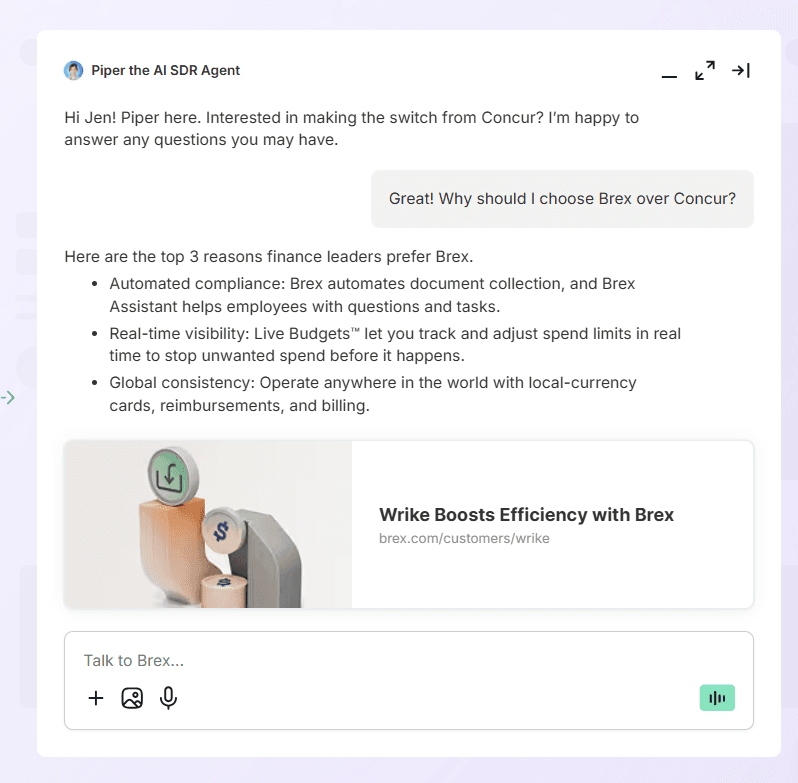
Built by former Salesforce executives specifically for Salesforce users, the platform was architected on the Salesforce data model from the ground up.
Integration is described as pretty seamless with deep connectivity.
It leverages Salesforce data for visitor segmentation and real-time conversations.
It eliminates middleware and custom API work for Salesforce-first organizations.
Account-based marketing motion
Strong ABM capabilities for enterprise sales cycles.
It allows salespeople to jump in when key accounts visit your site.
It surfaces the most relevant leads based on account tier and intent signals.
It integrates with 6sense and Demandbase for buying intent data.
It helps teams orchestrate engagement across multiple stakeholders within target accounts.
Where Qualified loses
Limited flexibility beyond Salesforce
Salesforce-centric architecture creates constraints.
Users request integrations with additional systems like CDP platforms and marketing automation tools beyond the core Salesforce stack, though many of these remain unaddressed.
There’s no current integration with a CDP platform, which users may rely on for audience building.
G2 reviews mention a steep learning curve and unintuitive reporting.
Routing capabilities and admin features need improvement.
Complex implementation and enterprise pricing
High barriers to entry for lean teams.
Pricing starts at $3,500/month ($42,000 annually).
Implementation timelines average 60-90 days.
Seat-based pricing penalizes growth as team size increases.
Chat-first with limited multi-channel automation
Sequential channel rollout limits fluidity.
AI is limited to predictive lead routing and text-based analysis.
Email was added six years after launch, voice seven years later.
Each channel treats interactions separately with limited context sharing.
Prospects are forced to repeat information across touchpoints.
The strategic choice for CROs
Both Drift and Qualified were built for an earlier era of conversational marketing—one defined by rule-based chatbots, manual playbooks, and human-heavy SDR workflows. As LLMs and AI agents reshape B2B buyer expectations, neither platform has fully evolved to meet the demands of post-LLM, AI-driven GTM motions.
Enterprise teams embedded in Salesforce or with robust SDR capacity may still extract value. But for CROs, sales leaders, and RevOps teams seeking faster time-to-pipeline and autonomous AI engagement, the legacy architecture of both tools increasingly becomes a constraint rather than a competitive advantage.
The post-LLM shift: What "AI native" really means
Most conversational platforms advertise AI capabilities. The real question is whether that AI was built into the foundation or bolted on afterward. This architectural choice determines whether agents handle nuanced buyer questions or escalate to humans the moment conversations deviate from programmed paths.
AI-Augmented Platforms | AI-Native Platforms |
Started as rule-based chat tools, added GPT-style responses later | Entire architecture built around how LLMs process context and generate responses |
Core system runs on decision trees—if prospect says X, respond with Y | AI agents learn from your sales process and adjust based on how conversations develop |
Escalates to humans when buyers ask questions outside programmed scenarios | Adapts to unexpected questions without manual playbook updates |
Channels added sequentially—limited context sharing | Multi-channel intelligence from launch—context flows between chat, email, and voice automatically |
Requires extensive playbook maintenance for edge cases | Trains on your website, CRM data, and knowledge base through native integrations |
Slow iteration cycles—new features require rebuilding workflows | Faster iteration—improvements deploy without reconfiguring existing conversation flows |
The architectural difference affects personalization accuracy, security compliance, scalability across channels, and how quickly your platform improves without manual intervention. Platforms designed around LLM architecture handle complex buyer questions and multi-channel engagement without the extensive configuration that retrofitted systems require.
Spara is an example of this AI‑native approach in practice. Spara’s AI agents run on a single, shared context layer and adapt across chat, email, and voice while keeping the same conversation thread intact. That unified brain lets Spara qualify leads, answer questions, and book meetings across the full funnel, rather than act like three separate bots that lose context every time a prospect switches channels.
When to consider a third option: Spara
Revenue leaders evaluating Drift and Qualified often discover that both platforms solve for capture rather than conversion. Prospects fill out forms, chat interactions get logged, and leads enter queues—but the gap between initial engagement and booked meetings remains manually resolved. That's where a third option emerged.
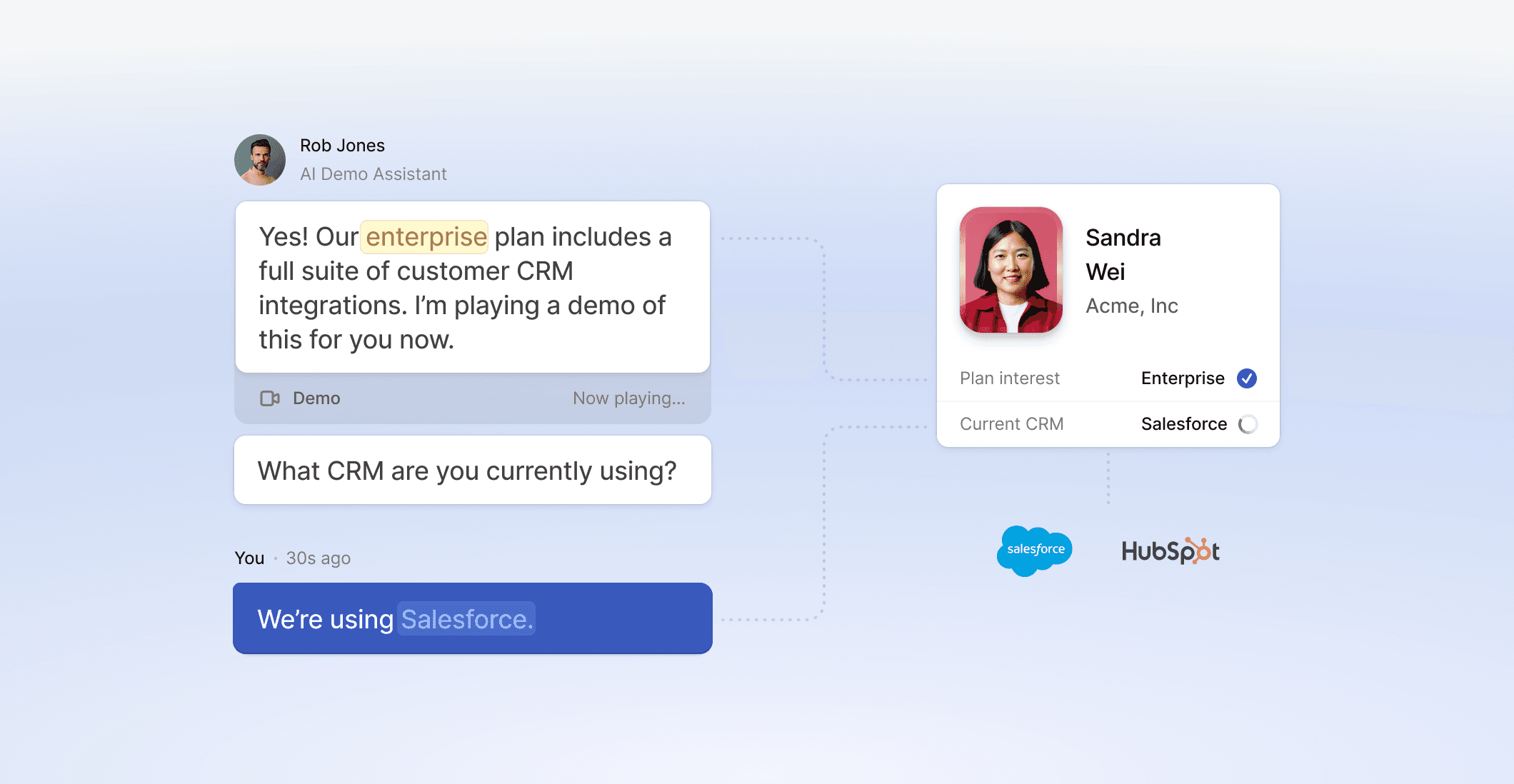
Spara was built post-LLM specifically for conversion rather than lead collection. The platform addresses the architectural limitations that legacy tools carry: agents qualify prospects, answer questions, and book meetings without human intervention across AI chat, email, and voice channels.
For revenue leaders prioritizing measurable ROI over vanity metrics
Spara customers report conversion improvements within the first month rather than after quarters of optimization. For example, Fama saw a 2.5x increase in qualified meetings booked, 40% reduction in demo no-shows, and +32% SQL conversion lift—with 28 hours of manual SDR work replaced monthly.
In another case, Rho achieved 3.1x form-to-meeting conversion, booked 137 qualified meetings in Q2 alone, and reduced SDR time per lead by 60%. The platform delivered output equivalent to three inbound SDRs.
These results focus on pipeline impact rather than engagement metrics like total conversations started or accounts identified.
Built with compliance as architecture, not an afterthought
SOC 2 and GDPR compliance shaped how Spara's system handles data from day one. Enterprise-grade safety includes malicious and sensitive conversation detection, with agents flagging inconsistent data instead of generating hallucinated responses. This matters for regulated industries where inaccurate product information creates liability.
Fast implementation without seat-based pricing penalties
Spara's no-code platform delivers results within weeks. Customers report going live "in days, not quarters" compared to the 60-90 day implementations common with legacy platforms. Usage-based pricing scales with conversation volume rather than team size—eliminating the growth penalty that seat-based models create when you add reps or traffic increases.
If Drift started the conversation and Qualified refined it for Salesforce-native teams, Spara finishes it—with measurable pipeline impact rather than just another step before prospects reach your sales team.
Final verdict: Choosing the right platform for 2026
Drift built the conversational marketing category and remains a solid choice for teams prioritizing brand recognition and extensive integrations. Recent M&A activity raises questions about long-term roadmap continuity, though the platform's maturity brings feature completeness and a well-documented ecosystem. The rule-based architecture shows its age when prospects expect instant, intelligent responses rather than queued conversations with human SDRs.
Qualified is built for Salesforce-native teams running ABM motions. The platform's tight integration and ABM capabilities make it a strong fit for organizations deeply embedded in the Salesforce ecosystem, though you're limited to what's on Qualified's roadmap rather than building custom agents for your specific use cases.
Spara reflects the pipeline-driven evolution of conversational platforms—built in the post-LLM era, focused on conversion instead of simple lead capture, and architected with multi-channel intelligence from day one. Revenue teams typically see measurable conversion gains within weeks, supported by usage-based pricing that scales with outcomes, not headcount.
The question isn’t whether AI conversational platforms are relevant in 2026. It’s whether your platform reflects how buyers engage now that AI can qualify, convert, and route all on its own.
If your team is still measuring response time in minutes instead of seconds, you're already behind. Book a demo with Spara and see what instant qualification and routing could do for your pipeline.

Lauren ThompsonHead of Marketing, Spara
FAQs
Related posts
View all
GTM
AI SDRs: The future of sales development
Traditional SDR models can't scale. AI SDRs automate qualification and routing to convert 3x more inbound traffic without adding headcount.
Feb 24, 2026
•
10 min read

GTM
How Kathleen Booth is solving the buyer intent decay problem
Kathleen Booth explains why intent data fails when teams can't act fast enough, and how real-time AI closes the gap before buyers move on.
Feb 19, 2026
•
6 min read
GTM
Corrina Owens on fixing what's broken in GTM
Corrina Owens shares how to streamline your GTM motion by fixing lead routing, simplifying buyer segmentation, focusing on high-impact signals, and embedding marketing in the deal cycle.
Feb 11, 2026
•
6 min read
Sign up for the latest from Spara
Subscribe to get more GTM insights straight to your inbox.