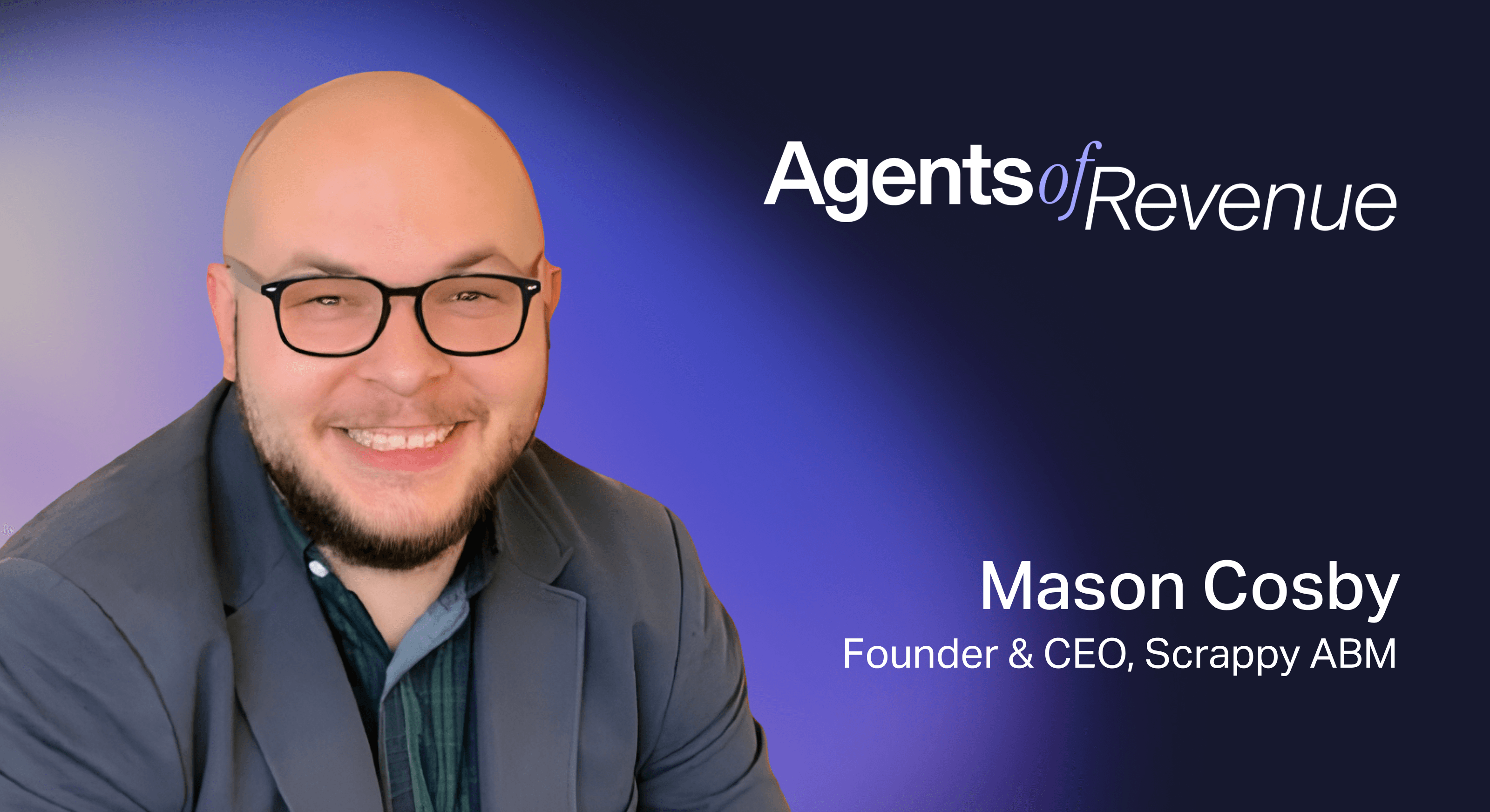

When Mason Cosby looks at his client’s GTM motions, he looks for the break. The points where buyers lose clarity and where teams lose the information they need to move an account forward.
As Founder and CEO at Scrappy ABM, he sees these breaks show up everywhere, from lack of clarity on the product early in the buyer experience to the way sales teams prep for conversations. And while his fixes may not be quick, they’re impactful.
“I always tell clients, if you measure us on a six month time horizon, you’re going to hate us,” he says. “If you measure us on a twelve month time horizon, we’ll change your business.”
His goal: Make the full system work together. Align every team. Clarify the ICP. Create demand with intention. Support sellers with relevant context. When these pieces connect, the buyer moves through a clearer path and the revenue team operates with more purpose.
Here’s how Mason approaches smarter GTM execution.
1. Align marketing and sales around the same buyers
When Mason looks at a company’s GTM motion, one of the first things he looks at is how sales and marketing are working together. In many cases, they are not. “If you were to tell me the list that your SDRs are calling right now… is there any influence or sway from marketing?” he asks. For many customers, the answer is “no.”
To Mason, the solution is simple: let marketing build engagement first, and have sales step in only when there’s clear buying intent. “Why don’t we first market to people,” he says, “and then once they’ve actually shown some sign of engagement, have people call them?”
He sees the impact when those motions connect. Buyers who have interacted with content or attended events move faster once sales reaches out. “The second one goes way faster and trusts you more and buys at a higher deal value,” he says.
For Mason, alignment means choosing the same accounts and coordinating when and how each team engages them.
2. Meet buyer expectations with clarity, personalization, and AI readiness
Mason pays close attention to how buyers interpret a company in the first moments. “The buyer expects that they understand who you are, what you do, and how it helps them within about the first 10 seconds,” he says. If the message is not specific to their situation, they leave quickly.
Personalization tools have raised that bar. When a website doesn’t reflect a buyer’s context, it shows up in higher bounce rates. “People are showing up, but they’re not being met with anything specific to who they are, what you do, or why you can help them,” he says.
He also looks at the signals buyers gather before visiting the site. Many use tools like ChatGPT to understand a company. If those tools return incomplete information, the first impression is already off.
His suggestion is simple: check what these tools say about your business. “Open up a free ChatGPT or Claude and ask what [your company] does,” he says.
For Mason, meeting buyer expectations means keeping the message clear, tailoring the experience where it matters, and making sure the signals that represent the company, including those surfaced through AI, are accurate.
3. Define and operationalize an ICP that actually converts
For both his customers and Scrappy ABM, Mason is focused on identifying which customers create sustainable growth for the business. He evaluates accounts using the LTGP to CAC ratio, the lifetime gross profit to customer acquisition cost ratio, a metric he adopted from acquisition.com.
“We actually have some really high paying customers for us personally. But, they are super demanding. They need custom everything. And as a result, they are significantly less profitable than the people who just buy what we do.”
Once he identifies which customers have been most successful long term for Scrappy ABM, he examines the shared attributes within that group.
“We use deep research to identify the actual ICP, not just based on firmographics, but on things like years in business, growth stage, and whether a company has stalled at that stage,” he says.
He also looks at internal team structure to understand whether marketing has the support it needs inside the organization. “We had a lot of solo marketers come to us… every solo marketer that we worked with did not end up working out and it was because the organization did not value marketing that much,” he says.
To make this ICP actionable, Mason’s team built a custom GPT that evaluates each opportunity against the criteria identified in this research.
“We actually have a custom GPT that is called Scrappy ICP. Whenever we get a meeting, our AE puts in the information that they provided to us and asks Scrappy ‘is this an ICP fit’. Our GPT spits out ‘this is their score.’”
For any company, this strategy gives sales a consistent way to understand fit before committing time to a conversation.
4. Give things away to create demand
With a clear ICP, Mason turns to demand creation. For Scrappy ABM, rather than holding back insights, he shares their playbook openly.
“We just give it all away for free. I do that through podcasts, I do that through webinars, we have newsletters,” he says. They also host workshops that give people a real view into how ABM works in practice. “In three weeks we are hosting our ABM in a Day workshop again, and it is like six hours of content and we have 300 people registered,” he shares.
Sharing insights builds credibility and helps buyers understand what outcomes look like. “Many of our customers have similar-ish programs, so we give away the data and the insights and the information that is gathered from their customer base of how much better their customers’ lives are after working with them.”
When potential buyers show up informed and confident, the sales conversation moves faster.
And when it comes to paid media, Mason focuses solely on high-fit accounts. “Our paid media programming only goes to target accounts because we know who our best customers are.” Organic content brings broad awareness. Paid content reinforces value for accounts that match the ICP.
5. Use AI to accelerate and elevate sales conversations
Mason’s sales process is designed to meet educated buyers with prepared sellers. AI acts as a support layer that helps his team synthesize context, refine proposals, and bring meaningful insights into each conversation.
Synthesize call insights and shape proposals
Mason begins by recording and analyzing every conversation. “We upload that into a couple different AI tools, then actually summarize it down,” he says.
The team incorporates these insights directly into proposals and validates each proposal with AI. “We upload all of our proposal presentations into ChatGPT before we send it to see what Chat thinks about our proposal, because I can guarantee many of our customers are doing that too,” he says.
Create deal-specific context using micro agents when needed
For deals that involve multiple interactions, Mason creates ad hoc agents to consolidate the information. “If you go through and copy and paste over every email and every call transcript, you essentially create a custom GPT that is specific to that sales process and that sales cycle.”
Prepare with a structured AI routine and use context with intention
Before a sales meeting, the team follows a defined AI preparation sequence to gather the context they need. “Our AE does have a specific 15 minute routine that he does with ChatGPT.”
One of the prompts he uses is, “As I head into the sales conversation, is there anything else that has happened in the past 12 months that would be relevant for me to know?”
Mason also teaches sellers how to use their research with intention. “A lot of sellers will lead in and just say it in the first five seconds… but if you weave it into the conversation 15 minutes in and you connect the dots for your buyers, they are like, oh, like they really did their research.”
AI speeds up preparation. The seller decides how to bring that context into the conversation.
Final takeaway
Mason’s approach treats GTM as a connected system. Alignment happens around the same buyers. Expectations are set early. Fit is defined clearly. Sales enters conversations prepared.
He prioritizes engagement, preparation, and sequencing over disconnected activity. When teams know who they are engaging, why they are reaching out, and what the buyer has already seen, execution becomes more consistent.
That philosophy aligns closely with how Spara thinks about revenue execution. When teams can surface meaningful signals, maintain shared context, and act at the right moments, GTM systems become easier to operate and easier to scale. Mason’s framework shows what that looks like in practice: fewer gaps, clearer handoffs, and conversations that start with relevance instead of catch-up.
Related posts
View all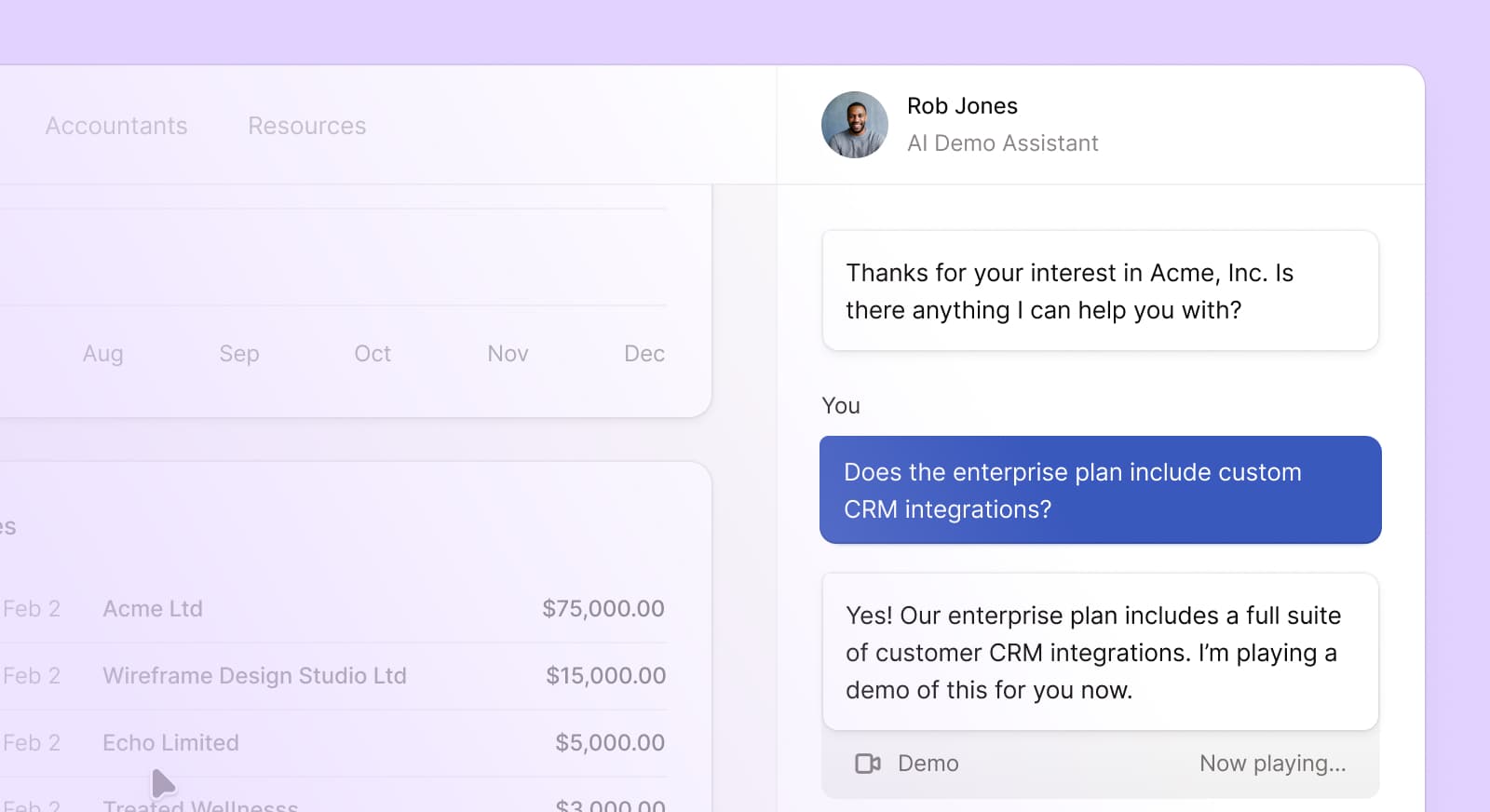
GTM
AI SDRs: The future of sales development
Traditional SDR models can't scale. AI SDRs automate qualification and routing to convert 3x more inbound traffic without adding headcount.
Feb 24, 2026
•
10 min read
GTM
How Kathleen Booth is solving the buyer intent decay problem
Kathleen Booth explains why intent data fails when teams can't act fast enough, and how real-time AI closes the gap before buyers move on.
Feb 19, 2026
•
6 min read
GTM
Corrina Owens on fixing what's broken in GTM
Corrina Owens shares how to streamline your GTM motion by fixing lead routing, simplifying buyer segmentation, focusing on high-impact signals, and embedding marketing in the deal cycle.
Feb 11, 2026
•
6 min read
Sign up for the latest from Spara
Subscribe to get more GTM insights straight to your inbox.