
Instead of browsing Google, people today get direct answers from large language models (LLMs), reducing click-through to original websites. And when buyers do land on a site, they expect immediate engagement and personalized responses.
This shift puts real pressure on GTM teams. With less traffic reaching owned channels and less time to respond, every interaction carries more weight. To keep up with this pace, teams adopt artificial intelligence (AI) across the stack to accelerate content creation, analyze performance, and automate engagement.
But teams also encounter AI noise. With many AI tools for different processes, information fragments, maintenance overhead increases, and customer experiences become inconsistent.
Marketing leaders don’t need more AI tools. They need agents that work together in continuous, end-to-end workflows. Systems that can observe intent as it appears, make decisions in the moment, and move go-to-market workflows forward without relying on manual coordination.
That’s what agentic marketing brings. Let’s break down what agentic marketing actually is, the benefits it delivers, and how teams can get started.
What is agentic marketing?
Agentic marketing uses AI-powered agents that can reason, plan, and automate various marketing workflows. These agents don't follow predefined rules. Instead, they learn from your company data and customer interactions to understand intent, recognize patterns, and take action in real time. They observe customer behavior, learn from outcomes, and adjust their approach as they go.
How agentic marketing works
Traditional automation depends on rules you define in advance. That works for predictable paths, but it struggles when behavior changes or signals emerge unexpectedly.
Agentic marketing takes a different approach by using multiple AI agents that work together to manage the entire workflow and make autonomous decisions based on real-time behavior. Instead of reacting after the fact, an agentic system can spot changes as they happen.
For example, if conversion rates start to dip, it can respond immediately by launching a recovery campaign without waiting for human intervention. Behind the scenes, multiple agents communicate with each other and coordinate actions in the right sequence to complete marketing tasks end to end.
For example, one agent might identify leads that have gone cold. Another creates personalized follow-up messages. A third determines the optimal timing and executes the outreach. The final agent analyzes responses, extracts insights, and recommends the next steps. Together, these agents execute entire marketing workflows effectively.
Why is agentic marketing important?
Buyer behavior has shifted, but most GTM systems and workflows were not designed for real-time engagement. As traffic becomes harder to capture and attention windows continue to shrink, every interaction carries more weight. Agentic marketing has become essential because it addresses this mismatch between modern buyer expectations and the operational limitations of traditional approaches.
The problem: buyer expectations and operational friction
Buyer expectations have evolved faster than traditional marketing strategies can keep up. When a buyer shows interest, they expect an immediate and relevant response. Even short delays can break momentum, which makes speed-to-lead a deciding factor in whether a conversation turns into pipeline or quietly drops off.
This shift in buyer behavior has raised the bar for marketing teams. It’s no longer enough to generate interest and hand it off downstream. Marketing leaders are increasingly accountable for measurable pipeline impact.
Early conversations need to move beyond capture and toward action. When early engagement is slow or poorly qualified, marketing loses control over what happens next, and revenue attribution becomes difficult to defend.
Manual SDR workflows also struggle under this pressure. Inbound volume continues to rise, but response capacity doesn’t scale at the same pace. SDRs are expected to triage leads, assess intent, and respond quickly across multiple channels, often without full context. This leads to inconsistent buyer experiences and delayed follow-ups.
Many teams still rely on separate tools for chat, forms, email, scheduling, and analytics, each operating in isolation. Buyers experience this fragmentation as repeated questions and disjointed handoffs, while teams struggle to maintain a consistent view of intent across channels.
Why agentic marketing changes the equation
Agentic marketing addresses these gaps by augmenting human teams with systems that can act immediately when intent appears.
AI-native agents engage buyers in real-time, gather context through natural conversation, and determine next steps based on live signals. This frees SDRs to focus on conversations that require judgment and relationship-building instead of repetitive qualification and routing.
Agentic marketing unifies the approach through multi-agent orchestration. Engagement, qualification, and action flow as one continuous process across channels, with context preserved at every step.
This is why agentic marketing has become essential. It combines real-time action with human oversight, helping teams move faster, prove pipeline impact, and scale engagement without sacrificing buyer experience.
Examples of agentic marketing in action
The following examples show how agents improve different marketing tasks by automating decision-making and adapting to buyer behavior in real-time.
Demand gen
Demand generation usually breaks down at the handoff between interest and intent. Teams optimize for clicks, impressions, and form fills, but those signals say little about who is actually ready to buy.
Agentic AI changes this by shifting the focus from aggregate metrics to real behavior. As visitors arrive, agentic systems observe how they move through pages, what content they engage with, and whether they initiate a conversation about product, pricing or services. These real-time signals provide a much clearer picture of intent than campaign-level metrics ever could.
When the system uses these real-time signals, demand generation becomes intent-driven. It identifies high-intent visitors as they arrive, while low-signal traffic naturally falls out of downstream workflows.
Inbound conversion
The AI greets visitors as soon as they arrive and continuously evaluates their behavior and personalizes the interaction. A buyer who shows strong intent is guided differently from someone who is still exploring, and those paths evolve as new signals emerge.
The agent learns from outcomes as well. It identifies which conversations consistently lead to meetings, and which create friction, then adjusts the experience accordingly. Over time, this refinement increases conversion rates and drives a more qualified pipeline without constant manual optimization.
Multi-channel orchestration
Agentic AI observes how buyers engage across website conversations, email exchanges, and voice interactions, and maintains a shared understanding of intent across these channels.
That shared context drives smarter action everywhere. The system decides when to respond in chat, what message the follow-up email should have, and how to drive a voice call. Each channel works in coordination, forming an agentic workflow that allows conversations to progress naturally between channels.
Sales and marketing teams alignment
Sales and marketing alignment often breaks down because both teams operate on partial information. Marketing sees early engagement signals, while sales feels the impact later, when timing or lead quality does not line up with pipeline reality.
Spara helps close that gap by connecting qualification on the website directly to sales readiness. As visitors engage in conversations and move toward meetings, Spara captures intent signals that are more predictive than form fills or lead scores alone and enriches the full customer data.
The result? Sales teams engage with leads that are qualified and show readiness, while marketing gets feedback on which interactions actually convert into meetings and pipeline.
How does agentic marketing differ from traditional automation?
Factor | Traditional automation | Agentic marketing |
Speed | Operates on predefined schedules and triggers. Changes happen only after someone reviews performance and updates rules. | Operates continuously. The system observes signals and adjusts behavior as they occur, shrinking the gap between insight and action. |
Personalization | Relies on static segments and template logic. Personalization is based on predefined paths. | The system adapts engagement based on live behavior and learned patterns, allowing personalization to evolve as intent becomes clearer. |
Adaptability | Requires manual updates when behavior changes, including rewriting rules or configuring new tests. | This system learns from outcomes and updates its decision-making continuously. |
Set-up effort | Requires defining rules, sequences, and triggers upfront, with complexity increasing over time as edge cases accumulate. | Teams can simply build, edit, or deploy AI agents across touchpoints by defining the qualification criteria in plain English. |
Buyer experience | Buyers encounter repeated or disconnected experiences across channels because context does not carry forward. | Context travels across touchpoints, providing a consistent experience across channels. |
What are the benefits of agentic marketing for GTM leaders?
This section explains how agentic marketing translates into tangible advantages for GTM leaders. It focuses on where AI-driven systems create real leverage across conversion, speed, and execution.
Higher inbound conversion
Real-time intent detection allows the AI to personalize each interaction, guiding leads with clear, actionable steps that drive higher conversion.
Better speed-to-value
Traditional marketing automation often requires long setup cycles, constant tuning, and manual analysis before results appear.
AI-driven platforms begin learning as soon as they are exposed to real interactions. As outcomes feed back into the system, personalization improves instantly, allowing teams to see meaningful impact faster.
Reduced SDR burden
When qualification improves, SDR teams spend less time sorting through low-intent leads and more time engaging prospects who are ready to buy.
AI helps identify the right leads earlier and enriches them with relevant context, so SDRs can start personalized conversations with a clear understanding of intent. This leads to more focused outreach, stronger customer relationships, and faster deal progression.
Consistency across channels
A connected AI system maintains visibility into context across channels and carries it forward as interactions continue. It uses signals from website conversations, email follow-ups, and voice calls to keep experiences aligned.
This continuity improves the buyer experience and gives GTM teams a more coherent view of how demand progresses into revenue.
Common misconceptions about agentic marketing
Despite its growing importance, agentic marketing is often misunderstood. Some assume it replaces human teams, requires complex technical expertise, or only applies to inbound workflows. The reality is more nuanced—and more practical.
Agentic marketing replaces humans
Agentic systems don’t remove humans from the loop. They shift where human effort is best spent. People still define strategy, set guardrails, and decide what success looks like. What changes is that agents handle the repetitive, time-consuming tasks required to execute that strategy at scale.
Agents monitor signals, adjust flows, and respond consistently across channels without needing constant attention. That frees teams from managing workflows and tuning rules, so they can focus on judgment, messaging, and moving qualified leads toward revenue.
It’s too technical to implement
Agentic systems are often assumed to require deep engineering effort. That assumption comes from earlier generations of automation tools that depended heavily on custom logic and technical setup.
In modern agentic platforms, teams configure behavior through familiar, intuitive interfaces instead of code or complex flows. Agents can be deployed across touchpoints by describing desired outcomes in natural language, rather than building logic trees or scripts.
It’s only for inbound
Agentic marketing is often associated with inbound experiences because that is where user behavior clearly reflects intent. But the same principles apply well beyond the top of the funnel.
Agents can support outbound calling, routing, guide in-app upsell moments, assist sales teams with context during live conversations, and act as co-pilots that surface relevant information at the right time.
This extends naturally into outbound workflows as well. For instance, an agentic system can identify leads who have already engaged with marketing campaigns, adapt outreach based on their interaction patterns, and initiate follow-ups through email or calls automatically.
How to get started with agentic marketing
Step 1: Identify high-impact buyer touchpoints
First, identify high-intent touchpoints where potential buyers most often interact, such as pricing pages, high-traffic areas of the website, or voice channels. Then look for gaps in the current workflows at those touchpoints, where interest drops, handoffs break, or friction consistently appears. This helps you decide which use cases to deploy AI solutions for the greatest impact.
Step 2: Map key qualification & engagement points
Next, determine what signals lead to conversion. Not every click or page view carries the same weight. Teams define which behaviors indicate real intent, which suggest exploration, and which should trigger follow-up. These signals guide how the system qualifies customer engagement, updates customer profiles, and decides what action to take.
Once these signals are defined, the AI initially observes the behavior and learns from outcomes over time, refining its approach and delivering personalized experiences as user behavior changes.
Step 3: Deploy a single agent as a pilot
Rather than deploying agents everywhere, start with a single agent focused on one workflow, such as lead qualification or inbound routing. The goal is not to automate everything, but to observe the intent signals, decide where AI can take action, and observe how AI adapts to the system and brings results.
A simple way to begin is by deploying a qualification agent on a high-intent touchpoint, such as a pricing page. Define the qualification criteria in plain language, let the agent engage buyers, and track the signals it captures along with the outcomes it produces.
This pilot gives teams a clear view into how the agent interprets behavior, responds in the moment, and contributes to measurable results before expanding further.
Step 4: Expand across channels
Lastly, expand the agents to multiple channels like email and voice calls. By sharing context across channels, agents maintain a consistent understanding of each buyer’s intent so their engagement feels personalized and consistent across channels.
For example, agents can follow up with qualified prospects who have engaged on the website but have not yet scheduled a meeting, sending targeted emails that reference prior interactions and encourage next steps. In parallel, voice agents can reach out to high-intent accounts to confirm interest, answer common questions, or route the conversation to a sales rep when deeper discussion is needed.
Over time, this expansion turns a single agent into a connected system that supports the full customer journey. The system handles coordination and continuity across touchpoints, while humans retain judgment and make the final decisions that move deals forward.
Turn agentic marketing into measurable pipeline lift
AI agents observe real-time buyer behavior, adapt to context, and carry conversations across channels. That autonomy makes engagement feel personal at scale and drives improvements where GTM teams care most: conversion rates, pipeline velocity, and sales efficiency.
Agents handle the continuous decision-making required to execute various go-to-market workflows like seamless hand-offs, lead enrichment, inbound and outbound engagement. When that operational layer runs automatically, teams spend less time refining automation rules and more time setting strategy and closing deals.
If your website traffic isn’t translating into enough qualified meetings, autonomous AI agents can help close the gap. Discover how Spara accelerates pipeline by engaging and qualifying prospects the moment they arrive.

Lauren ThompsonHead of Marketing, Spara
FAQs
Related posts
View all
GTM
Corrina Owens on fixing what's broken in GTM
Corrina Owens shares how to streamline your GTM motion by fixing lead routing, simplifying buyer segmentation, focusing on high-impact signals, and embedding marketing in the deal cycle.
Feb 11, 2026
•
6 min read
GTM
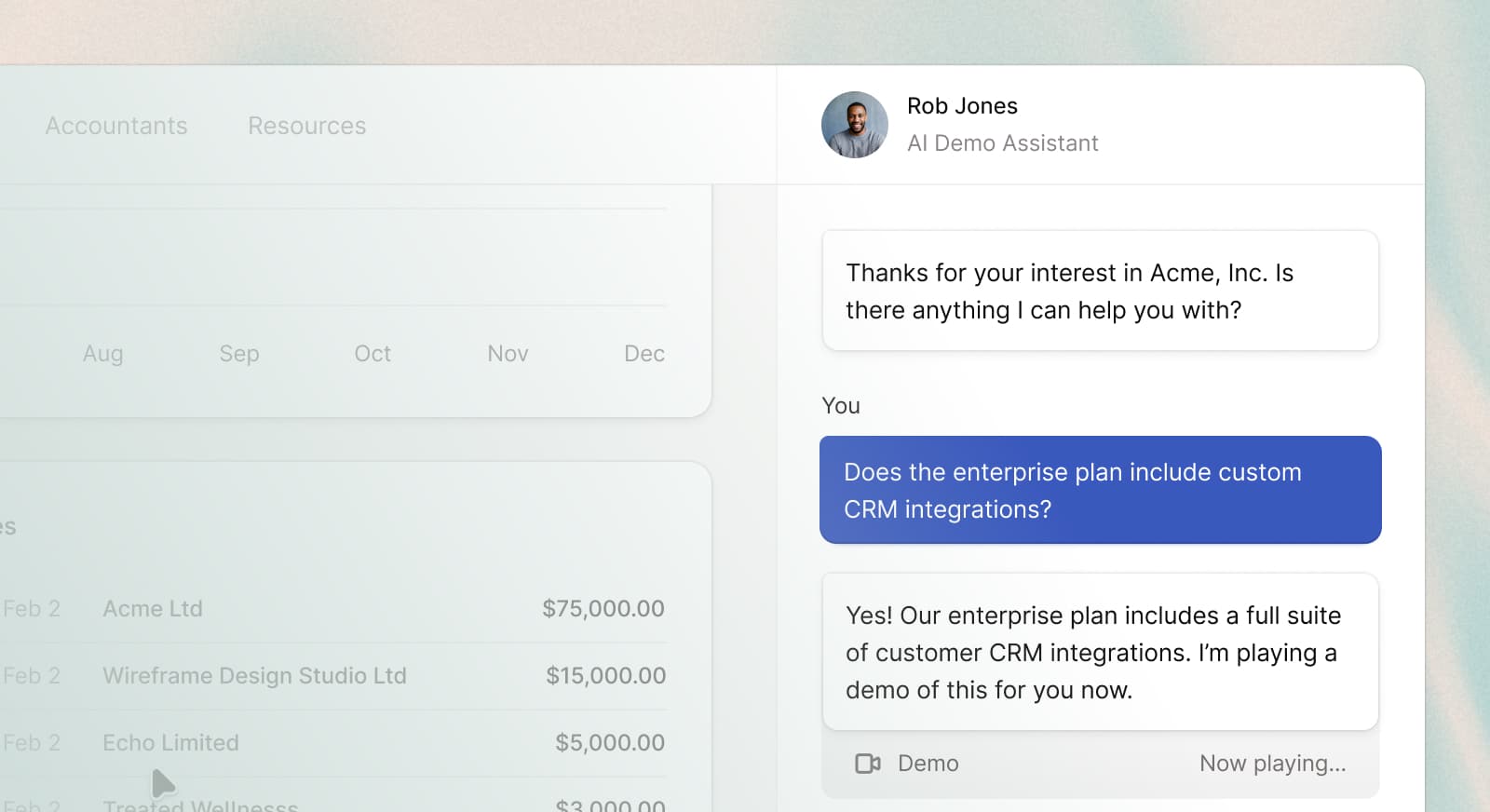
Conversational marketing chatbots: turning real-time conversations into qualified pipeline
Unlike traditional chatbots, learn how conversational marketing chatbots use AI to qualify leads, boost conversion, and deliver real-time buyer experiences.
Feb 10, 2026
•
9 min read
GTM
How Taft Love drives higher lead conversion rates
Taft Love explains how to eliminate lead leakage and improve conversion rates by enforcing consistent sales behavior, building feedback loops between sales and marketing, and aligning incentives around revenue.
Feb 4, 2026
•
7 min read
Sign up for the latest from Spara
Subscribe to get more GTM insights straight to your inbox.