
Approximately two-thirds of business leaders believe that AI tools are essential to enhancing their strategy, according to a HubSpot survey. However, only 38% have achieved meaningful efficiency, often because the tools they’ve adopted pitch “AI,” yet still run on rigid, manual workflows.
Success comes from knowing how to separate the right tools from the fragmented ones and implementing them in ways that actually support your goals. Let’s look at the real differentiators, how to recognize them, and which tools are ideal for your use case.
The explosion of AI sales tools and why it’s confusing buyers
More than 60% of sales teams now use some form of AI to support their daily workflows and accelerate revenue operations, and that demand has pushed hundreds of new tools into the market. And over 500 sales tools today claim to be “AI-driven.” When every tool puts “AI” on its landing page, it becomes almost impossible for sales leaders to figure out which one best fits their needs.
It gets even more confusing when you look at the different stages of a sales process. Prospecting, qualification, engagement, forecasting, and follow-up all have different needs, and AI can support each stage in different ways. However, some tools apply AI deeply to automate core workflows. Others only add light AI features to the UI so the product looks modern, even though the underlying system still runs on rigid if-else rules.
At the same time, customer needs have changed. According to MarketsandMarkets research, two-thirds of customers want customized content, and 67% get frustrated when businesses don't deliver personalized approaches.
To meet these expectations, you need AI sales tools that deliver:
Speed-to-lead: engaging customers in real-time
Personalization: adapting messages and engagement based on real buyer behavior
Increased rep efficiency: enriching lead data so reps can use it to personalize their approach to sales calls and close deals faster
Accurate forecasting: improving predictions based on richer behavioral signals
These real improvements are only possible through AI-native, not AI-retrofitted tools. The easiest way to avoid confusion is to check whether the product was built after the LLM era began. Tools built post-LLM have AI in their core design, not added later as a feature.
Finally, check how they deliver AI. Do they have an AI engine that learns from your company data and adapts to your buying behavior, or do they have a generic AI model that just rephrases the text to sound conversational?
What are AI sales tools?
AI sales tools are software platforms that use artificial intelligence and machine learning to automate, optimize, and improve key parts of the sales process. They streamline lead generation, customer engagement, qualification, and forecasting so sales teams can focus on high-quality initiatives that drive conversions.

AI sales tools generally fall into four core categories:
Lead qualification and routing
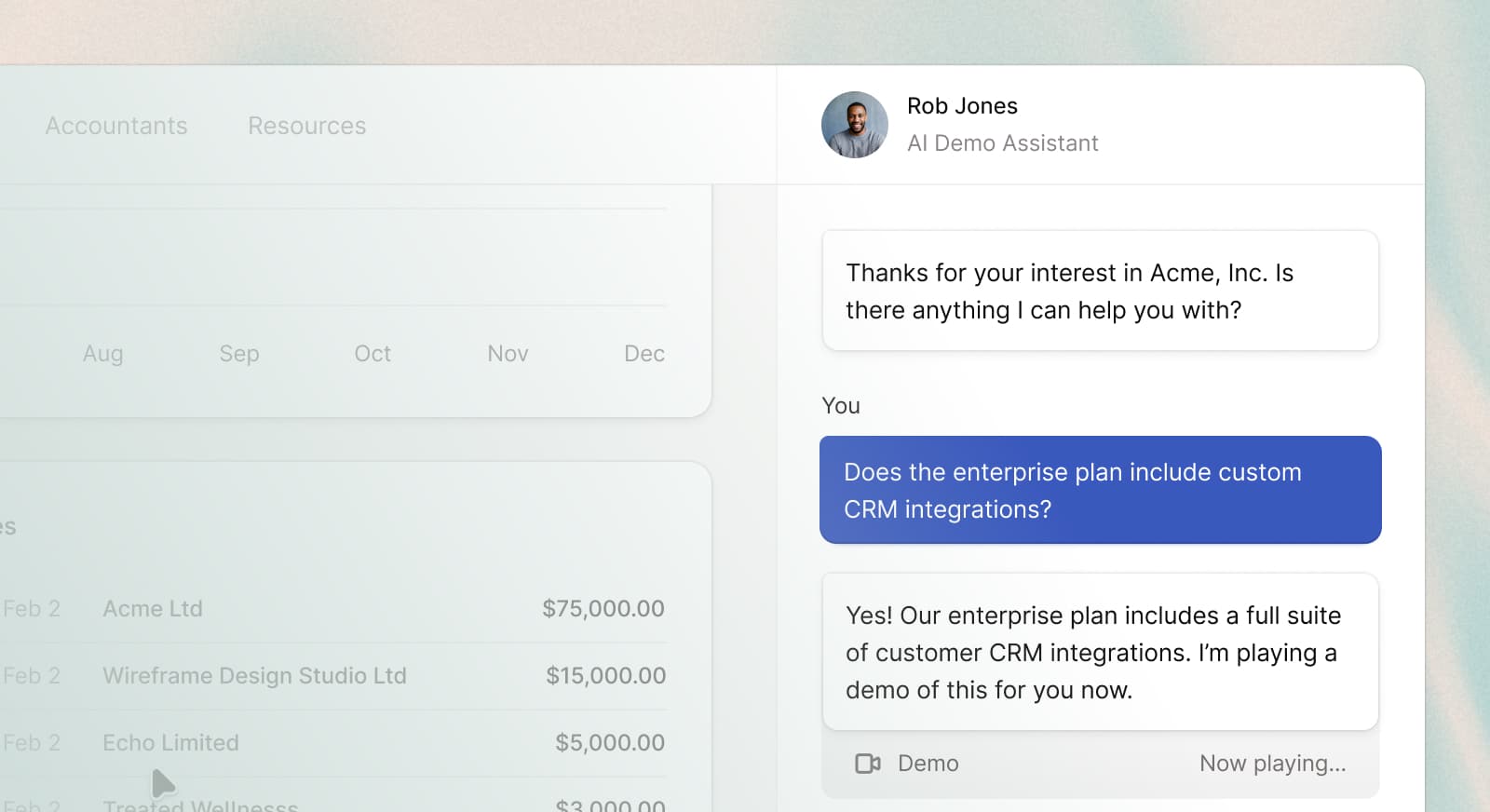
When marketing sends MQLs to your site, these tools step in instantly and engage the visitor. AI platforms like Spara personalize the conversation, ask the right questions, and qualify the leads. From there, the tool routes the buyer to the right rep or books a demo on the spot.
If the lead isn’t qualified, it routes them into a self-service nurture path that still delivers a personalized experience so the buyer leaves with a positive impression of your brand.
Prospecting and enrichment
AI tools help you identify the right prospects and personalize your outreach. They scan company websites, social media, news mentions, and other signals to find potential buyers.
They also enrich your CRM by filling in missing details or updating outdated fields. This gives your team cleaner, complete lead profiles so they don’t waste time researching or working with bad data.
Email and chat engagement
AI chat agents on your website can guide buyers in real time and deliver a personalized experience. These tools also create tailored email sequences and follow-ups based on each buyer’s behavior and past interactions.
Spara delivers these capabilities through its AI chat agents, Smartbar, Navigator, and Fullscreen. You can deploy them on different pages to match specific customer needs. The same AI engine also powers Spara’s email agent. Every email stays connected to the conversations in the chat, and buyers get one seamless, consistent, multichannel experience.
AI for forecasting and analytics
Tools like Gong and Clari use AI and predictive analytics to improve the accuracy of revenue and demand forecasts. They analyze call data, deal patterns, sales conversations, and rep activity so leaders can make data-driven decisions.
While individual tools address fragments of the GTM process, Spara offers an integrated alternative. Its AI-enabled platform centralizes qualification, routing, and real-time engagement in one ecosystem, enabling revenue teams to accelerate conversion and simplify their tech stack. Spara also works smoothly alongside the rest of your GTM tools, enhancing the workflows you already have rather than replacing them.
How to evaluate AI sales tools (a practical framework)
Map your revenue bottlenecks
Revenue improves when you address the exact pain points in your sales process. Start by identifying those pressure points. Is your speed-to-lead lagging? Are buyers dropping off between the initial qualification and the demo? Are your channels disconnected, forcing returning customers to start from scratch? Or is poor forecasting leading your team to the wrong decisions?
Once you pinpoint the real issue, break down the problem and set clear objectives. That means identifying the relevant metrics, measuring your current baseline, setting a target, and defining the minimum ROI or conversion lift you’ll accept.
Now you should assess whether the AI tool improves the set objectives by assessing it across the five areas below.
AI-native design
Sales tools have existed for decades, and many of them simply added AI on top only after LLMs emerged. AI-native tools have an architecture designed around LLMs from day one, which means they deliver true AI capabilities and are adaptive to upcoming AI advancements.
Security and compliance
Your sales tools will handle sensitive customer data and internal information, so they must meet standards such as SOC 2 and GDPR. Most vendors claim to be compliant, so verify their track record and review their up-to-date security documentation. If a tool has had security incidents or data breaches, rethink your choice.
Integration depth
You shouldn’t change your entire stack to adopt a new AI tool. Ensure it connects smoothly with your CRM, email system, and calendar. Tools like Spara offer native integrations as well as APIs and webhooks, giving you the flexibility to connect with both your core systems and any proprietary tools.
Outcome proof
Some automation tools highlight vanity metrics, including conversation counts or time spent on a page. These metrics don’t move revenue. Focus on AI tools that show real outcomes like conversion rates or demos booked.
Ease of setup
Most sales teams are not technical teams. A fast and simple setup reduces lift for onboarding and speeds up sales enablement. Tools like Spara make this easier by allowing teams to build, edit, and deploy their own AI agents without engineering support. For example, Rho, a financial institution, saw Spara start engaging leads in real-time within a few days—asking the right questions, sharing relevant content, and routing them correctly.
Top AI sales tools worth knowing in 2026
The AI sales landscape encompasses far more than just chatbots or conversation tools. Different platforms support different stages of the GTM motion, from enrichment and outbound to forecasting, coaching, and multichannel engagement. The tools below represent the strongest options across these categories.
1. Spara
Spara is an AI-native GTM platform built for modern revenue teams. It engages visitors in real-time, understands their intent, asks pre-qualifying questions, and lets them schedule calls with the right reps.
Its core AI engine trains on your company’s data, learns how your customers behave, and adapts to buyer engagement patterns in real-time so every interaction feels personal.
The same engine powers Spara’s agents across chat, voice, and email. A customer can start a conversation on your website and continue it over a call, with every detail carried forward.
Spara supports key sales processes end-to-end. It captures lead information during a personalized interaction, qualifies them based on real signals, and routes them to the right rep or books a meeting instantly. This improves speed-to-lead, lead qualification, and conversion.
Best for: Customers who want tailored, conversion-focused AI-native conversations from day one
2. Clay
Clay is a powerful enrichment platform that pulls live data from over 90 sources, including LinkedIn, Clearbit, and Apollo, and brings it all into one place. It provides sales professionals with data and insights about prospects to help them sell more effectively.
Clay doesn’t directly handle outreach, but it seamlessly integrates with your CRM, email marketing, and other platforms. This lets you build workflows inside Clay that trigger CRM updates or email follow-ups based on the user behavior data.
Best for: Businesses that need to automate lead data enrichment and prospecting
3. Gong
Gong is a revenue intelligence platform that analyzes your sales calls and conversations across Zoom meetings, email, and phone calls, and extracts insights that reps can use to enhance the customer experience.
The platform’s AI highlights important topics like objections raised, pricing discussions, and pain points so your teams can get actionable insights out of it.
Gong also supports accurate forecasting. It predicts deal outcomes based on buyer behavior and provides AI guidance to help reps manage their day-to-day activities.
Best for: Teams that need AI-driven insights from customer calls, emails, and meeting conversations
4. Orum
Orum is a live conversation platform that automates outbound calling, allowing your reps and SDR teams to connect with more prospects in less time. It speeds up outbound work by letting your team dial multiple leads simultaneously.
Its AI distinguishes between live voices, voicemails, and bad numbers, so it only connects a rep when a real prospect picks up. This drastically reduces idle time and increases rep productivity.
Best for: Automating cold calls and boosting sales rep efficiency
5. Smartlead
Smartlead is a cold email platform that helps you improve the performance of your outreach. Its AI helps craft highly personalized sales emails so your cold outreach feels natural and earns higher replies.
Smartlead has strong deliverability. It uses dynamic IP rotation to keep your emails out of spam and maintain a clean sender reputation.
Best for: Cold email outreach and marketing automation
6. Momentum
Momentum brings all your customer conversations together across video calls, email, Slack, and other channels. Its AI generates call summaries, highlighting key signals like objections, competitor mentions, budget details, and next steps.
Momentum takes a more real-time approach than tools like Gong. Its AI agents monitor conversations as they happen. For example, you can build a workflow that alerts a manager or creates a CRM task if a customer mentions a competitor or shows frustration.
Best for: Real-time workflow triggers like alerting a manager or updating CRM information during live conversations
7. LeadIQ
LeadIQ is a B2B sales prospecting tool that helps sales teams find and connect with the right leads. It keeps your data accurate through real-time verification and multiple layers of checks.
Sales teams use LeadIQ to access verified contact information, track buying signals, and personalize emails. This makes cold outreach more effective and helps reps focus on leads that are more likely to convert.
Best for: Large sales organizations that need stronger LinkedIn-to-CRM enrichment
8. 6Sense
6sense is an account-based marketing (ABM) platform designed to identify potential customers, prioritize the right accounts, and reach them at the right time.
The platform collects intent data from multiple sources, including website visits, keyword searches, and engagement patterns. By blending this with your customer relationship management (CRM) data, 6sense creates detailed account lists of your potential customers.
Best for: Account-based marketing teams
Don’t buy more tools—build a smarter GTM engine
There are countless AI-powered tools in the market today, and stacking them without a clear strategy can create unnecessary complexity. The goal is to choose the right ones for each part of your revenue process. Many products offer surface-level AI features, while only a few are truly AI-native and capable of delivering measurable outcomes.
These AI-native products adapt to buyer behavior, personalize every interaction, and strengthen the core of your GTM engine.
Spara gives you that AI-native foundation. Built in the post-LLM era, it supports key parts of your sales process, from qualifying leads to driving personalized conversations to booking meetings or routing buyers to the right reps.
See how Spara delivers cleaner, faster enrichment across your funnel—book a demo.

Lauren ThompsonHead of Marketing, Spara
FAQs
Related posts
View all
GTM
Corrina Owens on fixing what's broken in GTM
Corrina Owens shares how to streamline your GTM motion by fixing lead routing, simplifying buyer segmentation, focusing on high-impact signals, and embedding marketing in the deal cycle.
Feb 11, 2026
•
6 min read
GTM
Conversational marketing chatbots: turning real-time conversations into qualified pipeline
Unlike traditional chatbots, learn how conversational marketing chatbots use AI to qualify leads, boost conversion, and deliver real-time buyer experiences.
Feb 10, 2026
•
9 min read

GTM
Agentic marketing: boost inbound conversion with AI agents
Learn how agentic marketing uses AI agents to act on buyer intent in real time, improve conversion rates, and drive pipeline without adding headcount.
Feb 10, 2026
•
8 min read
Sign up for the latest from Spara
Subscribe to get more GTM insights straight to your inbox.