

Marketing teams work hard on inbound lead generation, but the real challenge begins after the lead arrives. Relying on manual qualification slows response times and forces reps to sort through form fills long after buyers express interest.
That delay is costly. Studies show that the company that responds first often wins the deal, yet no team can keep up with the speed buyers expect without marketing automation.
Automated lead qualification changes that equation. It engages every lead instantly, captures the right data in real-time, and routes qualified buyers to sales. It’s become the new standard for inbound conversion by delivering speed, consistency, and personalization at scale.
This article shows how automated qualification works, why it matters, and how teams use it to turn more inbound leads into real sales pipelines.
The speed-to-lead problem that’s costing you pipeline
When new leads fill out a form on your website, a clock starts ticking. And according to InsideSales research, once that clock hits five minutes, your chances of converting that lead drop by nearly eight times.
Most buyers have seven or eight tabs open while researching solutions, and their interest peaks in that short window. If a competitor reaches them first, you lose the opportunity before your team even sees the lead.
The same InsideSales study, conducted across 400 companies, found that only 0.1% of inbound leads are engaged within five minutes. That’s a lot of pipeline slipping through the cracks.
Many companies have shifted heavily toward account-based marketing (ABM), focusing their energy on a specific list of high-value accounts. They spend a lot of time researching those accounts, personalizing outreach, and running targeted campaigns. At the same time, when inbound demand increases, that same finite team capacity makes it harder to engage every inbound lead quickly and with context.
Another issue is overreliance on legacy tools for speed-to-lead. Today’s buyers expect more than a fast response. They want a human-like conversation with contextual answers instantly. If you clarify their problem and offer real insight right away, they’re far more likely to convert.
Legacy tools weren’t built for that. Rule-based chat flows and rigid lead qualification frameworks simply can’t deliver the level of personalization.
Spara CEO David Walker puts it simply: “Buyers open up faster with AI because they sense they’ll get value immediately, not a sales pitch. When you surface what matters in the first interaction, you shorten the path to a real conversation and give your reps everything they need to deliver high-value impact from the start.”
This is why AI changes the game. Modern AI systems learn from past patterns, adapt in real-time, and deliver meaningful conversations the moment the visitor shows interest in your product. They quickly identify the potential customers and route them to a real sales rep.
What automated lead qualification really means
Automated lead qualification uses artificial intelligence and machine learning technologies to identify which prospects are most likely to convert without manual intervention.
Unlike rule-based bots that rely on static criteria like job title, company size, or industry, AI-native agents follow your qualification logic and analyze multiple data points at once—website behavior, intent signals, and interaction patterns.
As the system engages more buyers, it learns from every conversation, spots emerging trends, and adapts to new patterns automatically. This keeps qualification accurate, current, and grounded in real buyer behavior.
Automating qualification is often misunderstood as replacing reps, but it actually increases their productivity. By handling early-stage triage, AI filters out low-intent prospects so only the right leads reach your team. Reps spend more time closing those deals and driving revenue instead of managing manual qualification steps.
That’s what Spara brings to the world of GTM. Spara’s AI-native agents let you define your ideal customer profile (ICP) in plain english, qualify leads based on it, and route them to book meetings.
Spara’s core AI engine is trained on your website pages and internal documentation, and the same model powers agents across chat, email, and voice. Context flows across channels and leads are recognized even if they come back through a different channel later.
Why manual qualification fails modern GTM teams
In a manual process, inbound leads submit the interest form on your site, and reps must review each submission and decide who to prioritize first. But today’s buyers expect a response within five minutes. Reps can’t manually process thousands of leads and reach them that quickly. This delay loses your customers to competitors and slows entire sales cycles.
Another major challenge with the manual lead qualification process is the quality of data your reps rely on. CRM records decay quickly as buyers change jobs, companies restructure, and teams update fields inconsistently. Manual data entry introduces typos, missing fields, and outdated contact information that mislead reps during outreach.
When reps personalize outreach based on this incomplete or stale data, they waste time on unqualified leads and create messaging that doesn’t match the buyer’s real pain points.
Data silos make the problem even worse. Marketing teams track intent signals, campaign performance, and engagement history to qualify inbound leads. Sales teams rely on CRM fields, call notes, and their own routing logic.
Without automation unifying these systems, reps and marketing teams can’t see the same data. Sales teams don’t know what brought the lead to your site, what content they engaged with, or what problem they’re trying to solve. That lack of context complicates the handoff, making it difficult to deliver a personalized experience, and results in lower conversion rates.
An automated, AI-native platform like Spara doesn’t force you to choose between lead volume and lead quality. Whenever the AI engages a lead, it collects key details and performs continuous data enrichment. By connecting systems, it also updates your CRM in real-time so reps always have the context they need to deliver relevant, high-value conversations.
Because Spara’s AI trains on your website, internal documentation, and real interactions across chat, email, and voice, it maintains a full 360-degree view of every lead. It personalizes every interaction using a data-driven approach and accelerates speed-to-lead without sacrificing quality.
The business impacts of automated lead qualification
Automated lead qualification has a direct impact on revenue. According to Gartner Research, companies that automate lead management see a 10% or greater increase in revenue within two quarters. That lift comes from several compounding advantages.
Automation lowers customer acquisition cost because the system handles early-stage triage and passes only high-value leads to reps. It also reduces response time—which means more buyers are qualified while their interest is at its peak—and increases conversion rates.
Manual qualification can take hours or days for each rep. Every minute spent researching lead data or deciding who to prioritize is time they could use closing deals. Automation removes those time-consuming tasks so reps can focus on meaningful lead nurturing and closing deals.
There’s no single formula for calculating ROI on automated qualification, but you can estimate it by measuring the business outcomes it improves. Start by tracking baseline metrics before automation, such as lead-to-booking conversion, customer acquisition cost, and rep hours spent on manual data entry or administrative tasks.
After you automate your qualification process, measure those same metrics again and compare the results. This way, you can quantify the success of automated lead qualification. For example, to measure cost savings: (Time spent on administrative tasks before automation – Time spent after automation) × Number of reps × Average hourly rate.
Email intelligence platform, Ora, followed this approach by deploying Spara AI chat across their core conversion paths. Instead of tracking vanity metrics, they measured real outcomes and saw a 70% increase in inbound conversion in the first 30 days.
How automated qualification works across channels
AI meets buyers where they are and keeps every conversation moving forward, whether they show up through chat, email, or voice. Let’s see how:
Chat
AI chat agents step in the moment a buyer signals interest on your website. They engage leads in real-time, answer questions with context, ask prequalification questions, gather key details, and route qualified buyers directly to your reps.
These chat agents operate 24/7, even when your team is offline. They hold personalized conversations during nights and weekends and encourage buyers to schedule meetings at their preferred time.
Spara offers three types of chatbots tailored to different web pages. You can place Spara Navigator in the bottom right corner as a floating assistant that follows visitors across your site. You can also embed Spara Smartbar as a static, mini-ChatGPT experience that sits directly within the page and engages visitors in context.
You can also deploy Spara Fullscreen, which loads immediately after a webform submission. This interface is deployed onto a single URL of your company's marketing website.
Not every engaged buyer is ready to convert, and that’s where automated email qualification shines. AI-driven emails follow up with leads who interacted with your content but haven’t converted yet. They send timely follow-ups based on the buyer’s actions and adjust tone and content to match where the buyer is in their journey.
A common scenario is when a buyer meets your qualification criteria but drops off before scheduling a call. Instead of letting that warm lead fade, the Spara AI email agent sends a personalized follow-up to bring them back and schedule a meeting.
The email agent also handles inbound questions. It reads and interprets each message, replies with relevant information, and gathers missing qualification details. Once the buyer signals real intent, Spara hands it off to a rep with full context, allowing them to optimize their outreach and focus on closing.
Voice
Inbound calls carry some of the strongest buying intent, but answering quickly is a challenge without automation. AI voice agents answer these calls instantly, ask qualification questions, and route the qualified calls to reps while the lead is still on the line. When teams are offline, those same voice agents continue the conversation after hours, capturing intent and context so no opportunity slips through.
Spara voice agents use advanced voice AI technology to deliver a human-like experience. Trained on real conversations, it understands tone and adapts naturally to the flow of conversation, giving buyers a smooth, professional experience.
How to evaluate automated lead qualification tools
The best automation tools reduce manual work, increase qualified pipeline, and fit seamlessly into your existing GTM stack. Use this checklist to find the one.
AI-native architecture
Look for a platform built on AI from the ground up, not a legacy system with AI bolted on. True AI-native tools learn from real interactions and drive conversations the way a human would. Most AI-native platforms were built after the rise of modern LLMs, with AI integrated from the very first design decisions.
Multi-channel flexibility
Buyers move across chat, email, and voice, so your platform must provide AI agents to support them. They should deliver a consistent experience across channels and rely on a single backend AI model that has access to full conversation history and lead data. So buyers don’t need to repeat themselves when they reach out on a different channel.
SOC 2/GDPR compliance
Check whether the platform meets industry-standard security and privacy requirements such as SOC 2 and GDPR. These certifications confirm that the vendor follows strict controls for protecting customer data, storing information securely, and managing sensitive workflows responsibly.
CRM and calendar integration
Choose an AI platform that seamlessly integrates into your current calendar and CRM tools. It should automatically update your CRM with the qualification details gathered during the buyer engagement. Calendar integration is equally important because the AI should guide qualified leads to book meetings instantly.
Ease of setup
Focus on tools your team can activate quickly. Simple onboarding reduces dependency on engineering resources and helps you see value faster without long deployment cycles.
The tool should also be easy to configure. For example, your sales team should be able to quickly edit and customize AI agents within a modern, intuitive interface.
Proven pipeline lift
Legacy tools follow seat-based pricing, which becomes expensive as your team scales. Look for modern AI platforms that price based on value, not headcount.
Spara meets all of these criteria out of the box. It delivers AI-native qualification across channels, integrates instantly with your GTM stack, and maintains enterprise-grade compliance. Sales reps can also quickly edit and customize its AI agents in plain English.
The future of lead qualification is AI-native
AI-driven qualification isn’t a futuristic concept; it’s already shaping how GTM teams operate. Today’s AI systems evaluate leads with precision, pass only the high-quality leads to sales, and help teams convert leads faster, generate measurable ROI, and deliver a smoother, more personalized buyer experience from the first touch. When AI handles repetitive work, teams can focus on the high-value conversations that move deals forward.
The evolution of AI lead qualification is far from over. AI-powered systems already use real-time data and predictive signals to personalize responses and anticipate customer needs, and those capabilities continue to improve as models get more context and feedback. Fortunately, the transition to AI-enhanced tools doesn’t require a heavy lift. Spara provides a modern interface, trains its AI engine on your custom data, and, because it’s AI-native at its core, can adopt new advances quickly without complex rework.
Talk to Spara today and see how quickly AI can convert leads and accelerate pipeline growth.

Lauren ThompsonHead of Marketing, Spara
FAQs
Related posts
View all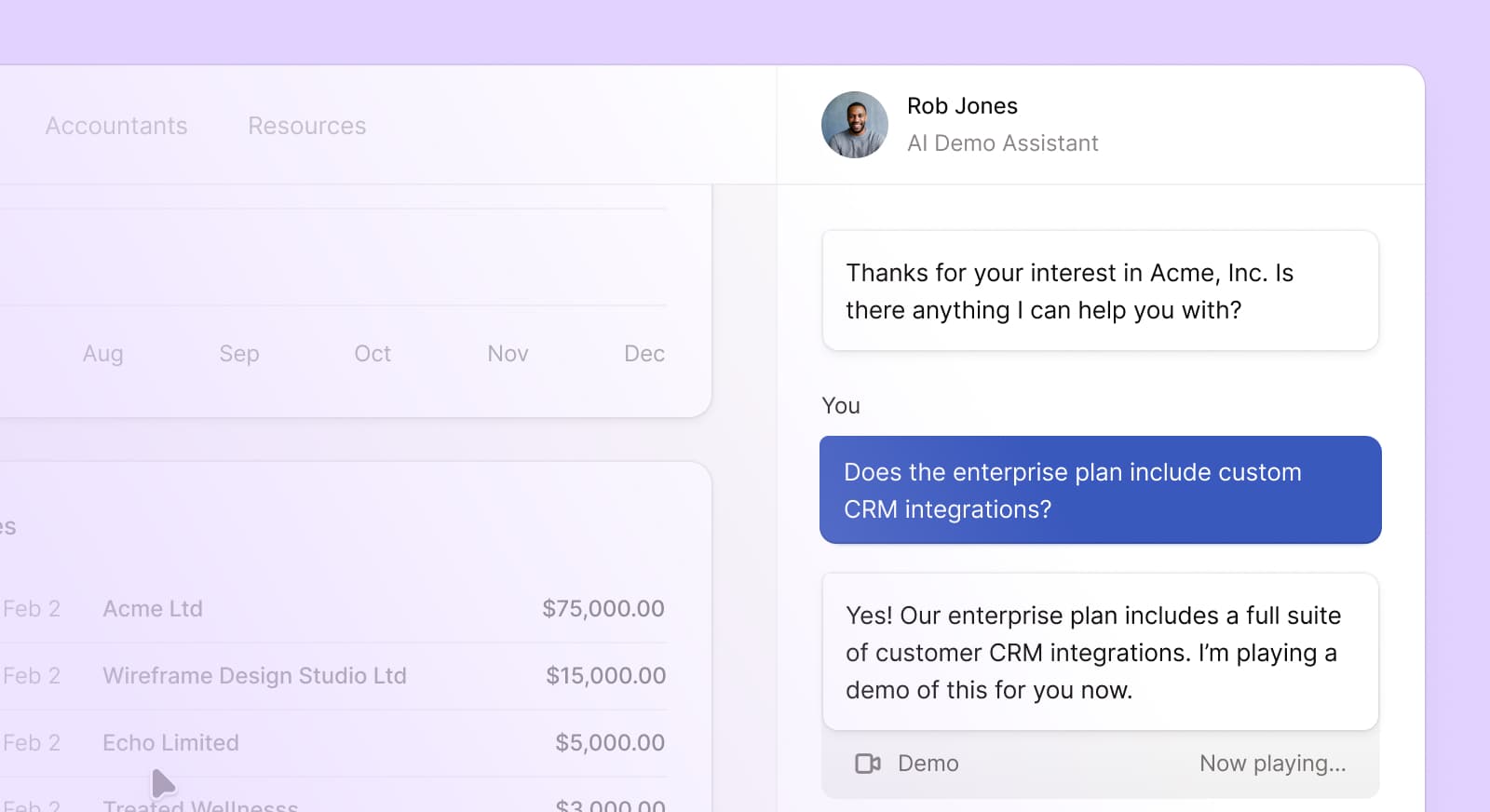
GTM
AI SDRs: The future of sales development
Traditional SDR models can't scale. AI SDRs automate qualification and routing to convert 3x more inbound traffic without adding headcount.
Feb 24, 2026
•
10 min read

GTM
How Kathleen Booth is solving the buyer intent decay problem
Kathleen Booth explains why intent data fails when teams can't act fast enough, and how real-time AI closes the gap before buyers move on.
Feb 19, 2026
•
6 min read

GTM
Corrina Owens on fixing what's broken in GTM
Corrina Owens shares how to streamline your GTM motion by fixing lead routing, simplifying buyer segmentation, focusing on high-impact signals, and embedding marketing in the deal cycle.
Feb 11, 2026
•
6 min read
Sign up for the latest from Spara
Subscribe to get more GTM insights straight to your inbox.