

Your marketing team just reviewed last quarter's conversion metrics. Website traffic increased 40%, but qualified meetings stayed flat. The gap? Speed-to-lead. While your team manually qualifies inbound leads during business hours, competitors using AI agents book meetings with those same prospects immediately—nights, weekends, and across all channels.
Qualified built its reputation on exactly this problem: routing high-intent website visitors to sales reps in real time. The platform's Salesforce integration and account-based marketing features made it the go-to choice for enterprise teams who needed sophisticated routing and account visibility.
But buyer behavior has shifted. Prospects now expect responses in seconds across different channels, like chat, email, and voice. Legacy platforms that added AI features on top of older infrastructure still rely on rigid scripts that break down when prospects ask unexpected questions. Modern GTM teams need platforms built from the ground up for adaptive AI conversations, not retrofitted chat tools.
Qualified helped define the conversational sales space, but AI-native platforms like Spara are redefining it. This article compares eight Qualified alternatives and explains how to evaluate them based on ROI, scalability, and AI maturity: the criteria that actually determine whether your platform converts inbound traffic into pipeline.
Why teams are looking for alternatives to Qualified
Qualified's chat-first approach worked well when website conversations were the primary inbound channel. But prospects don't limit themselves to your website anymore. They start conversations via chat during lunch, follow up by email that afternoon, and call the next morning when they're ready to move forward.
Qualified recently launched PiperX to address multi-channel engagement, but the platform's core architecture still centers on website interactions. When prospects switch channels, conversation history doesn't always follow, forcing buyers to repeat themselves.
Your prospects notice this friction because they're comparing you to the companies that solved it. Businesses using AI agents respond instantly across all channels, maintain conversation context automatically, and convert leads without manual handoffs. 78% of organizations now use AI in at least one business function, up from 55% in 2023—meaning your buyers are seeing this level of responsiveness from most vendors they evaluate.
The operational challenges extend beyond Qualified’s channel limitations:
Per-seat pricing scales with headcount, not results: Your costs increase as you add team members, making growth expensive even when conversion rates stay flat.
Complex implementation requires weeks or months: Configuration demands significant upfront investment, and routing logic requires manual updates when qualification criteria change.
Limited routing flexibility: Predetermined workflows need rebuilding rather than adapting when your sales process evolves.
AI features lag behind LLM-native platforms: AI capabilities were added to pre-existing infrastructure, resulting in scripted responses that break down during unexpected conversations.
Spara addresses these pain points through usage-based pricing plans that scale with activity rather than headcount, deployment that takes days instead of months, and AI agents that learn from your sales conversations rather than requiring manual workflow configuration.
Because Spara's AI was built after LLMs (large language models), the platform adapts to different conversation paths without maintaining decision trees or updating scripts when your qualification criteria change.
The top 8 Qualified alternatives to consider in 2025 and beyond
Choosing the right conversational sales platform comes down to how fast it converts inbound leads, how well it scales without adding headcount, and whether its AI actually adapts to your prospects, rather than just following scripts.
The platforms below are the strongest alternatives to Qualified, each with strengths that depend on your team size, sales motion, and technical requirements.
The comparison table below shows how these eight platforms stack up across the criteria that matter most for revenue teams when evaluating their specific needs.
Platform | Best for | Channels | Pricing model | Ideal company size | AI-native | Key differentiator |
Qualified | Enterprise teams using Salesforce with complex routing needs | Chat, email, voice (via PiperX) | Per-seat | Mid-market to enterprise | No | Deep Salesforce integration, AI SDR (Piper) for account-based engagement |
Spara | B2B SaaS teams prioritizing measurable pipeline growth | Chat, email, voice | Usage-based | Mid-market to Enterprise | Yes | AI-native platform, 2-3x conversion lift, deploys in days, conversational platform deployable at any funnel stage |
Drift | Enterprises with established SDR teams | Chat | Per-seat | Mid-market to enterprise | No | Conversational marketing focus, acquired by Salesloft |
Intercom | Customer support and post-sale engagement | Chat, email, SMS | Per-seat + resolution-based AI | SMB to enterprise | No | Customer service platform with Fin AI Agent |
Tidio | Small businesses and e-commerce | Chat, email, Facebook Messenger, Instagram | Freemium + add-ons | Small to mid-market | No | Affordable pricing, easy setup for basic automation |
Chili Piper | Sales operations teams needing scheduling automation | Chat, web forms | Platform fee + per-seat | Mid-market to enterprise | No | Meeting lifecycle automation, form-to-meeting routing |
Zendesk | Support teams needing omnichannel ticketing | Chat, email, voice, social | Per-agent | SMB to enterprise | No | Comprehensive support suite, advanced AI requires add-ons |
Docket | Enterprise teams with complex product questions | Chat (AI Seller agent) | Custom pricing | Enterprise | Yes | Sales Knowledge Lake, technical product expertise, RFP automation |
Sales Ape | Small teams handling high inbound volumes | Chat, email, SMS, WhatsApp | Custom pricing | Small to Mid-market (20-100 staff) | Yes | Quick lead engagement across multiple channels, CRM syncing |
1. Spara
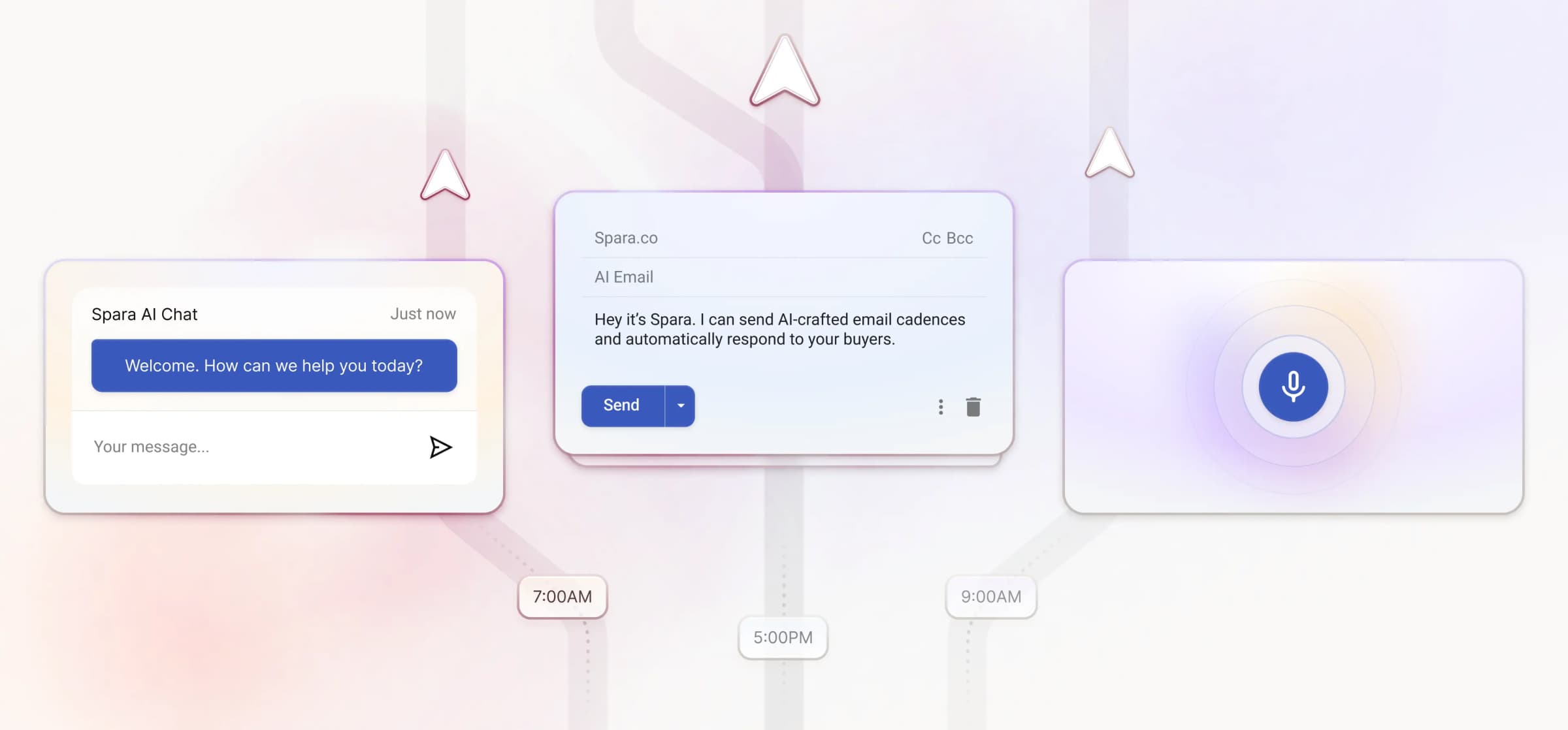
Spara chat, email, and voice agents
Alt text: Spara's multi-channel AI interface (Source)
Spara handles inbound engagement across chat, email, and voice using AI agents built after large language models. The platform qualifies leads during conversations, answers prospect questions in real time, and books meetings directly on your sales team's calendar.
Because Spara was designed specifically for AI-native workflows, agents learn from your sales conversations and documentation rather than requiring manual configuration of decision trees and routing rules.
Pros
Customers report 2 to 3x increases in qualified meetings with deployment in days rather than months.
Multi-channel context retention means prospects don't repeat information when switching from chat to email to voice.
Usage-based pricing scales with conversation volume rather than headcount, so adding team members doesn't automatically increase platform costs.
AI agents adapt to conversation paths and improve over time without maintaining scripts or decision trees.
SOC 2 compliant with enterprise-grade security and data protection built into the platform.
Agents can display product demos, documentation, and technical resources directly within conversations to answer detailed questions without forcing prospects to navigate away.
Lead enrichment combined with full conversation history creates comprehensive sales dossiers that sync automatically to your CRM, so your reps walk into calls already knowing what matters to each prospect.
Cons
Newer platform compared to enterprise incumbents.
Best suited for inbound-focused motions rather than extensive ABM campaign orchestration requiring complex account hierarchies.
Best for
B2B SaaS companies where speed-to-lead directly impacts win rates and teams that need to scale conversion without proportionally scaling headcount or technical resources. Also ideal for teams looking for a long-term platform solution with agents that can support the entire sales cycle, not point solutions.
2. Drift
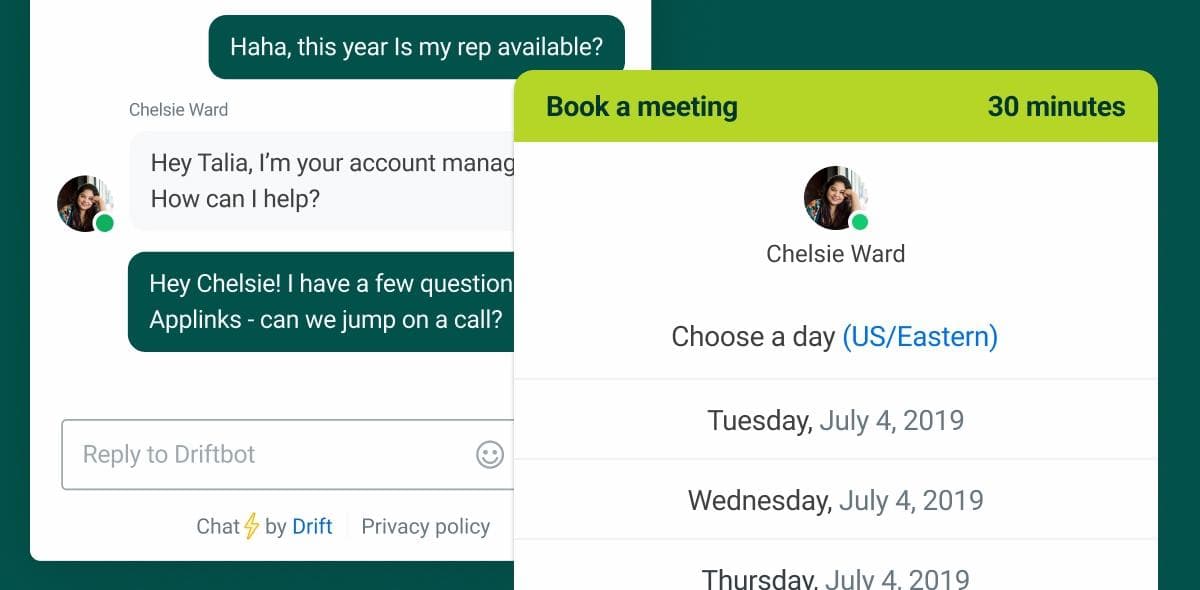
Drift conversational interface
Drift pioneered conversational marketing and remains popular among enterprise teams with established sales development representative (SDR) coverage. After Salesloft acquired the platform in 2024, Drift integrated deeper sales engagement features alongside its chat and routing capabilities.
The platform handles chat-based conversations while integrating with your existing tech stack, with a playbook that follows rules-based logic for different visitor segments and account tiers.
Pros
Strong brand recognition with an extensive customer base provides peer examples and best practices.
Playbooks offer granular customization based on visitor behavior, firmographics, and account data.
Account-based marketing features identify high-value prospects.
Cons
AI functionality remains limited; most automation relies on if/then playbook rules rather than adaptive intelligence.
Implementation takes weeks to months compared to AI-native platforms that deploy in days.
Responses follow predetermined decision trees that break down when prospects ask unexpected questions, requiring SDRs to step in and handle edge cases manually.
Security breach and data security concerns have raised questions about platform reliability.
Best for
Enterprise companies with established SDR teams who can supplement playbook limitations with human coverage, and teams already invested in Salesforce who need deep CRM integration for complex routing scenarios.
3. Intercom
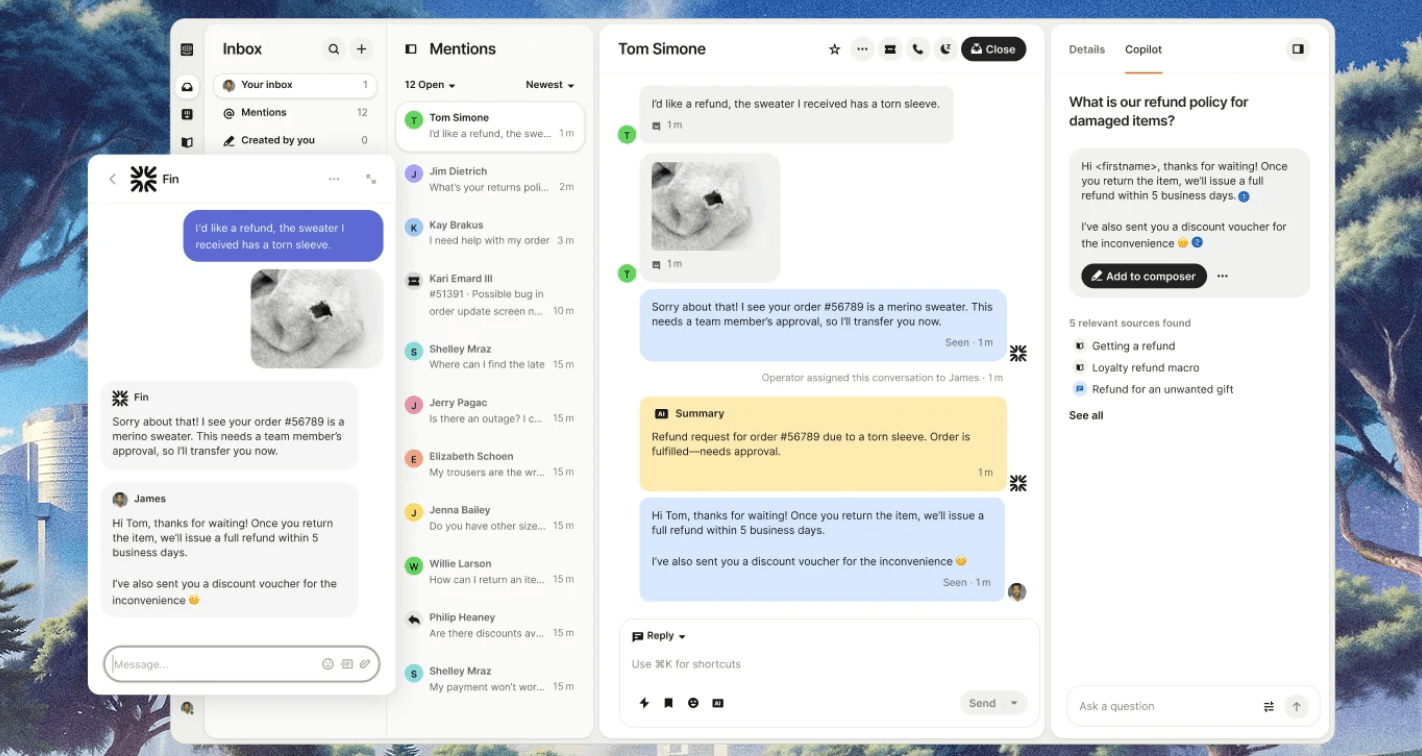
Intercom messenger interface
Intercom built its reputation on customer support rather than sales qualification. The platform excels at post-sale engagement, help desk ticketing, and customer success workflows. Its Fin AI Agent handles common support questions automatically, while the unified inbox consolidates conversations from email, chat, and social channels into one workspace for support teams.
Pros
Comprehensive support features include knowledge base management, automated ticketing, and multilingual capabilities.
Fin AI resolves routine customer questions without human intervention, learning from your help center content.
Strong integrations with customer success and support tools. Product tours and in-app messaging guide users through onboarding.
Cons
Built for support teams, not for generating qualified leads for B2B sales.
Limited in its routing flexibility for complex sales scenarios—the system prioritizes ticket resolution over pipeline conversion.
Qualification logic lacks the sophistication needed for enterprise sales motions with multiple stakeholders and buying stages.
Best for
Customer success and support teams managing post-sale relationships, or companies where help desk functionality and customer retention matter more than inbound lead conversion and sales pipeline generation.
4. Tidio
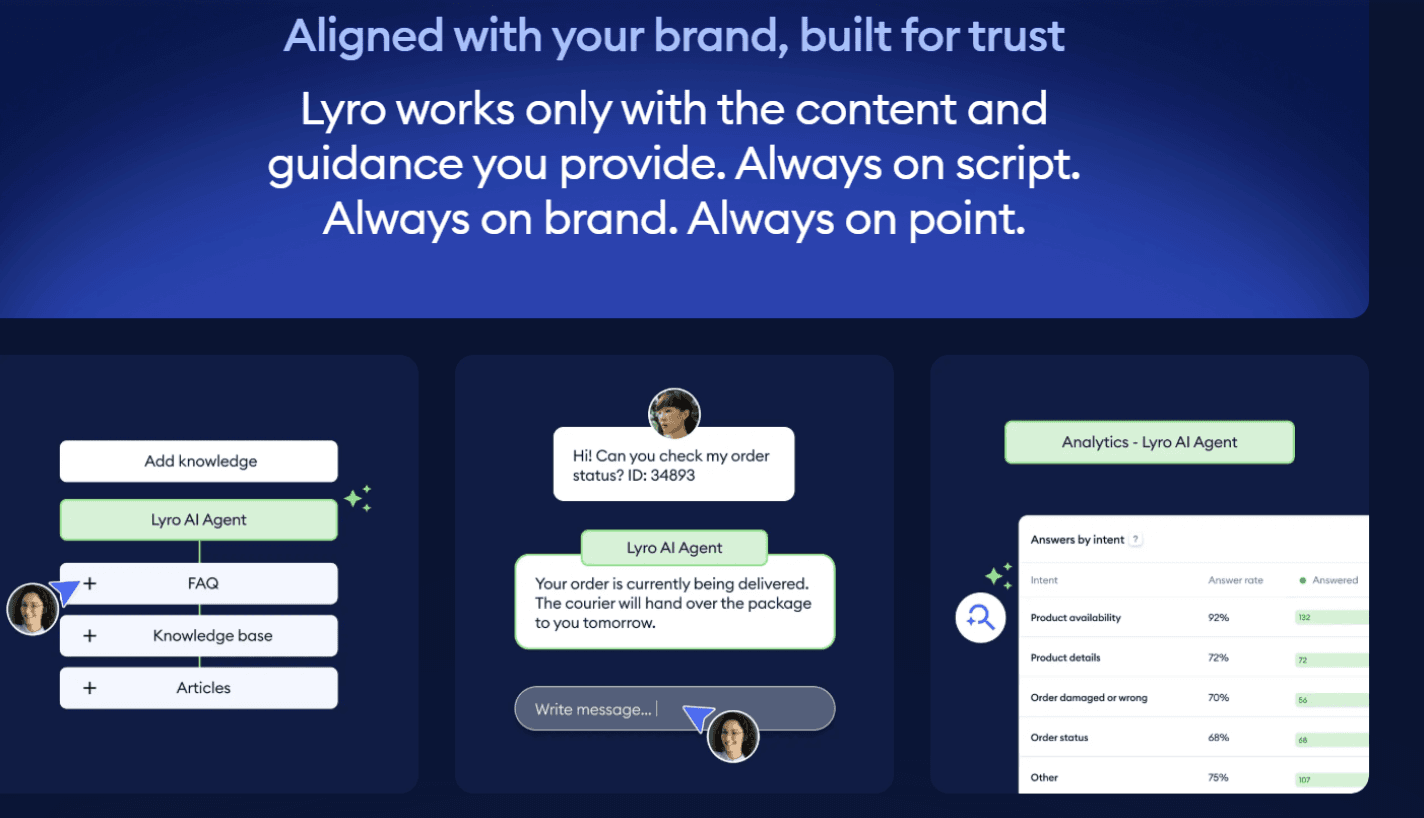
Tidio chatbot builder
Tidio targets small businesses and e-commerce stores looking for accessible live chat with basic automation. The platform offers a free tier with essential features, while paid tiers unlock AI capabilities through Lyro (conversational AI agent) and advanced chatbot flows. Setup takes minutes using drag-and-drop builders that require no coding knowledge.
Pros
Low barrier to entry with a functional free tier for small teams.
User-friendly visual flow builder makes bot creation accessible to non-technical users.
Quickly integrates with e-commerce platforms like Shopify, WooCommerce, and WordPress.
Multi-channel support includes Facebook Messenger and Instagram.
Cons
AI capabilities remain basic compared to enterprise platforms.
Flow-based chatbots follow predetermined paths rather than adapting to conversation context.
Conversation volume limits on free and starter tiers force upgrades as businesses grow.
Better suited for simple product questions than complex B2B qualification.
Best for
E-commerce stores and small businesses needing basic chat automation for product questions, order tracking, and simple customer inquiries without enterprise complexity or technical requirements.
5. Chili Piper
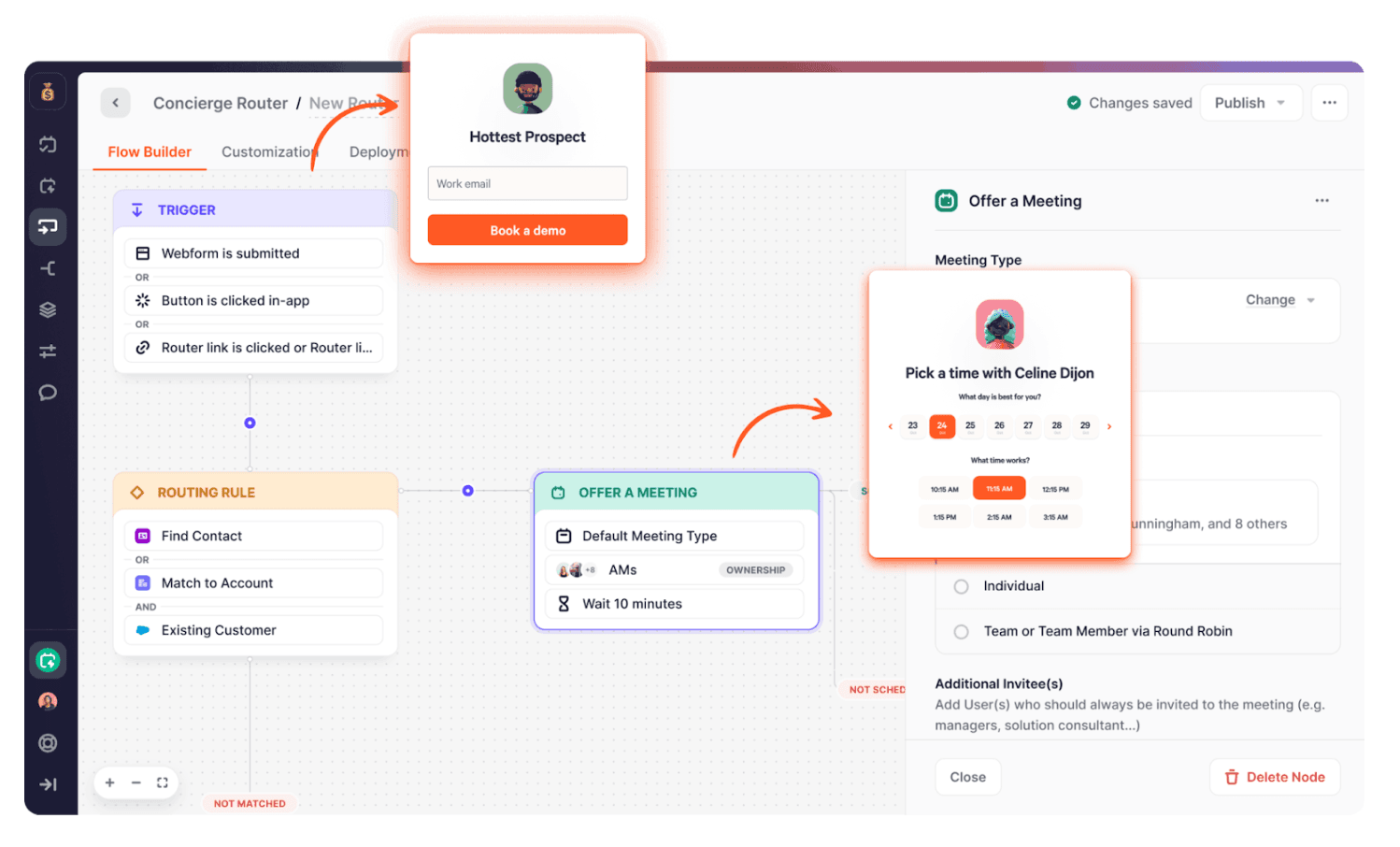
Chili Piper scheduling
Chili Piper specializes in scheduling automation and meeting routing rather than conversational engagement. The platform instantly routes form submissions to the right reps and books meetings without back-and-forth emails. The Form Concierge qualifies leads and schedules meetings directly from web forms, while Handoff manages transitions between SDRs and account executives.
The company recently launched Chat AI to add conversational capabilities alongside its core scheduling features, expanding beyond form-based workflows into real-time chat engagement.
Pros
Lets prospects book meetings instantly from any form or link, eliminating scheduling friction.
Strong Salesforce and HubSpot integrations sync meeting data automatically through native API connections.
Round-robin and skills-based routing distribute meetings fairly across teams.
Real-time calendar availability prevents double-booking and scheduling conflicts.
Cons
Admin interface requires training and ongoing management for complex routing rules.
Focused primarily on scheduling automation rather than conversational qualification.
Limited AI capabilities compared to platforms purpose-built for lead engagement.
Best for
Sales operations teams at mid-market to enterprise companies who need sophisticated meeting routing, calendar management, and form-to-meeting conversion more than conversational AI qualification.
6. Zendesk
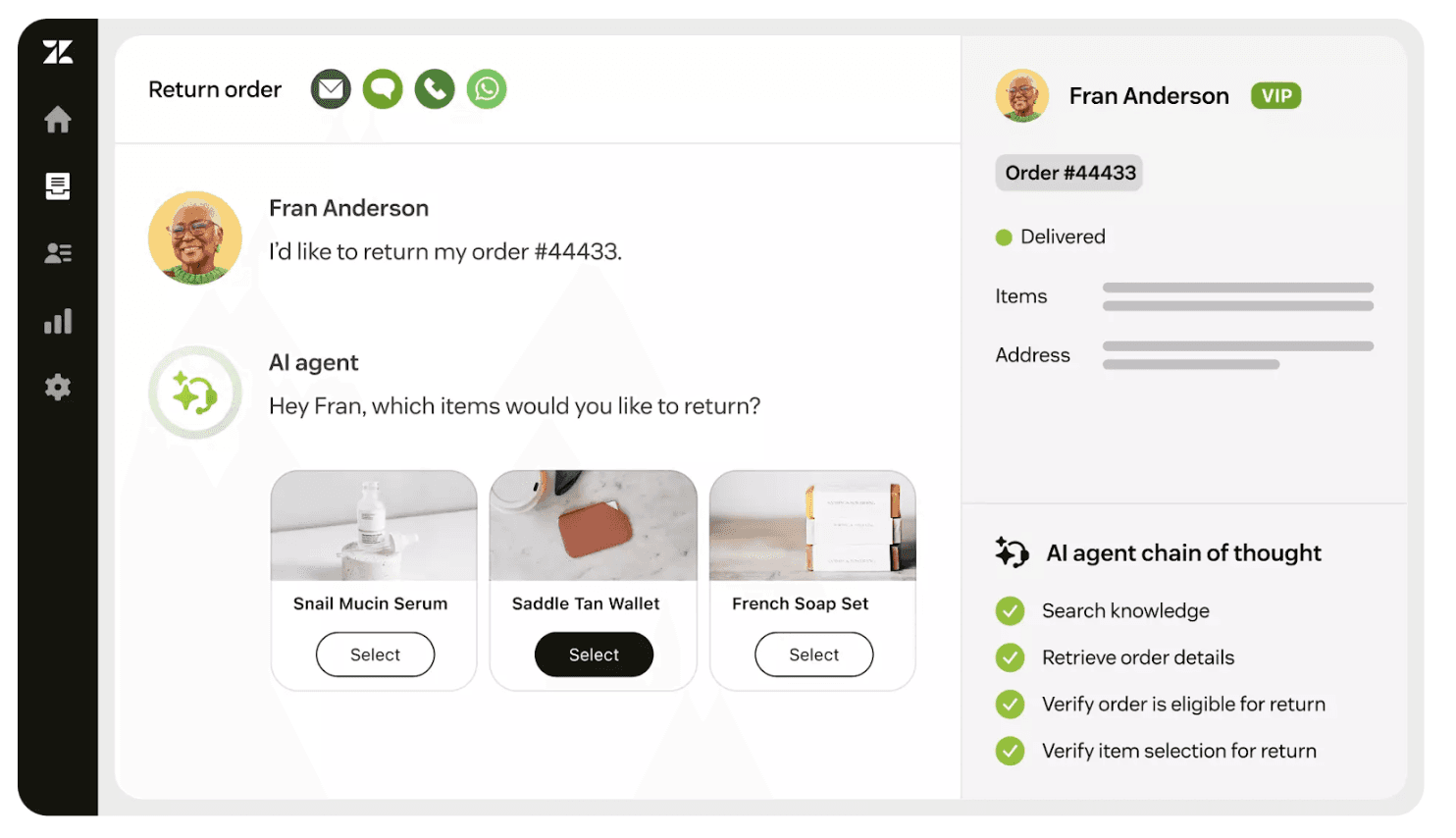
Zendesk support suite
Zendesk dominates the customer support software market with comprehensive ticketing, knowledge base, and omnichannel capabilities. The Suite combines support tickets, live chat, voice calls, and help center management into one workspace. Advanced plans add skills-based routing, custom analytics, and HIPAA compliance for regulated industries.
Pros
Mature platform with an extensive feature set across email, chat, voice, and social channels.
Robust reporting and analytics track team performance and customer satisfaction metrics.
Large ecosystem of marketplace apps and integrations.
Advanced automation handles ticket routing, prioritization, and escalation workflows.
Cons
Interface feels dated compared to newer platforms.
AI capabilities require add-ons even on higher tiers. It’s built for support ticket management rather than sales qualification and lead conversion.
Per-agent model makes team expansion expensive.
Best for
Large support teams needing enterprise-grade ticketing systems with strong SLA management, or companies where customer service infrastructure takes priority over sales conversion capabilities.
7. Docket.io
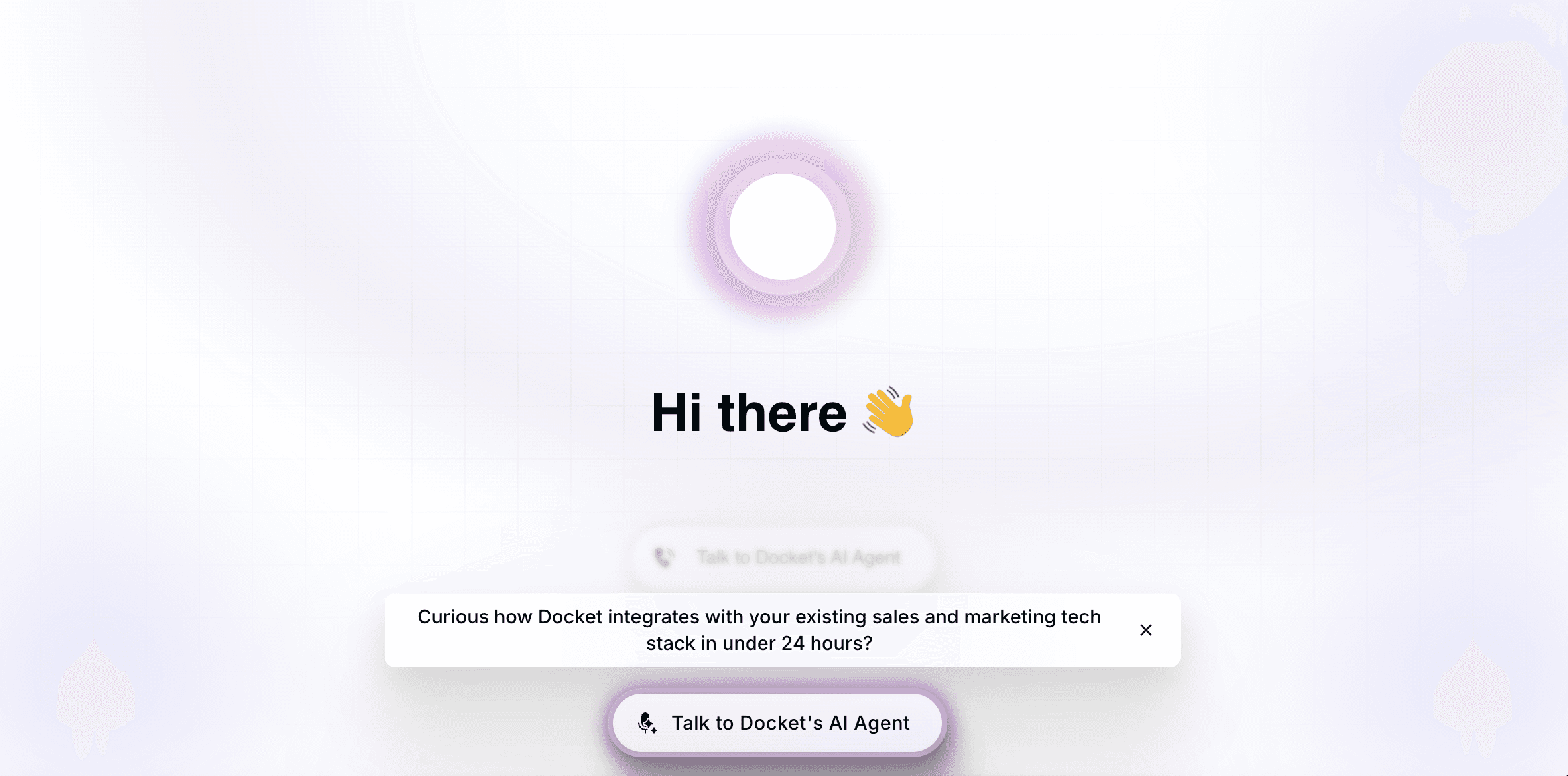
Docket AI Seller interface
Docket focuses on enterprise teams selling complex products that require deep technical skills and product knowledge. The system can display slides, videos, and technical documentation during conversations.
Docket's Sales Knowledge Lake ingests product documentation, sales materials, and past conversations to power two AI agents:
AI Sales Engineer (for internal team questions and RFP automation).
AI Seller (for website visitor engagement).
Pros
Handles complex technical questions that typically require sales engineers or product specialists.
Automates RFP and security questionnaire responses with high accuracy.
Multi-modal interface shows relevant documentation, demos, and technical specs contextually during conversations.
Fast deployment typically takes place within 24 hours. It is SOC 2 compliant with strong data security and customer environment isolation.
Cons
Purpose-built for enterprise use cases with technical products—may be overkill for simpler sales motions.
Since it’s a newer platform, it has a smaller customer base than established alternatives.
Focuses on product expertise rather than general lead routing.
Best for
Enterprise B2B companies selling technical products where buyers need detailed specifications, compliance information, solution architecture discussions, or technical validation before purchasing decisions.
8. Sales Ape
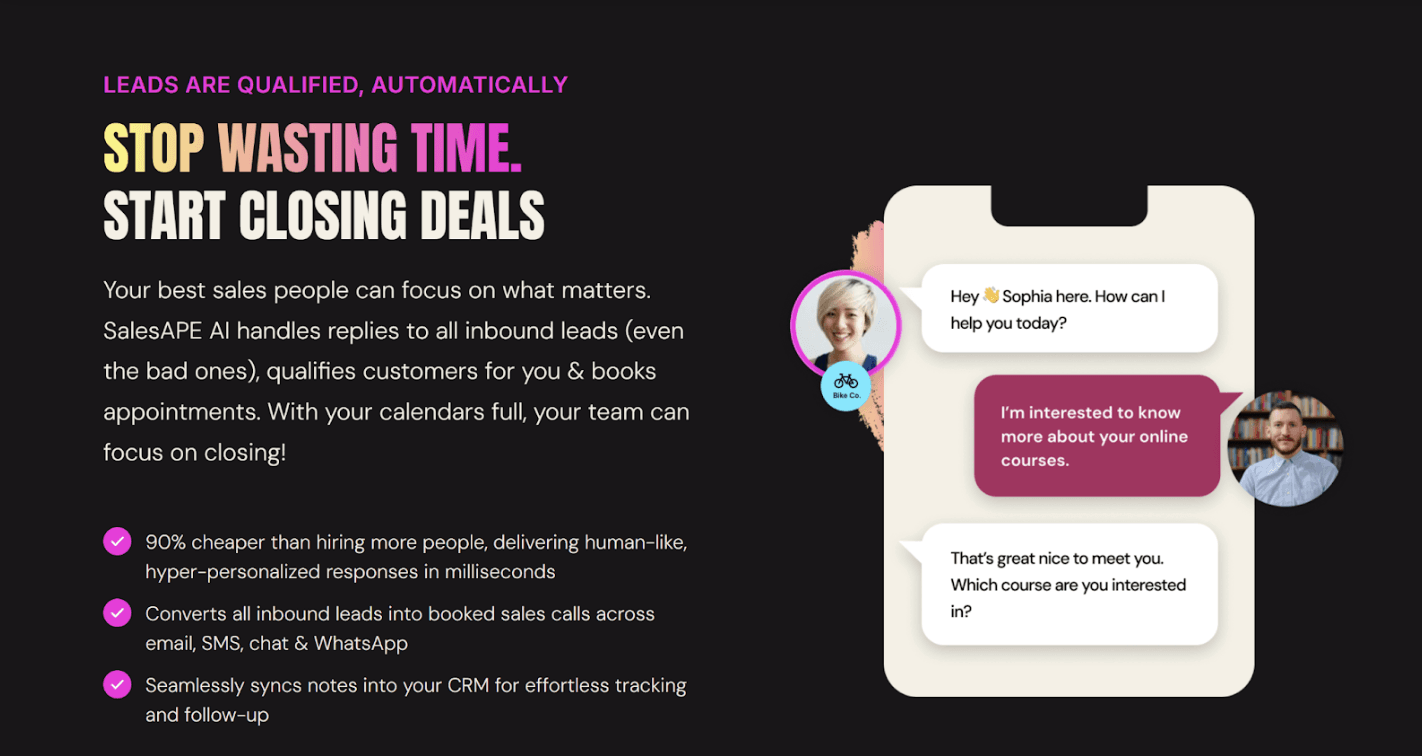
Sales Ape conversation dashboard
Sales Ape targets small to mid-sized teams handling high inbound volumes across multiple messaging channels, including WhatsApp, SMS, email, and web chat.
The platform qualifies leads through conversational AI, books appointments directly on calendars, and syncs conversation notes to CRM systems. Setup includes hands-on training to align AI agents with specific sales processes.
Pros
Lead engagement takes place across channels prospects use daily, including WhatsApp and SMS alongside traditional email and web chat.
CRM integration keeps conversation history synchronized for sales team follow-up.
Hands-on onboarding ensures AI agents match your qualification criteria and sales process.
Cons
Limited public information about specific integrations and advanced capabilities.
Smaller platform that lacks extensive enterprise customer proof points.
Best suited for straightforward qualification conversations rather than complex multi-touch enterprise routing scenarios.
Best for
Small businesses and service providers managing high inbound inquiry volumes who need fast lead engagement across multiple messaging channels without enterprise-level complexity or technical requirements.
Why Spara is the best Qualified alternative
Qualified built the blueprint for conversational sales platforms, but platforms built after LLMs solve problems that legacy architecture can't address. Spara's advantage comes from being purpose-built for adaptive AI rather than retrofitting capabilities onto older infrastructure.
The results prove the difference. Fama increased qualified meetings by 2.5x in their first month, while Rho achieved 3.1x higher form-to-meeting conversion and went live in days rather than quarters. These aren't outliers: customers consistently see up to 3.1x lift in qualified meetings because Spara engages prospects when intent peaks rather than after they've moved on.
Speed-to-lead determines whether you capture or lose deals. Spara's inbound SDR automation responds to chat instantly and follows up on email within 10 seconds, maintaining 24/7 coverage without adding headcount.
The platform integrates with any CRM you use (including Salesforce, HubSpot, and Marketo) and your existing GTM stack, and maintains SOC 2 and GDPR compliance with customer data encrypted and isolated in your environment.
Choosing the right Qualified alternative for your team
What really matters is whether your platform of choice converts more of your inbound traffic into your pipeline.
Your prospects are comparing vendors right now, and whoever responds first usually books the meeting. If your platform takes 15 minutes to route a lead while competitors respond in seconds, you've already lost. You also lose if the conversation fails to answer their questions, sounds robotic, frustrates them with rigid scripts, or can't surface product demos and documentation when prospects need to see how your solution works.
Flexibility is next—can the system adapt when your qualification criteria change, or do you need to rebuild workflows from scratch? Then, look at conversion metrics from current customers, not engagement stats or chat volume. 57% of B2B buyers expect positive ROI within three months, and 11% expect immediate returns.
Qualified pioneered this space years ago, but AI has evolved faster than platforms built on older infrastructure can keep up.
Chat with Spara to see how revenue teams engage, qualify, and convert faster without adding headcount.

Lauren ThompsonHead of Marketing, Spara
FAQs
Related posts
View all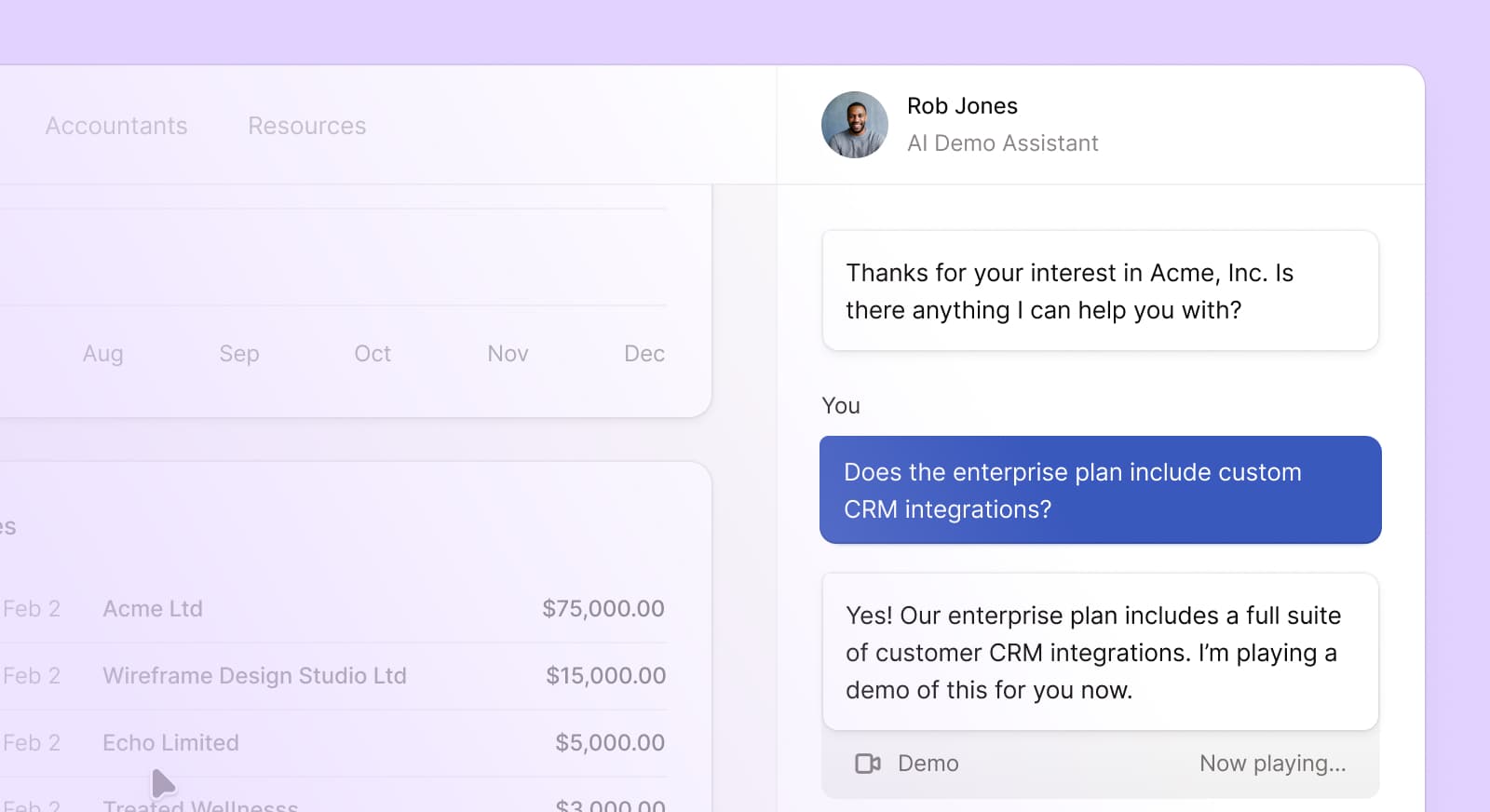
GTM
AI SDRs: The future of sales development
Traditional SDR models can't scale. AI SDRs automate qualification and routing to convert 3x more inbound traffic without adding headcount.
Feb 24, 2026
•
10 min read

GTM
How Kathleen Booth is solving the buyer intent decay problem
Kathleen Booth explains why intent data fails when teams can't act fast enough, and how real-time AI closes the gap before buyers move on.
Feb 19, 2026
•
6 min read
GTM
Corrina Owens on fixing what's broken in GTM
Corrina Owens shares how to streamline your GTM motion by fixing lead routing, simplifying buyer segmentation, focusing on high-impact signals, and embedding marketing in the deal cycle.
Feb 11, 2026
•
6 min read
Sign up for the latest from Spara
Subscribe to get more GTM insights straight to your inbox.