

Inbound sales have never moved faster, and teams are feeling the pressure. Buyers want answers instantly, yet most companies struggle to keep up with the volume of inquiries coming in every day. That gap between interest and follow-up is where sales cycles slow down, and revenue gets left on the table.
AI sales assistants are stepping in as a smarter way to close that gap. They help automate critical steps across the sales process, such as personalizing the real-time engagement or outreach campaigns, qualify leads, enrich data, or route leads to the right sales agent. This smart sales automation moves the funnel forward, letting sales teams focus on high-value tasks like building relationships and closing deals.
Let’s take a look at how to use an AI sales assistant to strengthen each stage of your sales funnel. We’ll also highlight the top AI sales tools that can streamline your workflow.
What is an AI sales assistant?
AI sales assistant software uses machine learning and generative AI technologies to automate some parts of the sales process so your sales team can focus on high-value tasks. This improves the sales reps’ efficiency while also delivering an optimal experience to buyers.
These tools automate routine tasks such as data entry, scheduling calls, and sending tailored follow-ups. They also support higher-value tasks like generating leads, qualifying inbound prospects, gathering key details before demo calls, and summarizing conversations.
The new sales imperative: Speed-to-lead and speed-to-value
The faster you engage a lead, the more likely they are to convert. When a prospect requests a demo, their interest is at its peak. In that moment, your team needs far less effort to move the conversation forward compared to a buyer who’s already lost interest or found an alternative.
For years, the industry held onto the five-minute rule. Delaying more than five minutes to follow up reduces the chances of conversion by 80%. The faster you respond, the better. In fact, responding within seconds can increase conversion rates by up to 391%.
But speed alone isn’t enough—buyers want personalized, contextual replies to what they asked and where they are in their journey. Traditional automation tools can send an instant email or trigger a workflow after a form fill, but they can’t hold a meaningful conversation or adapt to a buyer’s intent in real-time.
That’s where artificial intelligence can change the game. Because it trains on your company’s content and adapts to real buyer behavior, it can tailor responses, generate personalized outbound messages, enrich buyer data instantly, or qualify inbound interest within seconds, delivering both speed-to-lead and speed-to-value.
TinyMCE, a popular text editor, experienced this in action. After replacing their static forms and delayed follow-ups with always-on, AI-led conversations powered by Spara, they saw three times more MQLs and generated over $1M in pipeline per quarter.
How AI sales assistants actually work
AI sales assistants automate different parts of the sales process by learning from the data your company already produces. They use your website content, product documentation, CRM fields, past outreach, call recordings, and sales workflows to understand how your team sells and how buyers move through your funnel.
These systems can support the sales funnel in multiple ways depending on the assistant type. Some tools enrich lead data or generate outbound sequences. Others analyze sales calls, summarize meetings, create follow-up messages, or automate SDR workflows. Conversational AI assistants add another layer by engaging prospects directly across chat, email, or voice.
Spara is one example of a conversational AI sales assistant that learns how qualified buyers speak, which questions signal intent, and what information leads people to take the next step. As behavior shifts, the system adapts in real-time, getting better at qualifying leads, guiding conversations, and moving buyers toward revenue outcomes.
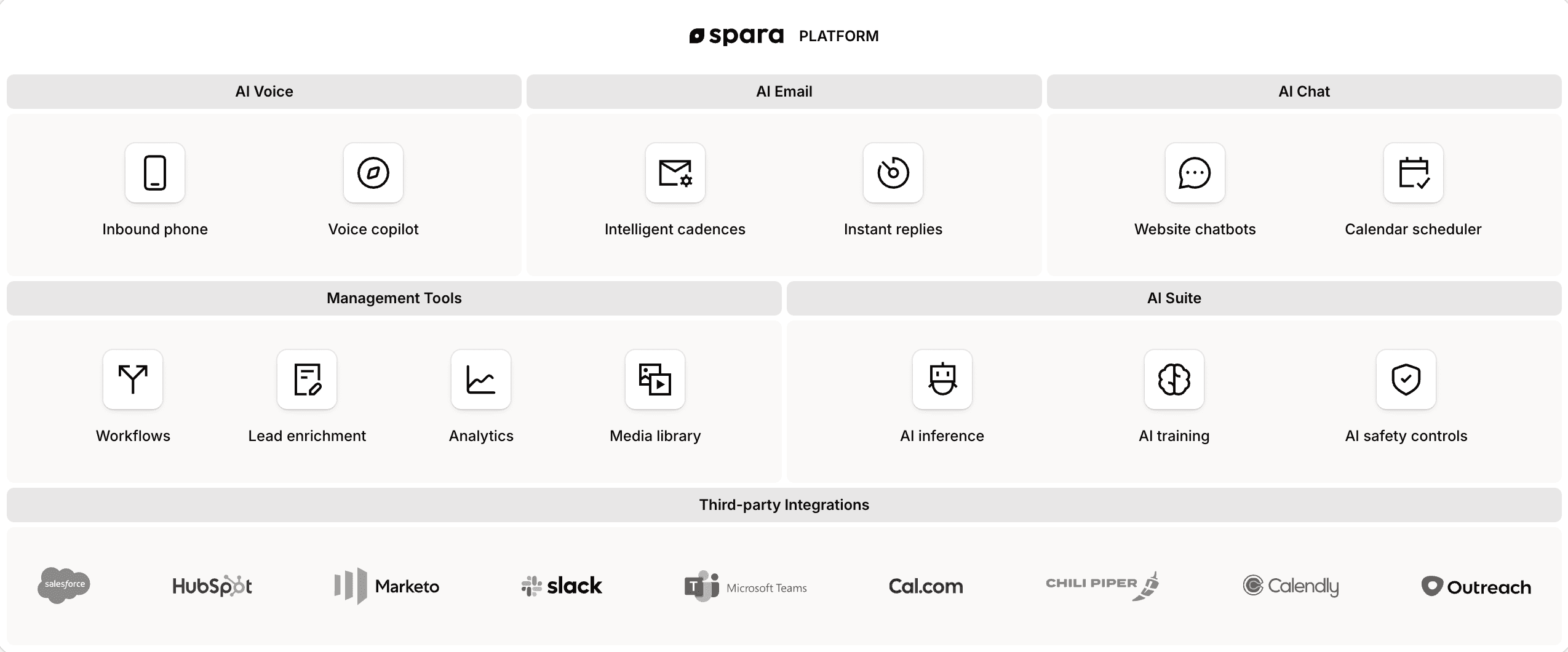
Spara platform
Spara AI provides AI agents across email, chat, and voice. Its core AI model pulls context from every interaction across channels, so a conversation that begins on your website can continue over email or transition to voice without breaking context.
This represents one way an AI sales assistant can operate, and we’ll also see tools that automate and enhance other parts of the sales process.
The top AI sales assistant tools to know
Many legacy sales tools still rely on predefined rules, rigid workflows, or single-channel execution. Modern AI sales assistants take a more adaptive approach, using data and learning to automate different parts of the sales process. Each platform focuses on a specific area of the workflow, from enrichment to outbound to call intelligence to real-time engagement. Here are the top AI sales assistant tools to know and where each one stands out.
1. Spara
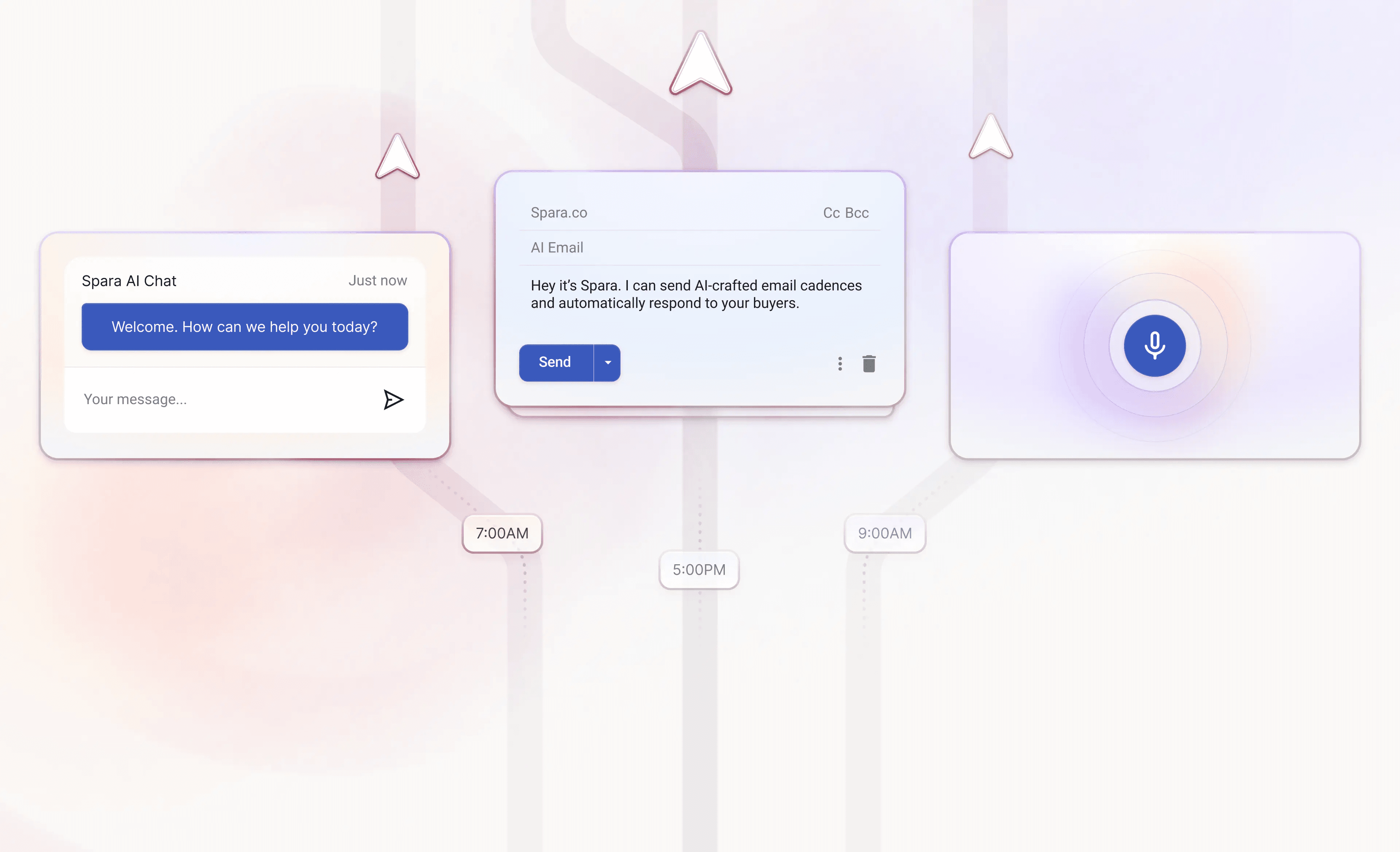
Spara is an AI-native GTM platform that learns from your company’s data and builds custom AI agents that drive personalized, context-rich conversations.
It allows you to deploy AI agents for real-time chat, email engagement and follow-ups, and voice calls. Because all channels share the same core AI engine, conversations stay continuous and connected as buyers move across these channels.
Spara qualifies leads using real-time behavior and historical patterns, and adapts as it learns from ongoing buyer interactions. It also captures key details during each conversation and passes them to your sales reps, so they enter demo calls with full context and a clear plan to increase conversion rates.
Best for: Real-time inbound qualification and multichannel buyer engagement
2. Regie.ai
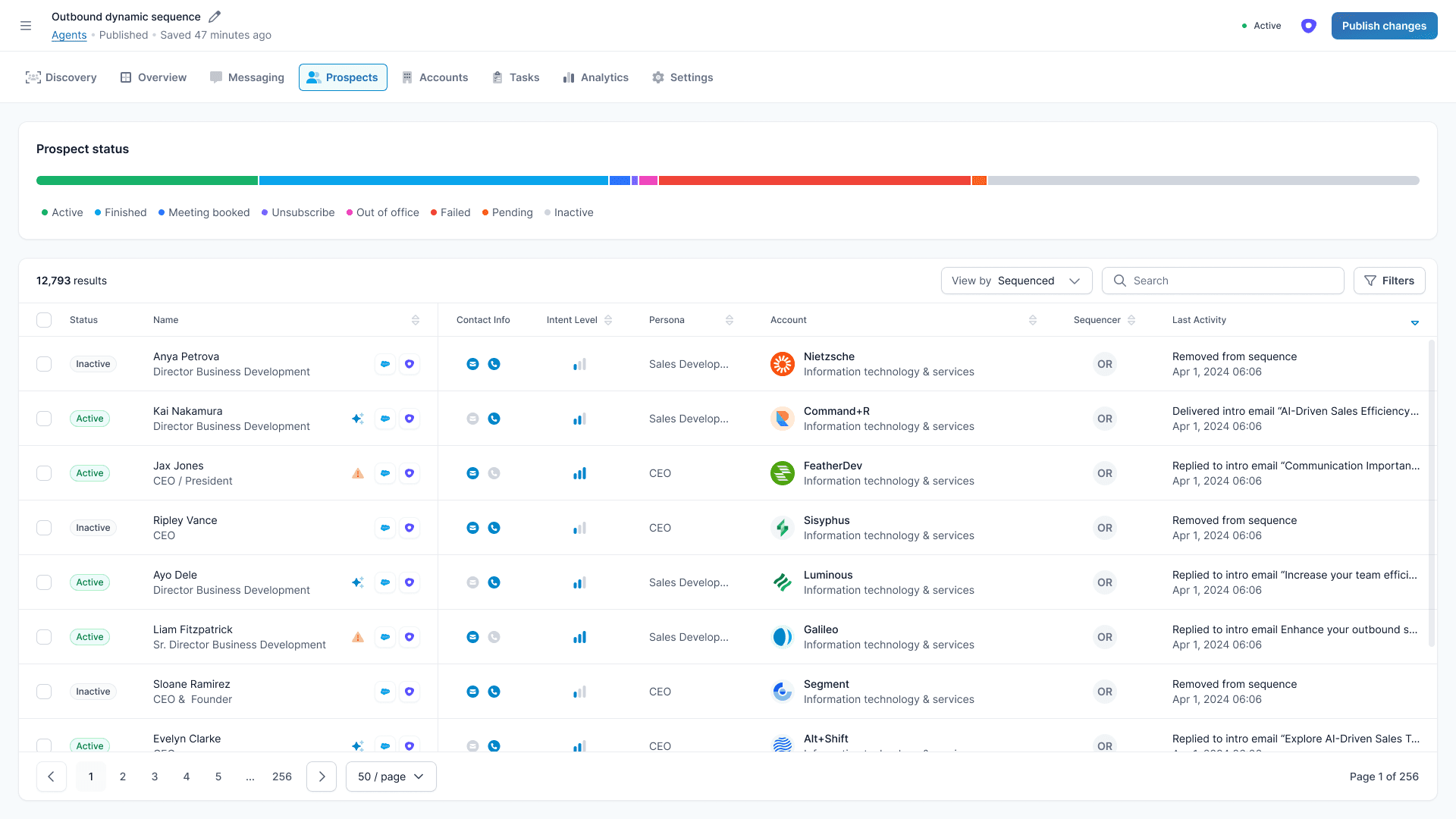
Regie.ai is an AI-driven outreach platform that helps teams source targeted prospects and enrich lead data for more effective outbound.
It’s efficient for cold emailing, creating tailored email sequences, LinkedIn messages, and full outreach campaigns. Regie.ai’s A/B testing capabilities help sales leaders test variations and make data-driven decisions.
Reps also get a central dashboard that displays their tasks at hand, including emails to send, calls to make, and others. However, the analytics are still limited according to some users. The platform could improve further by offering insights that help refine outreach sequences based on actual performance data.
Best for: AI-powered outbound sequencing and prospecting automation
3. Avoma
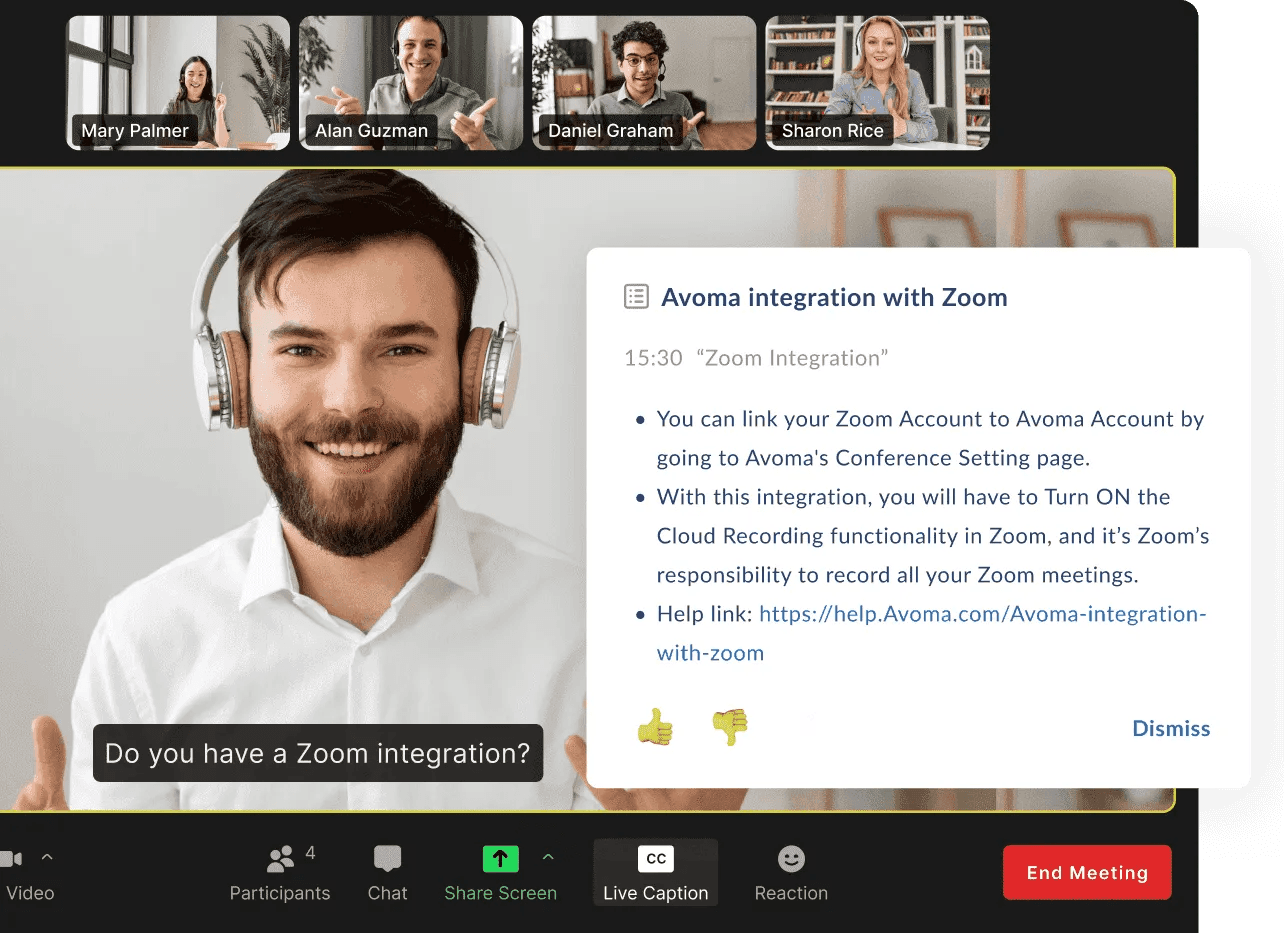
Avoma is an AI meeting assistant designed to optimize how reps schedule, conduct, and follow up on meetings.
Its auto note-taking feature sits on calls, generates summaries, and captures action items, pain points, and key discussion points for later review. After sales calls, it can draft follow-up emails tailored to the conversation.
Avoma also tracks talk-to-listen ratio, deal risk signals, filler words, customer sentiment, and other conversational trends. Teams can use these valuable insights to refine their communication and strengthen customer relationships.
Best for: Meeting intelligence, call summaries, and post-call workflow automation
4. DialPad
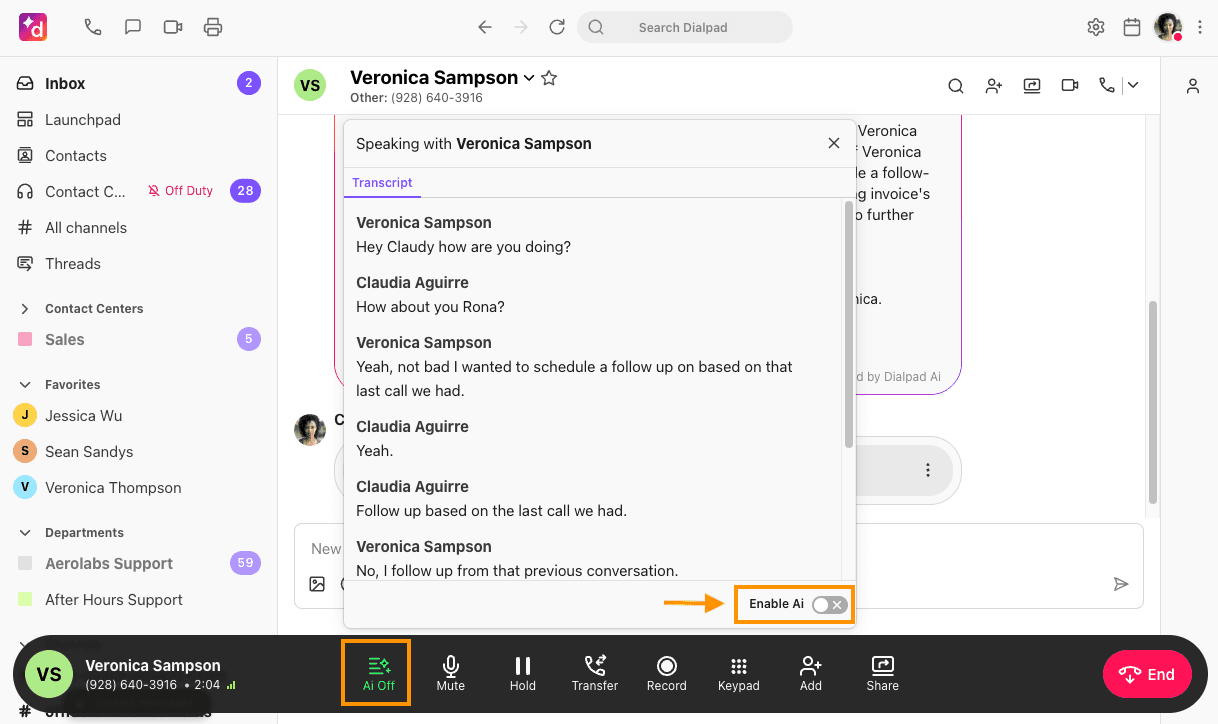
Dialpad is a business communication platform that unifies voice calls, video meetings, messaging, and SMS in a single application. The platform provides live transcription, sentiment tracking, and automated call summaries.
When you make or receive a call, Dialpad automatically pulls your full communication history with that contact, including previous calls, message threads, and AI-generated summaries and action items. Your sales teams never enter a call blind; they operate with full context and deliver a personalized experience to clients.
While Dialpad excels at call intelligence and coaching, it’s not a full AI sales assistant that can engage buyers across email, chat, or other channels.
Best for: Call intelligence, transcription, and conversation insights
5. Clay
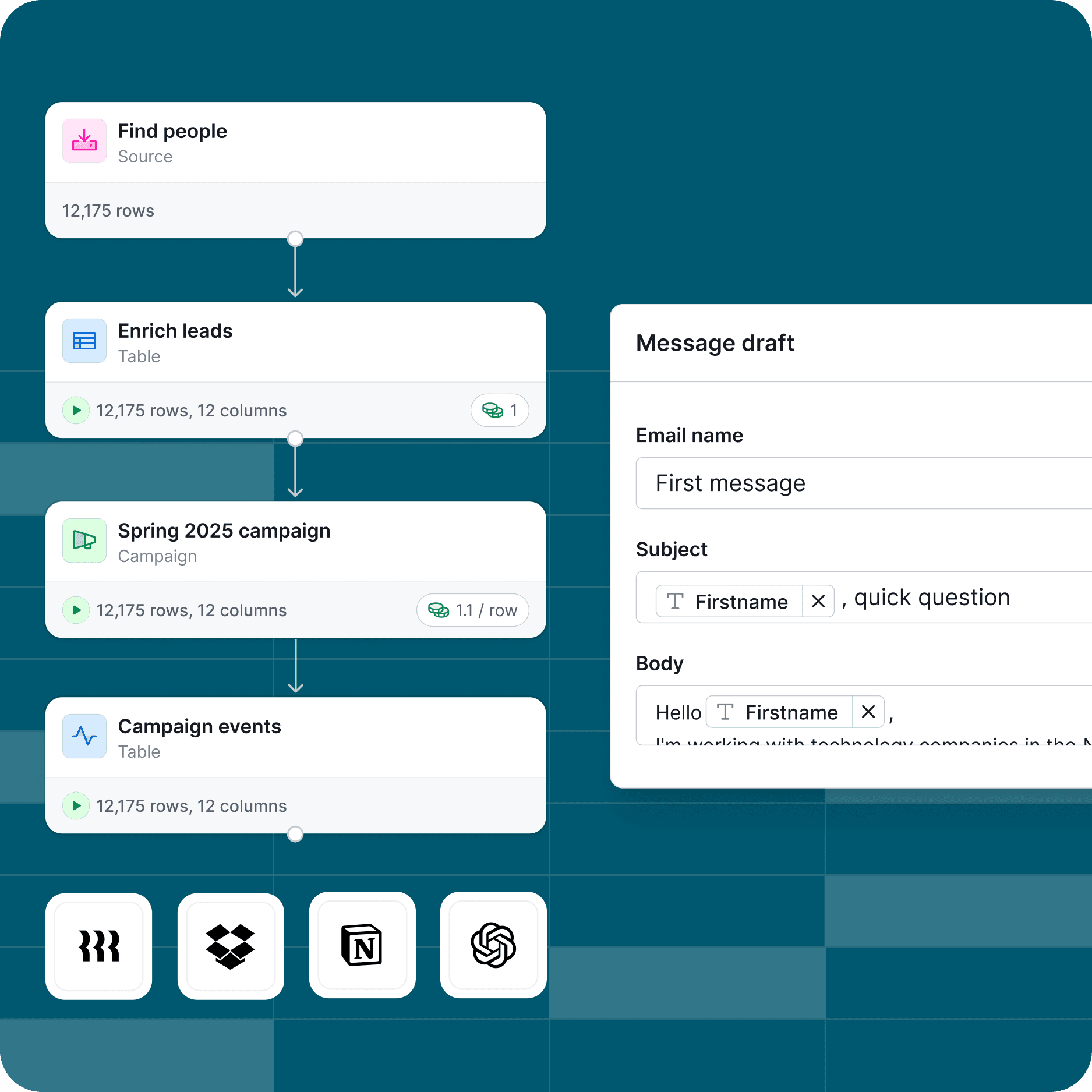
Clay is an intelligent data enrichment platform that consolidates contact data, enriches it with information from more than 50 sources, and uses AI to generate personalized email sequences.
The platform lets you search by job title, industry, company size, and other attributes to build targeted lead lists. It then creates outbound copy tailored to each audience segment.
Clay doesn’t directly execute email campaigns, however, but integrates with tools like Smartlead to schedule and automate those sequences.
Best for: Data enrichment and building high-quality lead lists at scale
6. Lavender
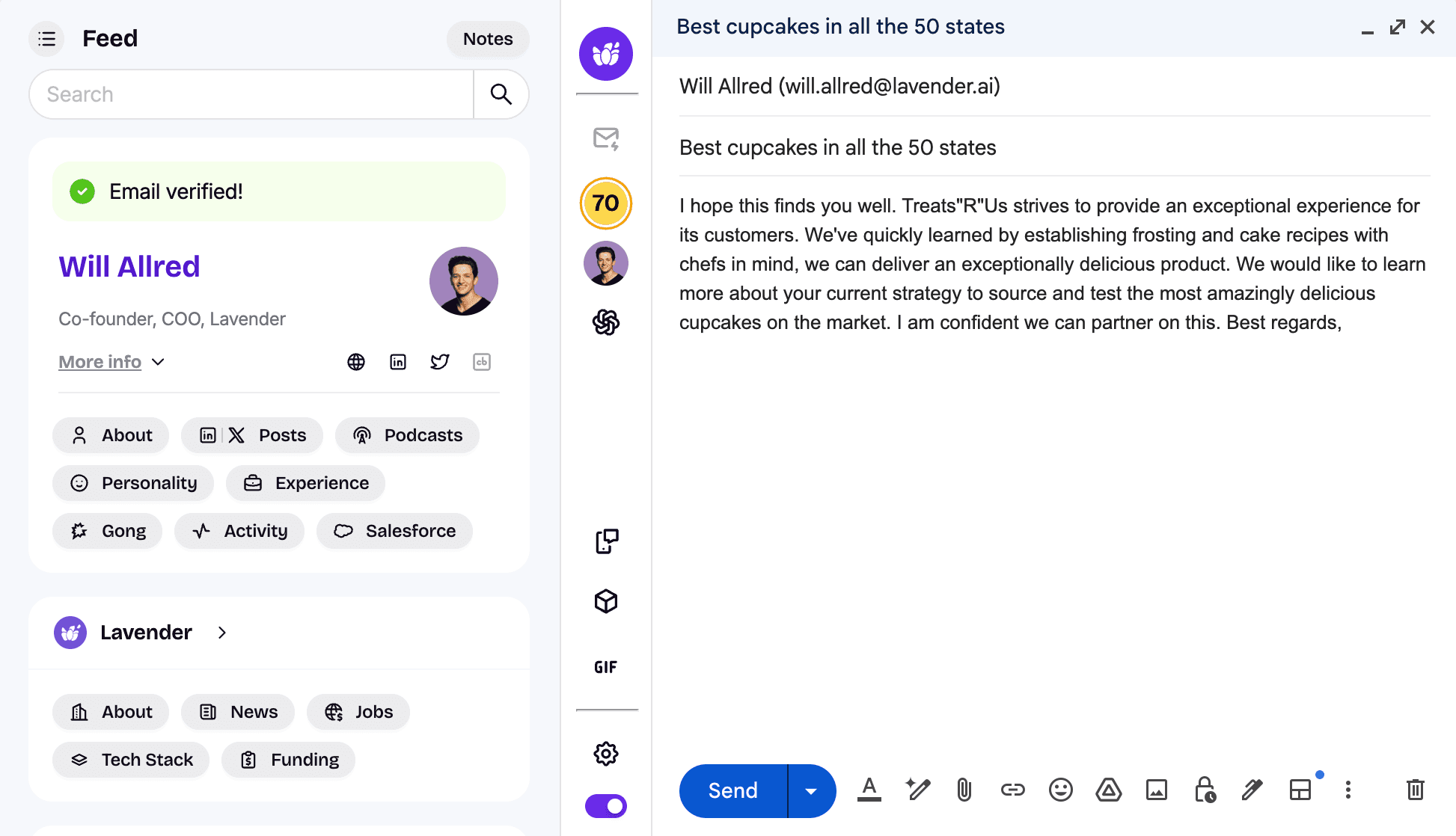
Lavender is an AI email assistant that integrates with popular email platforms like Outlook and Gmail to provide real-time guidance as you write sales emails. Its focus is on helping teams craft clearer, more personalized messages that drive higher reply rates.
Lavender’s AI trains on large email datasets and communication philosophy to improve how reps communicate with prospects and build better client relationships.
The platform analyzes emails for sentence length, complexity, mobile readability, and other metrics. It then scores the message from 1–100 and recommends edits that help reps reach higher-performing scores and increase reply rates.
Best for: Improving email quality and increasing reply rates
7. Blaze AI
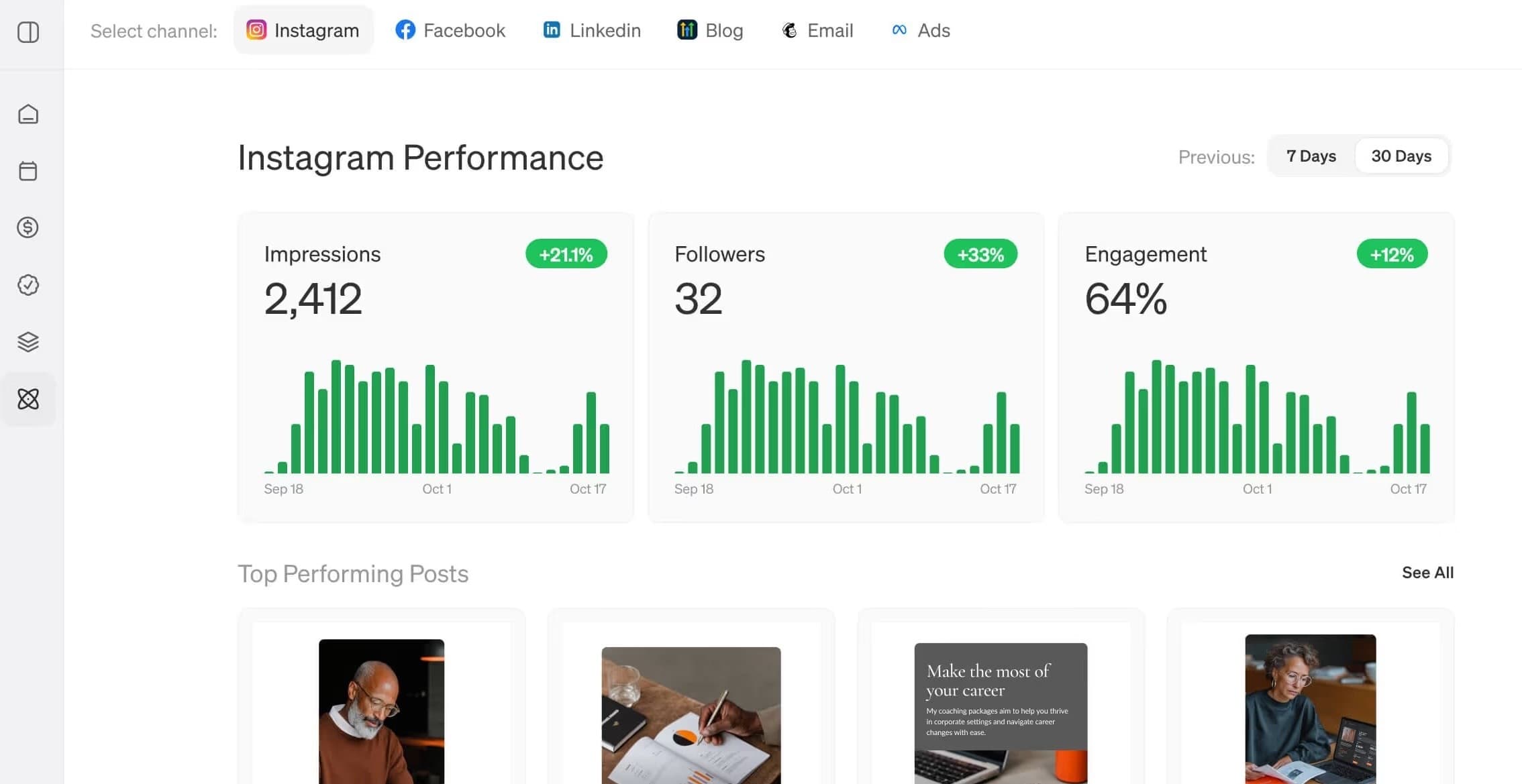
Blaze AI is a content creation platform that helps teams produce high-quality content quickly. It generates social media posts, blog drafts, email newsletters, and other written content without requiring teams to write manually.
Blaze AI promises brand voice customization to maintain consistency across all content marketing assets. It adapts to your brand voice by analyzing your existing materials, using that style to produce new content.
Best for: On-brand content creation across marketing and sales
How to choose between these tools?
When choosing a leading AI tool to streamline different sales processes, focus on whether the tool provides measurable pipeline growth. Can it drive revenue, increase conversion rates, or lift customer retention?
To evaluate that, check what its users say. Do they talk about real outcomes or vanity metrics? Spara users like FAMA saw a 2.5x increase in meeting conversions and a 32% lift in SQL conversion, which shows a true AI assistant impact in numbers.
If your goal is to generate a measurable pipeline—not just automate messages—focus on tools that can prove lift, not promise it.
AI sales assistants in action: Key use cases
Modern revenue teams are increasingly relying on AI sales assistants to handle high-volume customer interactions and deliver consistent experience across channels. Below are the most impactful ways AI is reshaping the sales workflow today.
Inbound lead qualification
AI sales assistants automate inbound qualification by analyzing real-time behavior and buying signals. They identify high-intent buyers during the conversation and route them to the right sales agent or schedule a demo instantly.
Multi-channel engagement
Customers may start a conversation on chat, continue it over email, and follow up by phone. An AI sales assistant needs to keep that context connected so every interaction feels consistent and personalized.
Better SDR productivity
AI removes repetitive tasks from SDR workflows. It handles early triage, collects qualification signals, answers common questions, and books meetings automatically. Reps can spend less time engaging every visitor manually and more on high-value conversations that close deals.
After-hour coverage
AI sales assistants work 24/7, engaging customers even when your team is offline. They respond to queries, qualify leads, send follow-up messages, and schedule meetings overnight or across time zones. This keeps the sales pipeline moving and ensures high-intent buyers never have to wait for business hours.
Spara delivers all these capabilities through one connected system. Its AI-native platform delivers consistent experience across chat, email, and voice, qualifies inbound buyers in real-time, and removes the manual SDR workload.
Turning AI into real pipeline impact
AI assistants are reshaping how revenue teams capture demand, qualify interest, and keep customers engaged. The most effective teams now use a hybrid approach, where AI handles early sales activities such as lead qualification and initial engagement, and human reps step in later to focus on high-value leads and close deals.
Spara helps teams put this strategy to work immediately. As an AI-native GTM platform, it unifies your channels, qualifies leads in real time, and personalizes every buyer touchpoint. The result? More inbound opportunities that actually turn into pipelines.
See how Spara can accelerate your pipeline—book a demo today.

Lauren ThompsonHead of Marketing, Spara
FAQs
Related posts
View all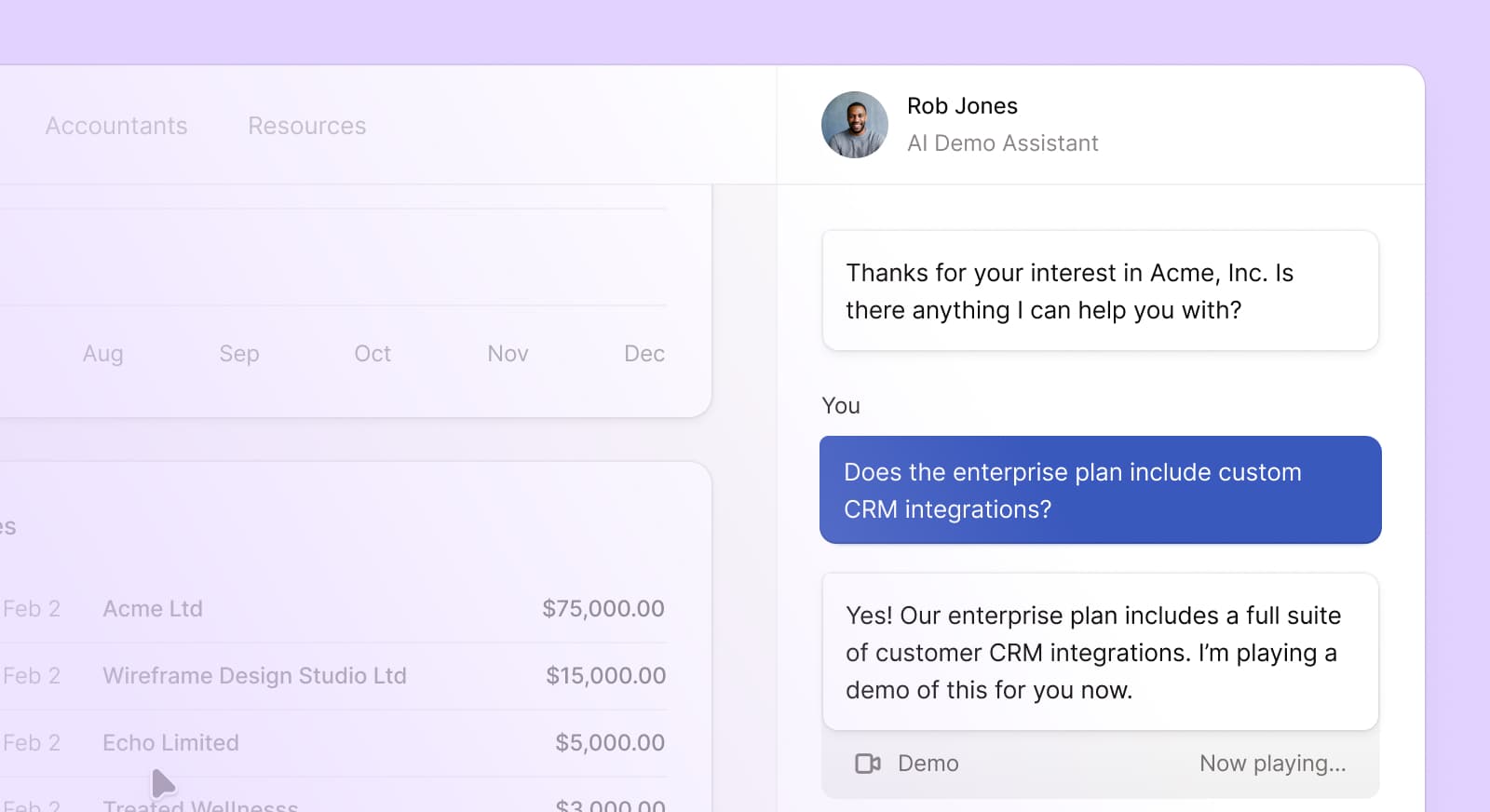
GTM
AI SDRs: The future of sales development
Traditional SDR models can't scale. AI SDRs automate qualification and routing to convert 3x more inbound traffic without adding headcount.
Feb 24, 2026
•
10 min read

GTM
How Kathleen Booth is solving the buyer intent decay problem
Kathleen Booth explains why intent data fails when teams can't act fast enough, and how real-time AI closes the gap before buyers move on.
Feb 19, 2026
•
6 min read

GTM
Corrina Owens on fixing what's broken in GTM
Corrina Owens shares how to streamline your GTM motion by fixing lead routing, simplifying buyer segmentation, focusing on high-impact signals, and embedding marketing in the deal cycle.
Feb 11, 2026
•
6 min read
Sign up for the latest from Spara
Subscribe to get more GTM insights straight to your inbox.