

A prospect lands on your site, asks a few questions, and fills out a form. By the time your team follows up, they’re already talking to your competitor.
Today’s buyers move fast, comparing vendors in real-time, and whoever responds first with relevant answers captures their attention.
The problem isn’t traffic—marketing teams already spend heavily to attract visitors—it’s how quickly and effectively you engage those visitors. Lead qualification that relies on outdated frameworks can’t deliver personalized engagement and misses key signals of modern buyer behavior.
You need lead qualification software built for modern GTM teams and today’s customers. The right AI-native platform learns from real buying signals and instantly identifies high-quality leads. Here, we compare the top eight lead qualification platforms, explore their pros and cons, and determine who they’re best suited for.
Why traditional lead qualification is broken, and what modern software should do
Today’s customers interact across multiple channels, including chat, email, and voice. But traditional systems rarely connect those touchpoints.
Every channel starts from scratch, making buyers repeat information they’ve already shared. This frustrates potential customers, hurting conversion rates. As a result, marketing teams end up spending heavily on lead generation that never converts into sales-qualified leads (SQLs).
The solution isn’t just faster automation; it’s smarter automation. Modern GTM teams need AI systems that instantly engage new leads with personalized responses and remember context across channels. So, when a lead calls after chatting, the conversation picks up right where it left off.
Unlike legacy chat tools that simply collect contact info with preset questions, AI-native platforms understand context, detect intent, and guide prospects toward conversion. Modern software should also apply AI-driven intent detection and scoring to qualify leads more accurately.
For example, Spara AI learns from your company’s data, identifies qualification patterns, and recognizes similar signals in new inbound leads. This helps your team focus on prospects most likely to close deals, turning more inbound traffic into revenue.
Comparing the top 8 lead qualification software options
| Best for | Supported channels | Pricing | AI-capabilities |
Spara | AI-native GTM automation | Chat, email, voice | Custom, affordable pricing | Custom AI agents trained on your company data |
Drift | Conversational marketing | Chat-only | Starts around $2,500/month; can get expensive with per-seat pricing | Script-based chat automation with basic AI features |
Qualified | Account based marketing | Chat, email | Custom pricing for different tiers | Piper AI SDR |
Intercom | Customer support and engagement | Chat, email, social | Starts at $39 per seat per month | Fin AI agent |
HubSpot | All-in-one CRM, marketing, sales, and service | Chat, email, social | Includes a free plan; separate cost for each hub | Basic AI features for routing and data analysis |
Chili Piper | Inbound scheduling and lead routing | Chat, email | Usage-based plans | AI chat |
Zoho SalesIQ | Sales engagement and website visitor tracking | Chat, email | Affordable tiered pricing with add-ons for advanced features | Zoho’s Zia assistant—AI chatbot |
Default | Lead enrichment, routing & scheduling | Chat-only | Starts at $750/month | Template-driven automation with basic AI functionality |
1. Spara AI
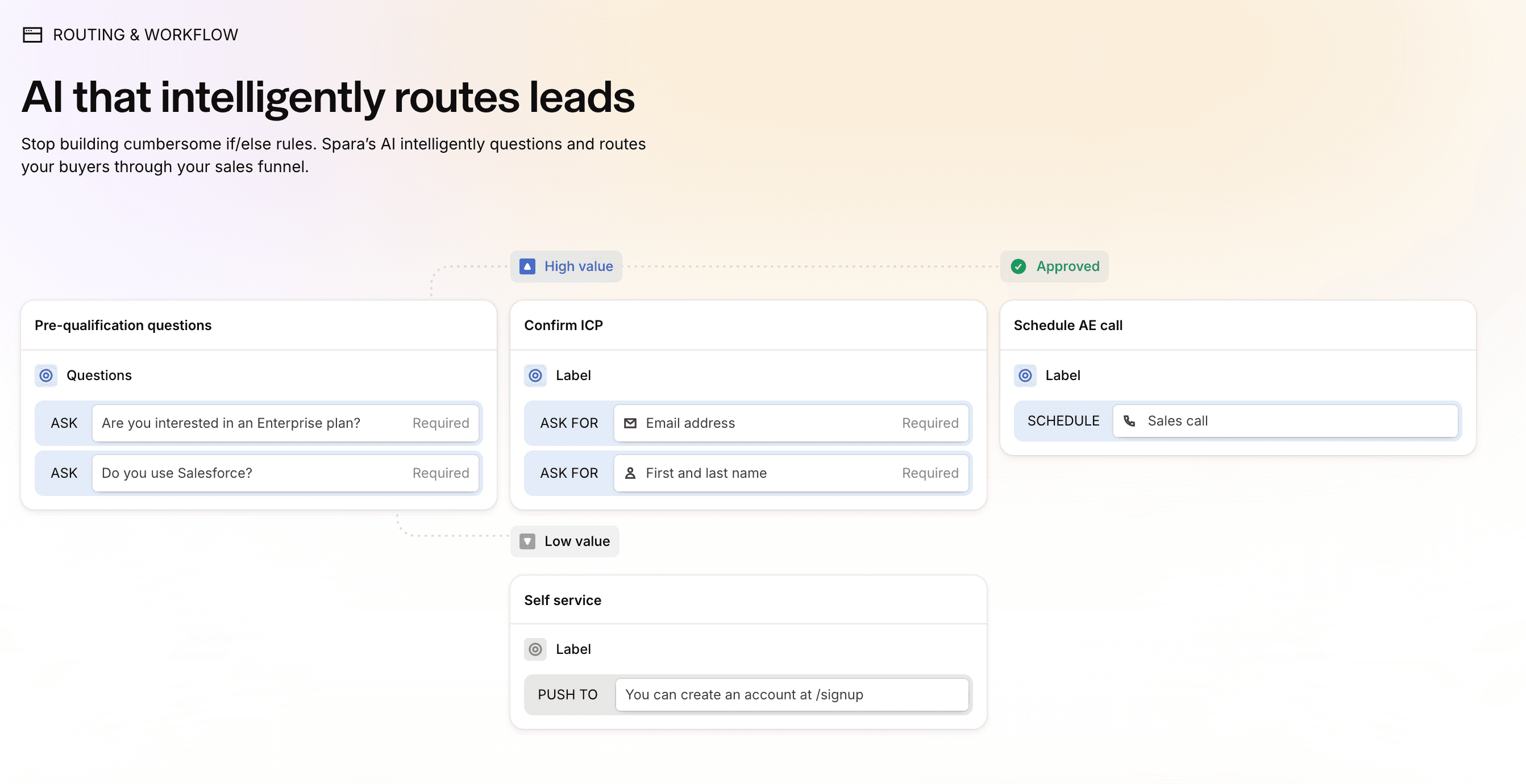
Spara AI is an AI-native platform built for modern GTM teams that want to engage, qualify and convert inbound leads faster. It connects with visitors through chat, email, or voice, and keeps the conversation going seamlessly across every channel.
Spara custom-trains its AI engine on your company website, marketing pages, and internal docs. It engages visitors with personalized responses, asks the right pre-qualifying questions, and uses your preset criteria to qualify the lead. It then routes qualified leads to the right sales rep or schedules a meeting.
Spara also enriches every lead the moment they land on your site. It instantly identifies visitors using qualification signals and engagement patterns, and can alert your sales team on Slack when a high-value buyer arrives.
Spara then pulls verified third-party data, builds a complete customer profile, and syncs it directly to your CRM. It also adds conversation insights from the chat, such as what the visitor asked about, what they showed interest in, and what they need next. With this context, your sales team walks into meetings prepared to push deals forward.
Pros
With Spara, GTM teams can:
Leverage an AI-native architecture built after the LLM era
Use AI agents across chat, email, and voice
Train the AI on your websites and internal materials to personalize the engagement
Drive conversion-focused conversations instead of basic lead capture
Build custom connections through Web API, Webhooks, and JavaScript API
Maintain enterprise-grade security with SOC 2 and GDPR compliance
Automate follow-ups with personalized email nurture sequences
Cons
Teams adopting Spara should:
Recognize that it is newer in the market compared to legacy tools
Note that outbound capabilities are limited today while the team is actively expanding into this area
Best for
Modern GTM teams looking for a long-term AI-native solution that can support the entire sales cycle
2. Drift
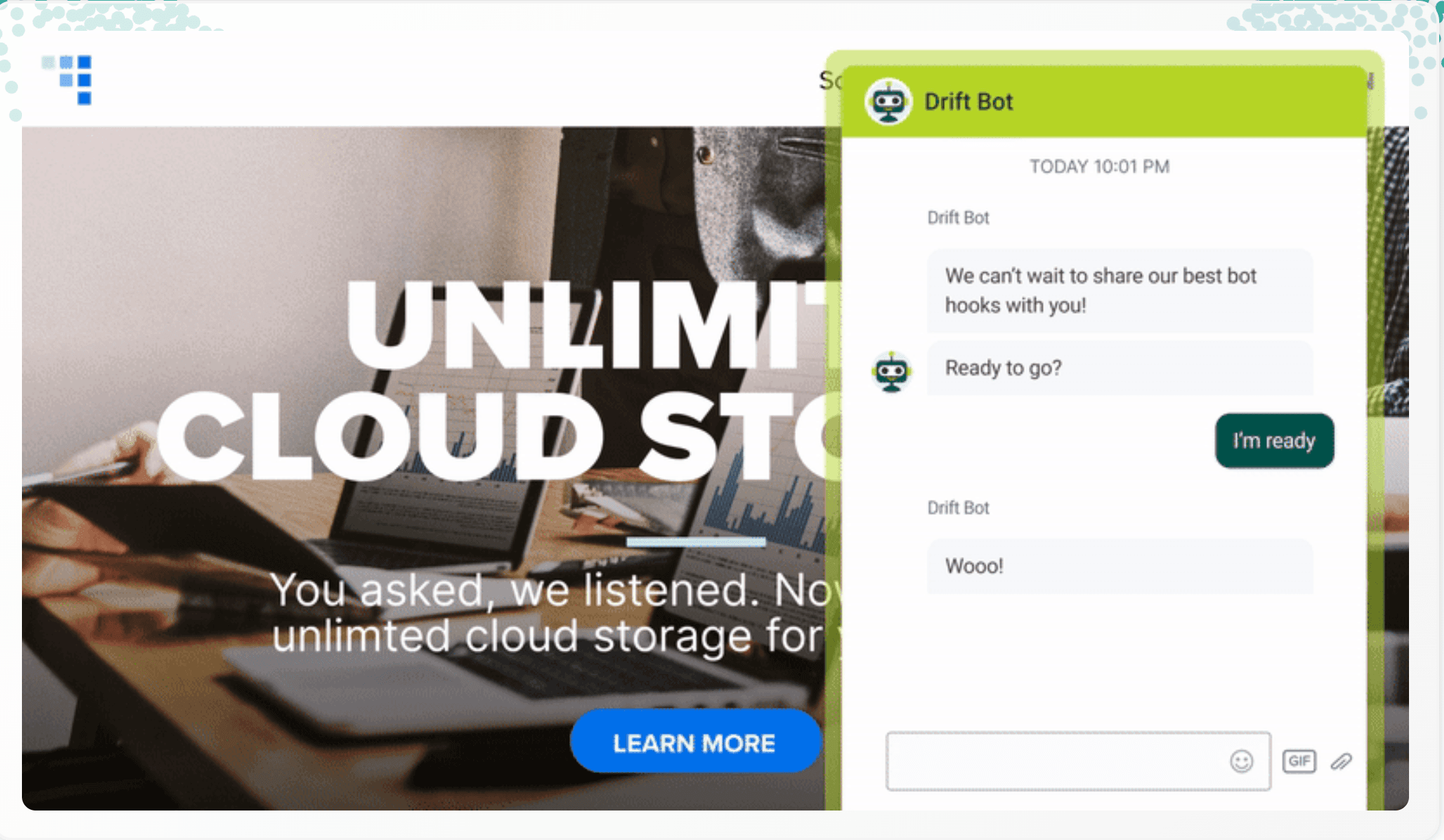
Drift is a well-established conversational marketing platform that automates website visitor engagement and accelerates the sales cycle. It runs on automated chat workflows that allow you to build your bot's conversational flows by adding and connecting nodes.
These customizable playbooks let you include questions that uncover the buyer’s intent, budget, and then qualify them based on these criteria. If someone seems like a good fit, Drift automatically sends them to the right salesperson’s calendar or live chat.
Pros
With Drift, teams can:
Get a well-known brand with a proven track record in conversational marketing
Build chat workflows easily using its intuitive Playbooks feature
Benefit from nearly a decade of market experience and a large customer base
Create custom routing rules to direct conversations to the right rep or team
Cons
Drift is:
A legacy tool has been here for decades with no major core advancements
Limited with a chat-only tool
Doesn’t train AI models on your company-specific data
Can quickly become expensive due to its per-seat pricing
Best for
Chat-only conversational marketing
3. Qualified
Qualified is a leading pipeline generation platform built for Salesforce users and teams running Account-Based Marketing (ABM) programs.
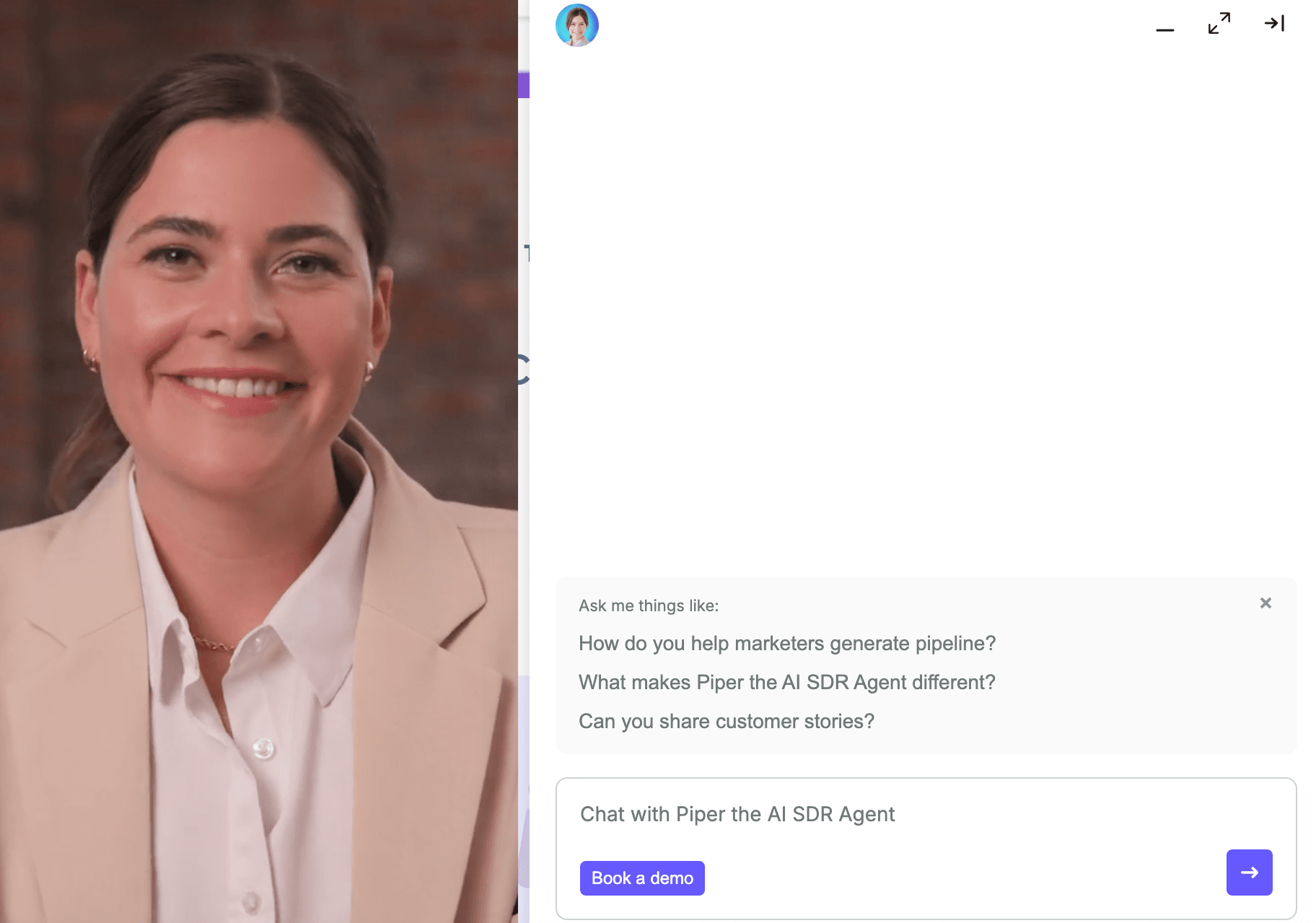
It has an AI SDR agent called Piper, which greets website visitors through live chat, answers their questions, and tailors the experience to each account. It then qualifies leads using predefined criteria such as company size, industry, and location.
When a visitor matches your ideal customer profile (ICP), Piper instantly prompts them to book a demo or connect them to your sales team.
Pros
With Qualified, teams can:
Access a responsive customer support team throughout implementation
Use native Salesforce integration for smoother lead management
Streamline internal workflows through its AI Copilot to reduce repetitive tasks
Identify hot accounts through account-based buying intent data
Cons
Teams considering Qualified should:
Note that the platform is optimized for inbound and less effective for outbound prospecting
Understand that it performs best with Salesforce, which limits flexibility for other CRMs
Expect a backend that some users find confusing to navigate
Prepare for higher pricing as the usage scales
Best for
Salesforce-centric ABM teams
4. Intercom
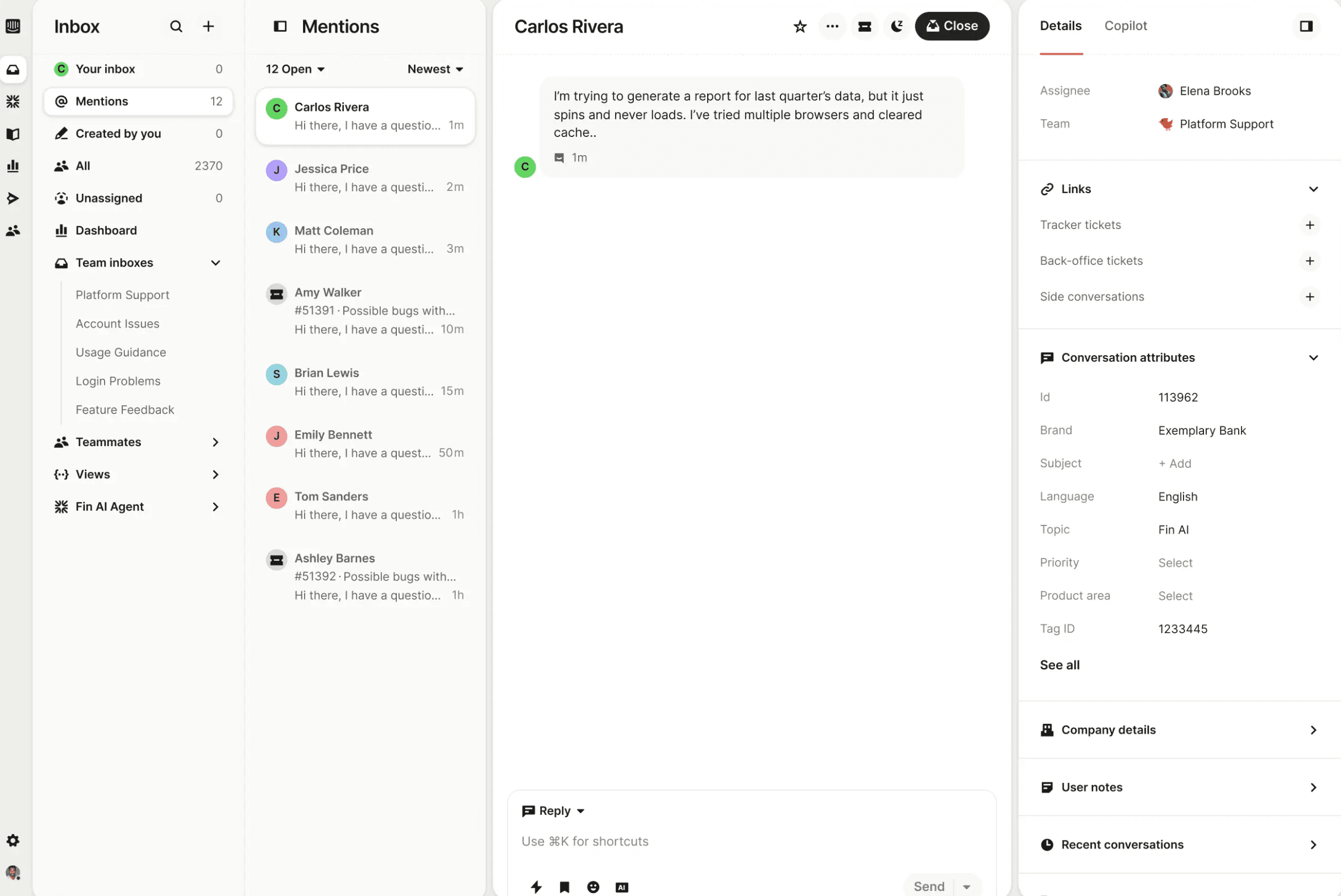
Intercom is an all-in-one customer service platform that allows support teams to engage customers across email, chat, and social media channels.
The software’s Fin AI agent can be installed on multiple channels like WhatsApp, Facebook, and Instagram, and answers questions and takes action in any language. When it encounters complex queries, it automatically routes them to the right human agent, keeping customers happy and wait times low.
Beyond customer support, Intercom powers automated product tours and feature discovery, helping new users with smooth onboarding.
Pros
Intercom helps teams:
Communicate across WhatsApp, Facebook, Instagram, and SMS in one connected system
Manage live chat and support tickets through a unified inbox that strengthens customer support
Work efficiently on the go with its intuitive mobile app
Speed up responses with an AI Copilot that pulls answers from the knowledge base in real time
Cons
Teams evaluating Intercom should:
Expect limited reporting and dashboard capabilities based on user feedback
Be aware that the generic AI agent may miss context during conversations
Consider that it is built primarily to enhance support experience, not for sales
Best for
Customer support and service teams
5. Hubspot
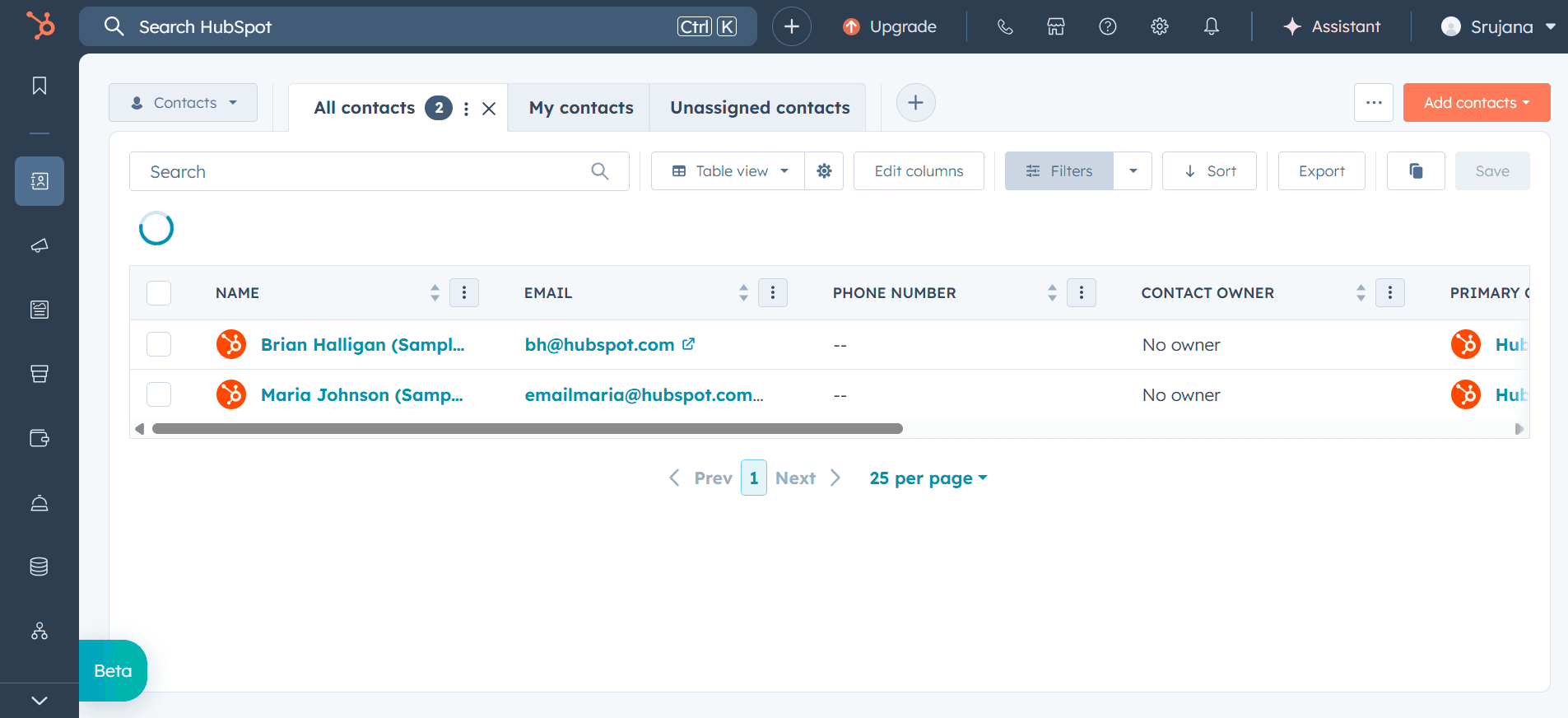
HubSpot brings all of your customer operations into one central platform. It connects marketing, sales, service, content, commerce, and operations hubs through a shared HubSpot CRM, giving every team access to the same customer data.
HubSpot automates lead qualification through its workflows and forms. You create forms that ask prequalification questions and trigger workflows that compare responses against defined criteria. If they’re a good fit, the software routes them straight to the right rep or books a meeting automatically.
You can also build data-driven workflows that react to your lead responses. For example, you can score leads, send follow-up emails, or trigger workflows based on their form answers.
Pros
HubSpot allows teams to:
Keep their CRM, website tools, and customer support capabilities in one place
Use basic live chat and bot features as part of the free plan
Centralize data across marketing, sales, service, and other hubs for stronger sales performance
Enrich contact information and company records automatically using public data
Cons
Teams evaluating HubSpot should:
Be aware of higher costs as the contact base grows
Prepare for a steep learning curve due to its extensive set of features available
Note that its tight integration with the HubSpot ecosystem limits flexibility
Understand that its built-in chat and forms offer only basic functionality compared to dedicated platforms
Best for
Teams who want an all-in-one platform to manage their marketing, sales, support, and operations in one connected system
6. Chili Piper
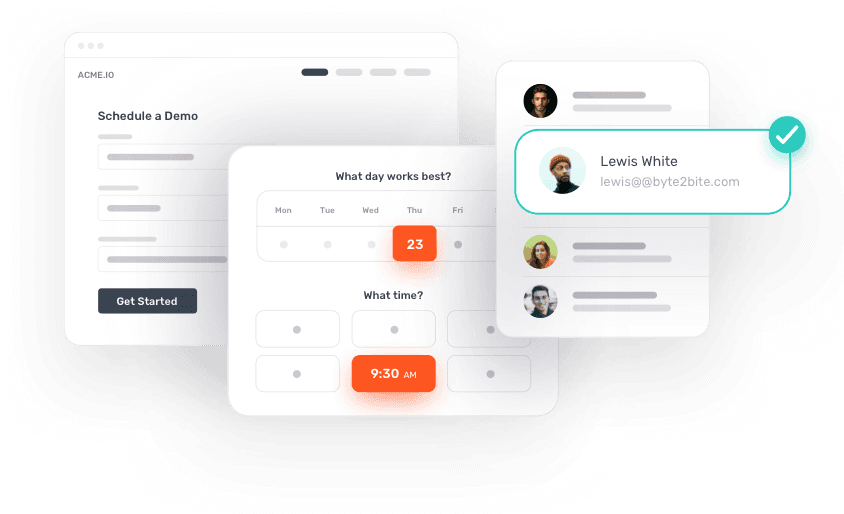
Chili Piper has made its mark in the enterprise scheduling and lead routing space. You can set up custom qualification and routing rules based on your team’s criteria, and Chili Piper automatically matches each prospect with the right person.
Its standout feature, Form Concierge, collects lead information through web forms, qualifies them instantly, and books meetings right away for qualified leads. This helps GTM teams capture and convert inbound demand without manual follow-up or lost opportunities.
Chili Piper also supports live calls and one-click meeting booking, giving sales reps the flexibility to engage prospects however they prefer.
Pros
Chili Piper helps teams:
Qualify and schedule prospects directly from your web form with Form Concierge
Get quick support via live phone calls thanks to Concierge Live
Embrace smart routing and calendar tools that sync for better sales performance
Prioritize and distribute leads efficiently through distro routing system
Quickly book meetings with the one-click Instant Booker
Use AI chat to qualify visitors, answer buyer questions, and schedule meetings
Cons
Teams considering Chili Piper note that its:
Time zone selection is a limited generic list rather than specific cities
Customer support is poor based on user feedback
Best for
Lead routing and automated scheduling
7. Zoho SalesIQ
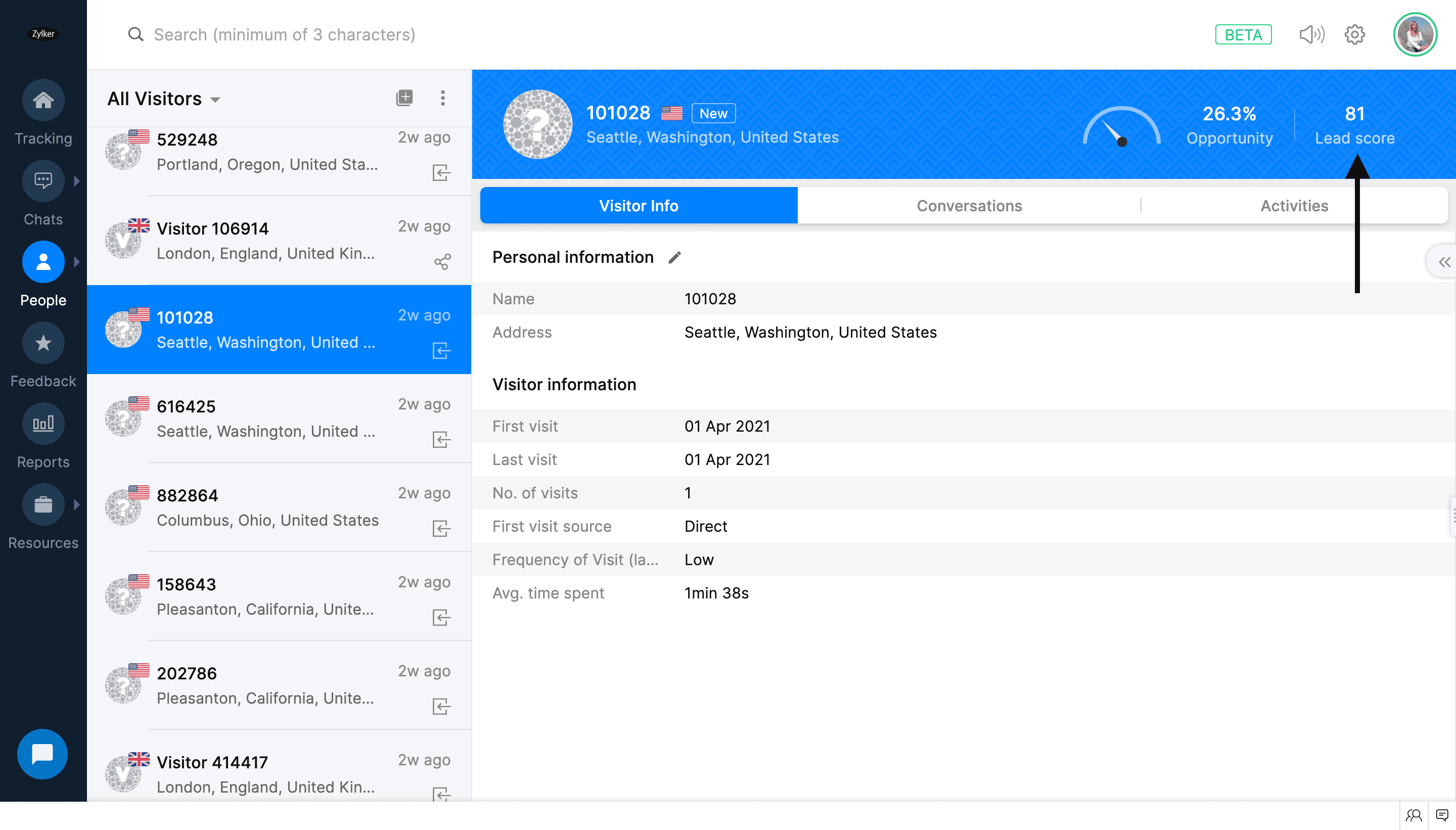
Zoho SalesIQ is a customer engagement platform that combines live chat, visitor tracking, and analytics into a single platform. It allows you to create chatbots on your website, Facebook Messenger, Instagram, WhatsApp, and other channels.
The platform offers an Answer Bot that identifies user intent and replies automatically using predefined answers or helpdesk articles. You can also use Zobot to build custom conversation flows for more advanced interactions. These bots collect visitor information, apply lead scoring rules, and qualify prospects that meet your sales funnel criteria.
SalesIQ also includes a built-in live chat that allows smooth handoffs between chatbots and human agents. You can set up routing rules to assign chats based on user type, department, or rep availability. Teams also receive notifications when a high-value account visits the website.
Pros
Zoho SalesIQ enables teams to:
Track website visitors in real-time
Customize live chat widgets to match brand and site design
Integrate smoothly with Zoho CRM and other Zoho products
Cons
Consider that Zoho SalesIQ can:
Limit multilingual support, which restricts global usability
Feel overwhelming to set up, according to users who want more guided onboarding
Best for
Website chat, visitor tracking, and basic lead engagement
8. Default
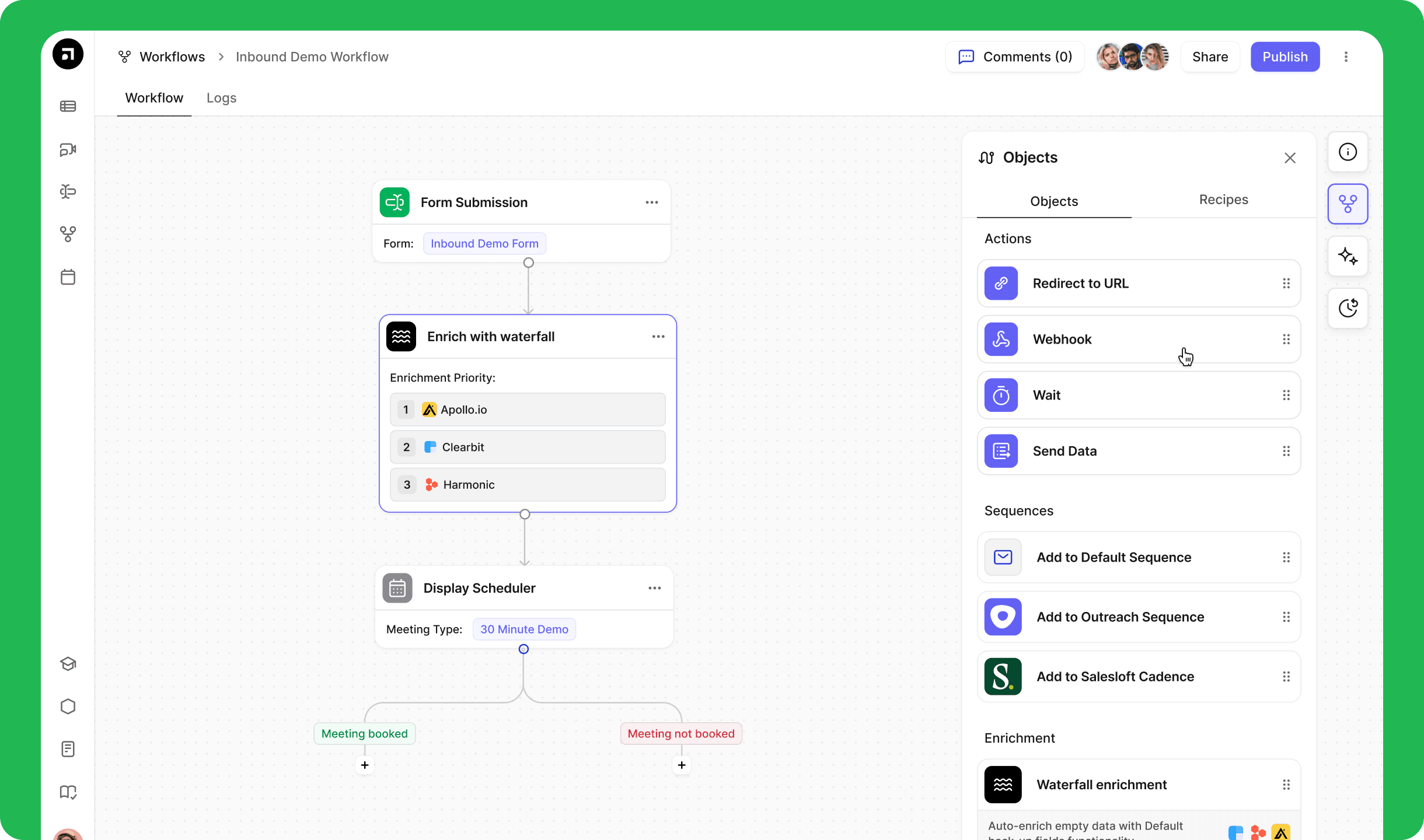
Default is built for revenue teams that want to bring enrichment, lead scoring, routing, scheduling, and CRM updates together in one streamlined workflow.
It pulls data from forms, CRM systems, and product usage signals to create an accurate, up-to-date profile for every lead. You can then build no-code workflows to qualify leads, route them to the right rep, and schedule meetings automatically.
The software also lets you build advanced automations like round-robin scheduling that only applies to leads matching your ideal customer profile (ICP), ensuring your reps spend time on the right opportunities.
Pros
Default allows teams to:
Integrate directly with their CRM and marketing automation platform (MAP) to maintain full context across every handoff
Use AI-powered summaries that help reps understand each lead instantly before outreach
Deliver end-to-end inbound orchestration with enrichment, routing, scheduling, and CRM updates in one unified workflow
Cons
Default falls short:
For small businesses that don’t rely heavily on inbound traffic or lead capture forms
With limited resources to fully leverage the platform’s capabilities
Best for
Inbound orchestration across revenue teams
Lead qualification is evolving, is your team keeping up?
The shift toward AI-led qualification represents more than faster response times or automated scoring. Intelligent GTM platforms learn from your data, read buyer intent in real time, and qualify leads instantly without waiting for manual input. They analyze context, act autonomously, and feed insights back to your team to improve the next interactions.
Rho, a financial services company, deployed Spara across its main conversion paths and saw results in days. The result was a 3.1x increase in form-to-meeting conversions and 137 qualified meetings booked in a single quarter.
If you’re ready to level up your lead qualification process and see real results, chat with Spara to see how it can help your team convert faster.

Lauren ThompsonHead of Marketing, Spara
FAQs
Related posts
View all
GTM
Sönke Venjacob’s playbook for turning inbound interest into booked meetings
Sönke Venjacob reveals how to convert inbound interest into booked meetings by automating nurture sequences, prioritizing engaged leads, and leading with value instead of hard selling.
Jan 28, 2026
•
4 min read

GTM
How to use AI for marketing: benefits, tools, & best practices
Learn how to use AI for marketing to automate responses, personalize experiences, qualify leads, and improve conversion rates across chat, email, and voice.
Jan 23, 2026
•
8 min read

GTM
Conversational agents: what they are and why GTM teams rely on them
Conversational agents use AI and natural language to engage buyers in real time. Learn how they improve inbound engagement, qualification, and pipeline.
Jan 23, 2026
•
9 min read
Sign up for the latest from Spara
Subscribe to get more GTM insights straight to your inbox.