
Marketing teams invest heavily in events, product launches, and SEO to drive demand. But that spend only pays off when buyers are engaged quickly. When the handoff from marketing to sales is slow, the value of that investment leaks.
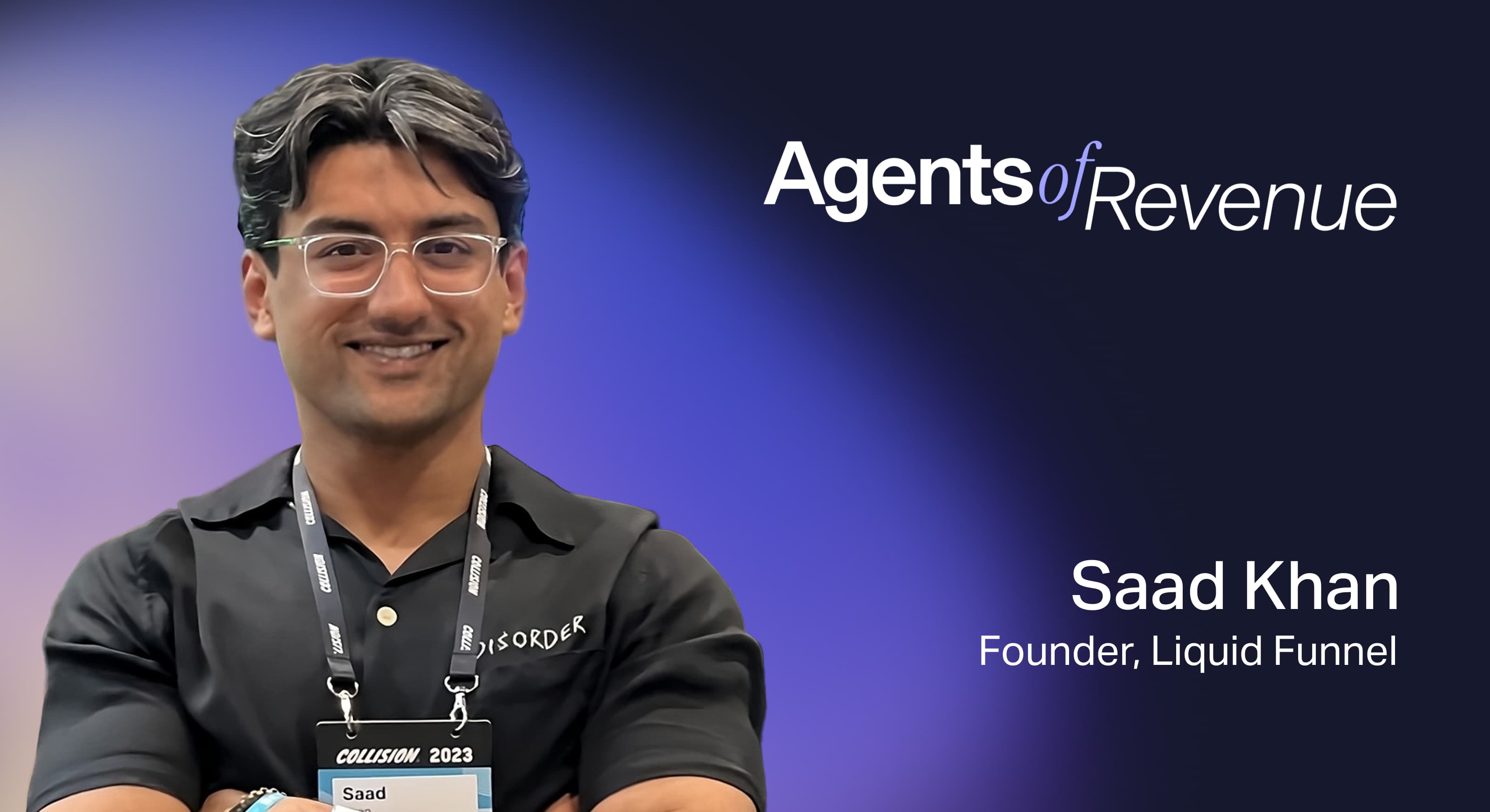
As a GTM leader and advisor, Saad Khan has seen this happen first-hand.
“You’re spending so much money on these marketing efforts,” Saad says. “Every time you invest in marketing a product or an event category, you’re increasing your CPL. The point where it breaks is when CPL is high and you’re not converting.”
That’s why Saad has spent years focusing on what happens in the minutes after intent appears. Not demand creation, but demand capture and building systems that engage buyers while interest is still fresh.
“Whoever gets the buyer first gets more of the mind share,” Saad says.
Here’s his approach to building inbound systems that respond fast enough to win the buyer’s attention.
1. Fix speed-to-lead by automating the first touch
Speed-to-lead breaks when inbound requests land in queues instead of triggering action.
“Five minutes is what it should be,” Saad says. “If you don’t respond quickly enough, that gives buyers time to look elsewhere.”
Saad has seen this pattern repeatedly at past companies.
“It’s a process problem and a routing problem,” he says. “Leads come in, they go into buckets, and they just sit there.”
At his previous company, Aligned, demo requests often came in while reps were already on calls. The leads were captured, but no one was alerted immediately. Follow-up depended on when a rep became available and noticed the request.
Instead of trying to force reps to respond instantly, Saad focused on removing the delay at the system level.
When a demo request was submitted, his team triggered a simple automated email. The message went out immediately to confirm the request and set expectations that someone would follow up shortly.
“One email, real quick,” Saad says. “It wasn’t perfect. But without it, we would’ve lost ten to fifteen deals.”
That automation didn’t replace the rep. It ensured the buyer was acknowledged right away while a human prepared to follow up.
When Saad reviewed closed deals, buyers confirmed they were evaluating competitors at the same time. The difference was which team engaged first.
Speed also signaled credibility. “That speed of responsiveness validates you as an organization, your team, your brand,” Saad says.
2. Eliminate the manual research tax before reps engage
Fast responses don’t matter if the conversation lacks relevance.
Before automating different workflows, reps spent fifteen to twenty minutes per inbound lead pulling LinkedIn profiles, checking CRM history, reviewing tech stacks, and assembling context manually.
“It was so damn manual,” Saad says. “Everything. All this effort is going into enrichment, research, and preparation.”
So Saad’s team automated the research layer too. When a lead came in, systems pulled company data, enriched contact records, and surfaced context automatically.
Instead of hunting across tools, reps could immediately see:
Basic company and role information
Existing CRM history and past interactions
High-level firmographic details relevant to qualification
Reps reviewed this context in seconds instead of hunting for twenty minutes.
“When AI gives you the context upfront, productivity skyrockets,” Saad says.
That time saved compounded across the team, with response times dropping and conversion rates improving.
“We brought one-hour response times down to five minutes sometimes,” Saad says. “At worst, within thirty minutes.”
3. Prioritize real-time engagement using live buyer signals
Many inbound systems still operate in batch mode. Forms get filled, data lands in a CRM, routing happens later, and follow-up happens even later. Tools work sequentially instead of immediately.
Buyers don’t operate that way anymore.
“There are chatbots now that can have real conversations when someone is raising a hand,” Saad says. “As soon as you go on the website, they can take you over the line.”
For Saad, real-time inbound isn’t just about responding faster. It starts with deciding who should be engaged immediately.
At Aligned, his team focused first on identifying which companies were on the website in real time. Knowing the company, not just the visit, removed minutes of manual research and made early conversations more relevant.
But a website visit alone wasn’t enough.
Saad paired that signal with product behavior. Who signed up, who invited teammates, who hit a paywall, who was actively using the product. Instead of chasing every signal, his team looked for overlap. Website activity plus product usage or engagement across multiple touchpoints. A clear pattern that indicated real buying intent.
Only when those signals converged did the team treat the moment as high priority. This focus allowed reps to engage the right buyers while interest was still high.
“B2B buying is more B2C than ever,” Saad says. “If I book a demo and give you my cell number, I’m fine getting text updates. You have my attention.”
Final takeaway
Marketing creates intent, but intent doesn’t wait. If your systems can’t engage buyers in real time, revenue leaks before sales ever enters the conversation.
The fix isn’t asking reps to move faster. It’s building systems that acknowledge interest instantly, surface context automatically, and bring humans into the conversation at the right moment.
“Teams that respond in five minutes win,” Saad says. “Teams that respond in an hour lose without even knowing they were competing.”
That’s why Spara enables responses in seconds, not minutes. Our always-on AI agents engage buyers right away, capturing intent while momentum is still high and ensuring no high-intent conversations stall.
The modern inbound standard is simple: real-time engagement powered by automation, with humans focused on the conversations that actually move pipeline.
Related posts
View all
GTM
Can I fully replace a human SDR with an AI SDR?
AI SDRs can automate speed, qualification, and follow-up—but they can’t replace human judgment or trust. Learn what AI SDRs can automate, where humans still win, and how top teams use both to drive pipeline.
Jan 15, 2026
•
9 min read
GTM
Why AI is changing lead qualification forever
Learn how AI transforms lead qualification with instant engagement, smarter intent detection, and automated routing that accelerates pipeline and boosts revenue.
Jan 8, 2026
•
10 min read
GTM
Why automated lead qualification is the new standard
Learn how automated lead qualification works, why it drives higher conversion, and how AI-native tools turn inbound leads into pipeline growth.
Jan 8, 2026
•
8 min read
Sign up for the latest from Spara
Subscribe to get more GTM insights straight to your inbox.