
AI SDRs are everywhere right now, and so are promises. Vendors claim you can automate outreach, qualification, follow-up, and booking, making human sales development representatives (SDRs) optional. CROs and sales leaders, under pressure to do more with less, are asking: Can I fully replace a human SDR with an AI SDR?
The short answer is no, but not for the reasons most people think.
AI can absorb the volume that breaks SDR teams, instantly engaging every inbound lead, qualifying buyers using customer relationship management (CRM) data, and booking meetings in real time. What it can’t do is replace judgment, trust-building, or complex deal navigation. That distinction matters because confusing replacement with leverage leads to the wrong go-to-market (GTM) decisions.
The real opportunity lies in understanding what AI should own at the top of the funnel, and where humans create the most value once it counts.
The SDR role has never been more critical, or more broken
Sales development sits at the center of revenue growth, and it’s under real strain. SDR teams face rising inbound volume, higher activity quotas, and shrinking response-time expectations. And this is on top of juggling CRM data entry, follow-up, and lead qualification. Burnout is common, and results suffer as a consequence.
Speed-to-lead has become the battleground. Buyers today expect instant, 24/7 engagement wherever and whenever they reach out. If a prospect waits minutes instead of seconds, response rates drop, and conversion rates follow. Human SDRs simply can’t scale that level of responsiveness without ballooning headcount and costs.
The good news? AI SDRs are changing the equation. Autonomous agents take ownership of the front-line execution, absorbing volume, acting on buying signals instantly, and moving qualified prospects forward, so SDRs aren’t stuck reacting, but leading the sales conversation. Sales rep assist agents can then support mid-funnel conversations, helping reps move deals forward with better context.
For instance, Spara customers see up to 3x faster response times and 2–3x higher MQL conversion rates. Although AI-powered SDR workflows don’t replace the human touch, they protect it where it matters most.
What AI SDRs can and can’t do
AI SDRs bring real leverage to modern sales teams, but only when leaders understand the line between automation and human judgment. For CROs, a more useful question is where AI-powered SDRs create outsized impact versus where human sales reps still win.
Here’s a quick breakdown of what AI SDRs can and can’t do.
SDR Responsibility | AI SDRs | Human SDRs |
Speed-to-lead & response time | Instant, 24/7 | Limited by hours |
Lead capture & qualification | Automated, data-driven | Manual, time-consuming |
CRM enrichment & workflows | Real-time, consistent | Error-prone |
High-volume outreach & follow-up | Scales easily | Burnout risk |
Complex objections & emotions | No | Yes |
What AI SDRs do exceptionally well
AI SDRs excel at the operational core of the sales process. Autonomous agents automate lead capture, routing, and prequalification across chat, voice, and email, eliminating delays that hurt conversion rates. With AI-native platforms like Spara, that automation translates directly into booked meetings and cleaner handoffs, not just faster replies.
Because AI agents connect directly to CRM data, they enrich records in real time, personalize messaging, and nurture prospects at scale. Many teams also use AI sales agents to support outbound sales workflows, including sequencing, enrichment, and high-volume outreach, even if outbound automation isn’t their primary focus today.
In practice, AI SDRs book qualified meetings within seconds, freeing human SDRs and sales reps to focus on high-value conversations instead of repetitive tasks.
What AI SDRs can’t (and shouldn’t) do
AI SDRs can’t replace the human touch. They’re unable to read emotional nuance, handle sensitive objections, or adapt to sudden context shifts in complex sales cycles. Nor can they build trust with multiple stakeholders or navigate political dynamics inside buying committees.
Even the most advanced AI technology remains rules and data-driven. Creativity, intuition, and problem-solving still live with experienced salespeople. That’s why the strongest teams pair autonomous AI agents at the top of the funnel with sales rep assist agents mid-funnel, using artificial intelligence to optimize efficiency, not replace human interaction where it matters most.
Why the question of “replacing” human SDRs misses the point
Asking if you can replace a human SDR with an AI SDR pits artificial intelligence against people. But the real advantage comes from combining the two. AI SDRs don’t compete with human SDRs. Instead, they remove the friction that prevents sales teams from doing their best work.
Winning teams adopt a hybrid SDR model built on AI and human collaboration, not substitution. Automation delivers speed, coverage, and consistency. Humans deliver trust, judgment, and the ability to advance deals by coordinating complex buying decisions.
Here’s what that shift looks like in practice:
AI SDRs handle the front line: Autonomous agents engage inbound leads, automate lead qualification, enrich CRM data, manage follow-up, and route qualified leads in real time.
Human SDRs take over high-intent conversations: Human SDRs and AEs focus on sales conversations, complex objections, and high-value opportunities that actually move deals forward.
Roles evolve, not disappear: SDRs become sales strategists or AI orchestrators, guiding workflows, refining messaging, and optimizing how AI-powered tools support the sales process.
AI shouldn’t replace your SDRs. It should make them unstoppable. Spara qualifies and routes leads at scale—so your team focuses on closing the conversations that matter most.
What a high-performing human and AI SDR system looks like
The most effective sales teams don’t try to fully replace a human SDR with an AI SDR. They design a system where AI SDRs and human SDRs each own the work they do best, end to end.
In a modern, high-performing workflow, responsibility is clearly split:
Human SDR: Steps in with full context to deliver personalized outreach, handle nuanced questions, build trust, and advance sales conversations requiring empathy and judgment.
This model removes the most time-consuming SDR tasks, including manual data entry, repetitive messaging, and constant triage, while preserving the human touch that drives conversion.
Spara customers see this play out in production. Teams using AI-powered SDR workflows report 2–3x increases in qualified meetings, faster response times, and meaningful reductions in SDR busywork. In one case, AI agents delivered the equivalent output of multiple inbound SDRs while routing only high-intent leads to sales reps.
The result is simple: fewer distractions, cleaner pipelines, and more time spent closing deals instead of chasing them.
The risk of getting it wrong: When AI replaces instead of enhances
The fastest way to break trust with buyers is to treat AI SDRs as a headcount replacement instead of a sales system upgrade. When leaders try to act on that premise, the result often feels transactional, robotic, and disconnected from how real sales conversations work.
Poor AI implementation shows up quickly:
Over-scripted messaging that can’t adapt to real questions or context shifts
AI agents that mishandle nuance, pricing concerns, or emotional objections
Shallow automation that prioritizes cost-cutting over conversation quality
This kind of misuse fuels “AI anxiety” on both sides of the deal. Prospects lose confidence in your brand, and sales teams lose faith in the tools meant to help them.
AI SDRs that touch CRM data, lead qualification, and messaging must meet enterprise standards for SOC 2, GDPR, and data integrity. Inaccurate responses, hallucinated answers, or loose data handling can hurt conversion rates and create legal and reputational exposure.
The fix is straightforward but often ignored: build your AI SDR strategy around conversation quality, safety, and trust, not automation for its own sake. The best AI-powered SDR workflows enhance human sales reps, protect the human touch, and strengthen the sales process.
Human connection is still the ultimate conversion engine
AI has changed how sales teams operate, but it hasn’t changed why deals close. The question of replacing a human SDR with an AI SDR surfaces real pressure around scale, speed, and efficiency. But it misses the core truth: buyers still convert through trust, relevance, and human connection.
The strongest GTM teams get this right by designing for partnership, not replacement:
AI SDRs deliver instant engagement, automate lead qualification, enrich CRM data, and handle high-volume follow-up without breaking response time.
Human SDRs and sales reps focus on sales conversations, problem-solving, and guiding complex decisions with empathy and judgment.
Together, they create faster pipelines without sacrificing the human touch that drives conversion rates.
This is where Spara draws a clear line. We don’t use AI to remove salespeople from the process. By absorbing the volume, speed, and operational demands of modern GTM, Spara frees SDRs and sales reps to focus on the work that actually drives revenue.
Each rep shows up to conversations with full context, cleaner CRM data, and qualified intent, allowing them to move faster, handle more meaningful opportunities, and close with confidence across all communication channels.
If you’re rethinking your SDR model, start with the right foundation. Build around AI-powered agents that enhance your sales process, not replace it.
See how Spara helps teams convert more pipeline while keeping humans at the center of every deal.

Lauren ThompsonHead of Marketing, Spara
FAQs
Related posts
View all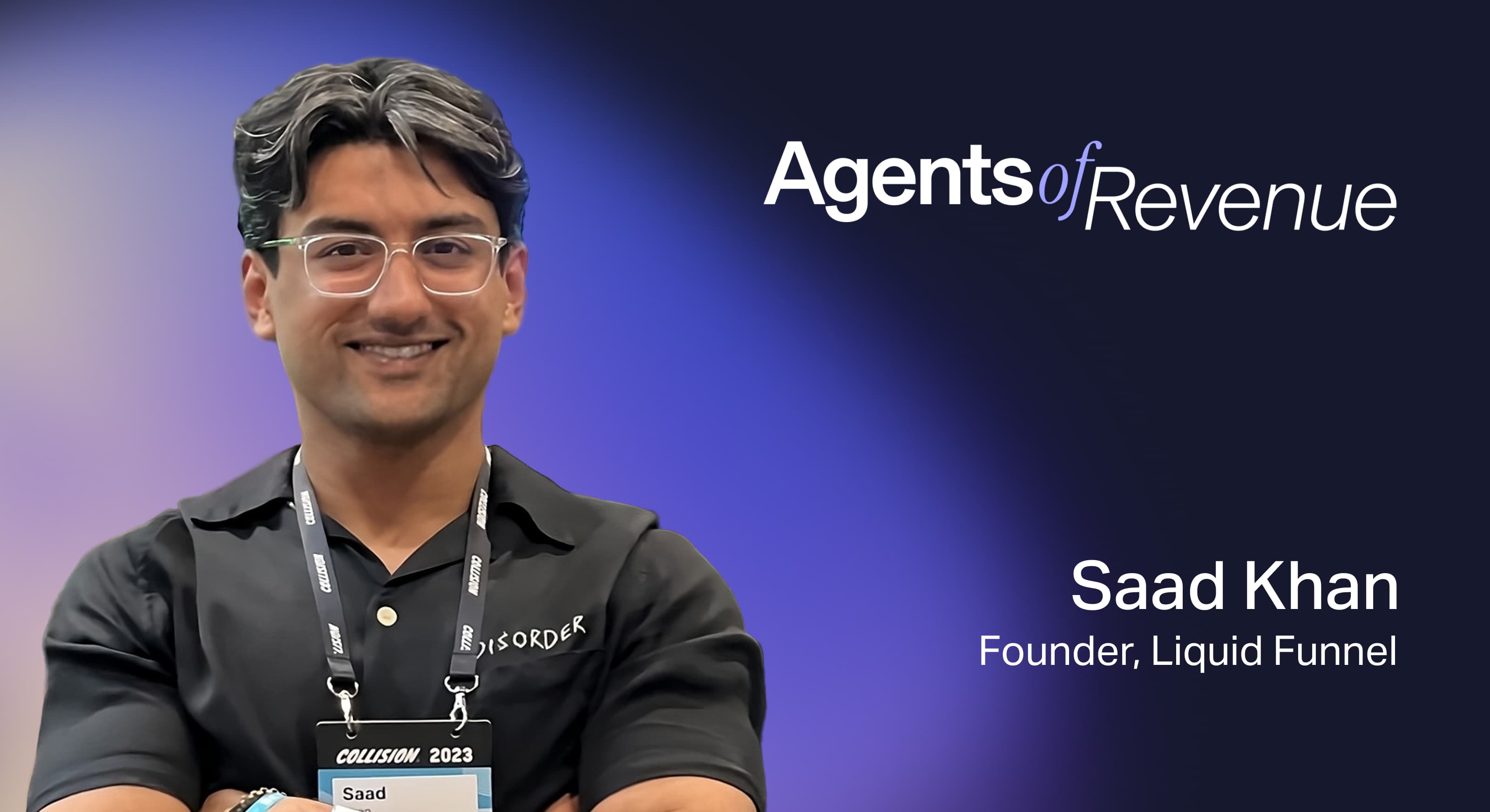
GTM
The playbook for winning inbound with Saad Khan
Saad Khan reveals how automating first touches, eliminating manual research, and engaging buyers in real time transforms inbound conversion.
Jan 14, 2026
•
4 min read

GTM
Why AI is changing lead qualification forever
Learn how AI transforms lead qualification with instant engagement, smarter intent detection, and automated routing that accelerates pipeline and boosts revenue.
Jan 8, 2026
•
10 min read
GTM
Why automated lead qualification is the new standard
Learn how automated lead qualification works, why it drives higher conversion, and how AI-native tools turn inbound leads into pipeline growth.
Jan 8, 2026
•
8 min read
Sign up for the latest from Spara
Subscribe to get more GTM insights straight to your inbox.