

Marketing and sales teams are moving past rules-based chatbots and static automation. In their place, a new model is taking hold: AI-native agents designed to engage buyers in real time, across channels, transforming customer engagement from the first touchpoint.
This shift is driven by a simple reality. Buyers expect instant, accurate responses wherever they are—on your website, in email, or over the phone. When those expectations aren’t met, conversion suffers. Speed-to-value now matters as much as speed-to-lead, and traditional tools struggle to keep up. As adoption accelerates, the conversational AI market is growing rapidly, driven by this demand for real-time, AI-driven customer engagement.
Conversational AI marketing sits at the center of this transition. Instead of capturing form fills and handing leads off hours later, AI-powered agents qualify intent, route conversations, and move buyers forward the moment interest appears. The result is a faster, more consistent buyer experience and measurably higher inbound conversion.
What is conversational AI marketing?
Conversational AI marketing uses AI-driven conversational systems which simulate human conversation to engage prospects through natural, two-way conversations across digital touchpoints. These systems combine machine learning, natural language processing (NLP), and real-time automation to understand buyer intent, respond accurately, and guide interactions toward meaningful outcomes that align with customer needs.
Unlike traditional marketing automation, conversational AI adapts as conversations unfold. It pulls from customer data, recognizes intent signals, and adjusts responses dynamically to reflect real buyer behavior.
This makes it possible to qualify leads, answer questions, and route high-intent buyers without forcing them through rigid workflows or delayed human follow-up, improving customer satisfaction in the process.
Static chatbots vs. adaptive AI agents: what’s the difference?
Static chatbots rely on scripts, decision trees, and predefined rules. They can answer basic FAQs or support limited self-service, but they break down when conversations move off-script or span multiple channels.
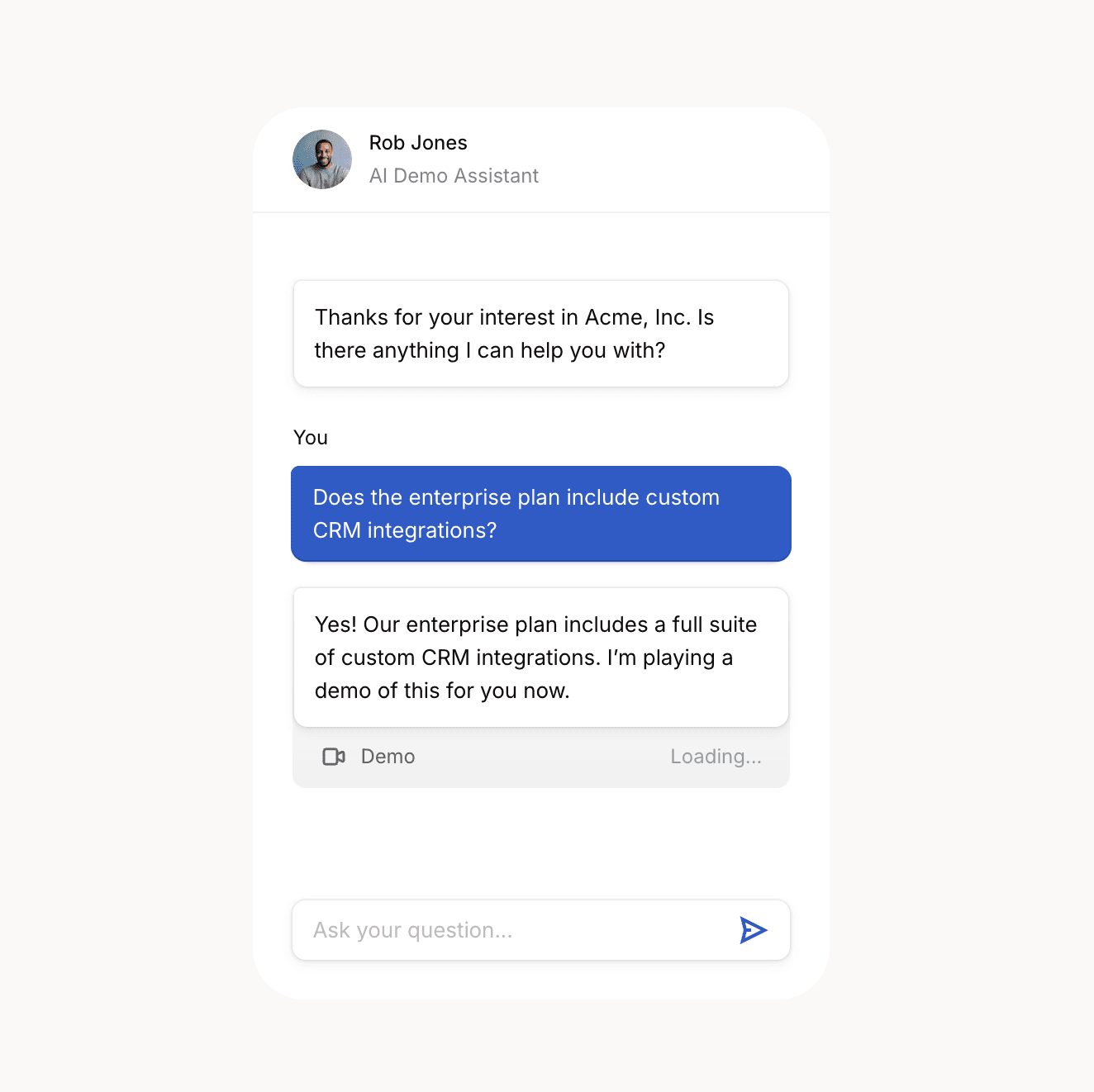
Adaptive AI agents are different. They use generative AI and NLP to understand context, learn from previous interactions, and carry conversation memory forward.
Instead of collecting data and stopping, they move buyers toward the next best action by delivering more personalized experiences at each stage of the conversation. That can be booking a meeting, continuing the conversation over email, or routing to a human agent when it matters.
How is conversational AI used in sales and marketing today?
Modern sales and digital marketing teams are using conversational AI to remove friction at the top of the funnel and convert demand more efficiently. The focus is on real-time engagement that supports broader marketing strategy and pipeline goals.
Real-time qualification and routing
Conversational AI is often used for AI-powered lead qualification that adapts to buyer intent instead of forcing prospects through static forms.
Response time has a direct impact on conversion rates and overall inbound performance. Studies consistently show that leads contacted within five minutes are far more likely to convert than those contacted later.
Conversational AI eliminates that delay by engaging visitors instantly, asking the right qualification questions, sharing relevant demos or educational resources, and routing high-intent leads through automated workflows to the appropriate sales team in real time.
This approach helps marketing teams protect inbound demand while allowing sales teams to focus on conversations that actually move pipeline.
AI-driven nurturing across chat, email, and voice
Buyers rarely convert in a single interaction. Conversational AI platforms now extend engagement across chat, email, and voice, maintaining continuity as buyers move between touchpoints and messaging platforms.
Instead of siloed tools, AI agents can follow up after a chat interaction via email, answer questions over voice, or re-engage prospects who go quiet. That omnichannel continuity improves customer experience and keeps conversations moving without manual effort or fragmented follow-up.
Reducing friction across the buyer journey
Many drop-offs happen when buyers encounter delays, repetitive questions, or disconnected tools. Conversational AI helps streamline the journey by retaining context, reducing handoffs, and strengthening customer relationships by ensuring buyers never have to start over.
When AI agents handle early-stage engagement, response times shrink, user experience improves, and human agents step in only when their expertise is needed.
Turning top-of-funnel traffic into booked meetings
Conversational AI has proven especially effective for high-intent inbound traffic and inbound lead generation. For teams using inbound SDR automation, qualifying intent immediately and scheduling meetings in real time drives significant lifts in conversion rates while improving lead generation efficiency.
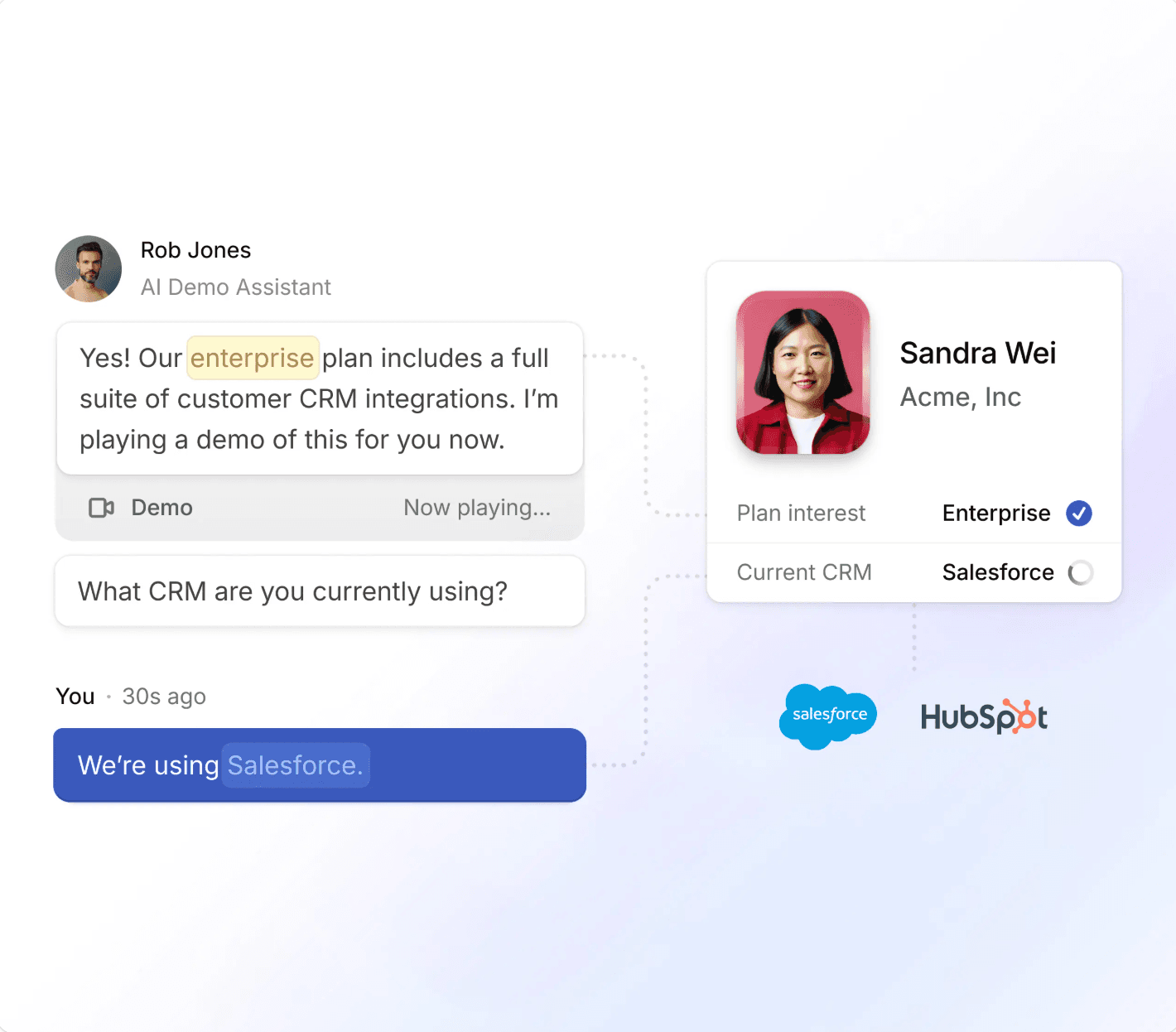
Companies using AI-native inbound engagement consistently report increases in qualified meetings and reductions in manual SDR workload—without sacrificing buyer experience.
Conversational AI vs. traditional marketing automation
Legacy marketing automation platforms were built for batch workflows, a model that falls short in a real-time buying environment. Without instant engagement, even strong inbound demand can disappear. That’s why successful teams focus on building a zero-leak inbound motion that addresses common buyer pain points.
The cost of delayed human follow-up
Since buyers expect responses within minutes, not hours, interest fades and conversion drops when follow-up is delayed. Traditional workflows that rely on form submissions and queued SDR outreach introduce delays that directly impact revenue. Conversational AI removes that latency by engaging buyers the moment intent appears.
Adaptive, context-aware AI vs. scripts and rules
Conversational AI agents interpret intent and respond naturally, even when conversations evolve. Rules-based systems, on the other hand, force buyers into predefined paths, so the experience breaks down when a question doesn’t match a script.
Adaptive agents are more context-aware, resulting in a more personalized experience, higher customer satisfaction, and stronger long-term retention.
Multi-channel engagement as a competitive advantage
Single-channel chat tools are no longer sufficient. Buyers expect continuity across messaging platforms, messaging apps, email, and voice. Conversational AI platforms designed for omnichannel engagement maintain context across touchpoints, creating a more cohesive experience across all digital marketing.
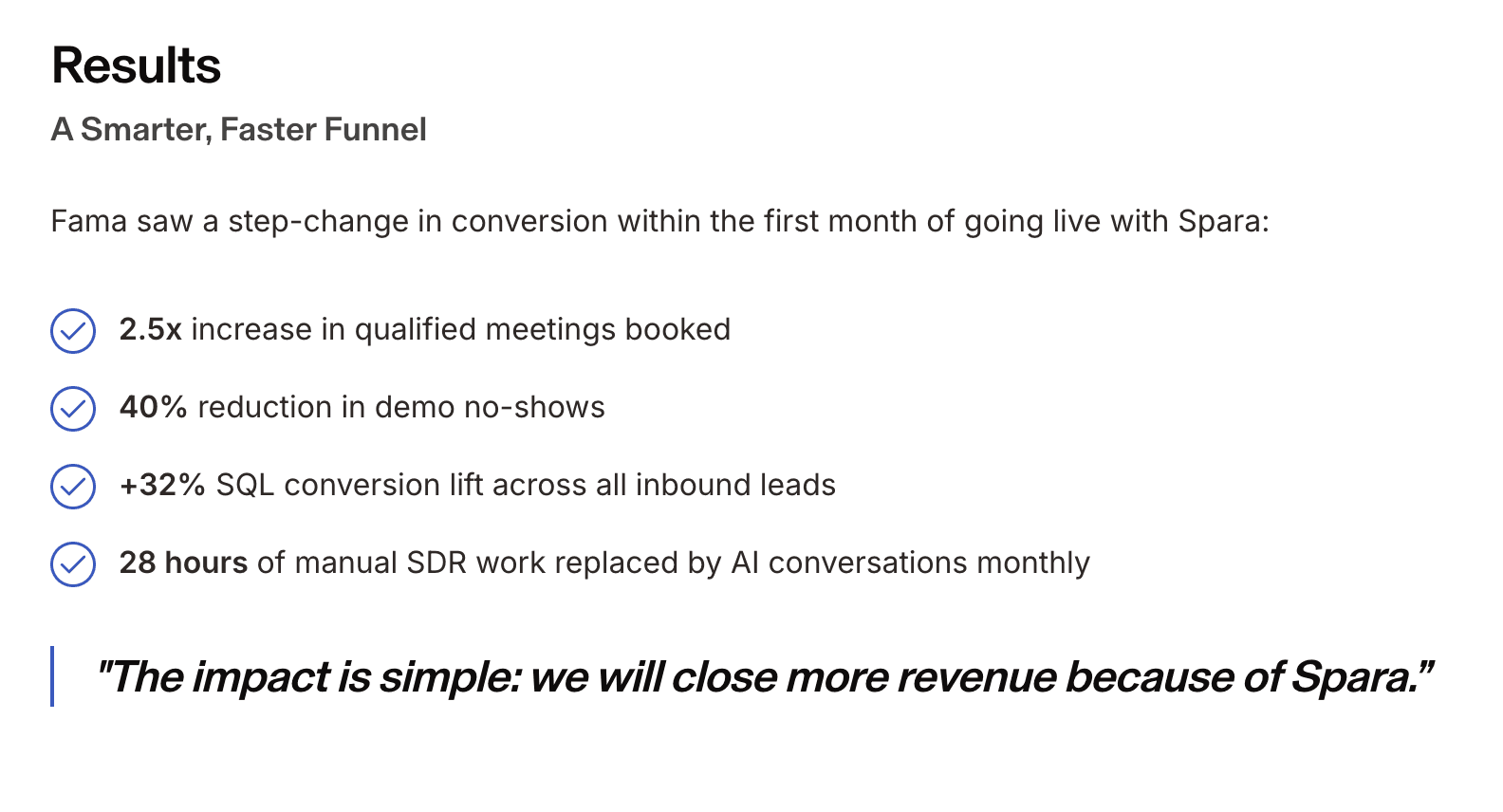
This is where AI-native platforms are outperforming legacy systems. In the first month after implementing Spara, customers like Fama and Rho saw a 2-3x increase in qualified meetings, along with meaningful reductions in SDR workload, demonstrating how real-time, agent-driven engagement translates into measurable results.
Challenges of conversational AI marketing (and how to navigate them)
Like any powerful GTM tool, conversational AI comes with challenges and tradeoffs. Teams that succeed are deliberate about how they deploy and govern these systems, paying close attention to performance metrics, data integrity, and operational alignment. Here’s what to watch out for and how to handle it.
Quality, accuracy, and brand-safe responses
Accuracy is non-negotiable. If an AI agent gives the wrong answer or drifts off-brand, trust erodes quickly. That’s why effective conversational AI needs to be trained on reliable sources and designed to flag inconsistencies rather than invent responses.
Platforms built with factual grounding and adaptive learning make it easier to maintain brand-safe interactions at scale.
Ensuring compliance, privacy, and data governance
Conversational AI often sits close to sensitive customer conversations, making compliance and privacy critical from day one. Marketers should look for platforms that support SOC 2 and GDPR compliance and offer clear, transparent controls over how customer data is used, stored, and retained.
Integrating AI into existing workflows and CRM systems
Conversational AI works best when it fits naturally into the way teams already operate. Tight CRM integration ensures conversation data, intent signals, and follow-up actions are captured automatically, without creating extra work. That shared visibility helps marketing and sales teams align around shared metrics and outcomes.
Maintaining human oversight and avoiding over-automation
AI should support people, not sideline them. The most effective deployments use conversational AI to handle repetitive, early-stage engagement, then escalate complex or high-value conversations to experienced sales and support teams. This balance keeps the experience human where it matters most, while still benefiting from automation at scale.
To make that balance reliable, strong platforms also build in oversight mechanisms. With Spara features like simulations and Watchtower, teams can test changes across common scenarios and review conversations for patterns and hallucinations, respectively.
How to evaluate conversational AI platforms (what actually matters)
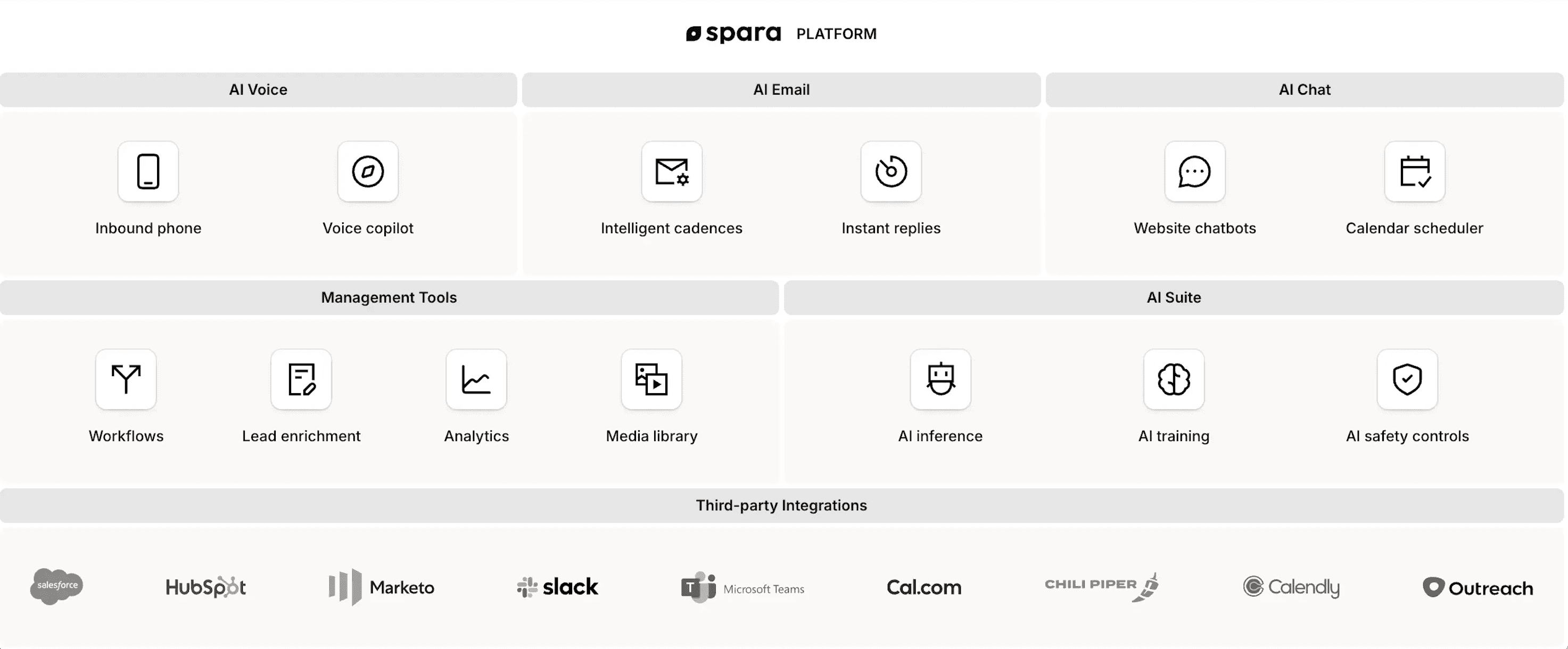
Not all conversational AI platforms are built for real-world GTM use. Many tools look similar on the surface but behave very differently once they’re embedded into live buyer workflows.
In practice, a few underlying factors make the difference between scalable conversational AI solutions and tools that create friction. Here’s what to look for.
LLM-native architecture vs. retrofitted AI tools
One of the most important distinctions is whether a platform was designed natively around large language models or whether AI was layered onto an existing chatbot or automation tool.
LLM-native platforms are built to understand context, manage nuance, and adapt as conversations evolve. Retrofitted tools often struggle once interactions move beyond simple scripts, leading to brittle experiences and inconsistent responses.
Over time, this architectural difference shows up in accuracy, scalability, and how confidently teams can rely on AI in customer-facing moments.
Multi-channel intelligence (chat, email, voice)
Buyers don’t think in channels. They move fluidly between chat, email, and voice depending on urgency and preference. Platforms that treat each channel as a separate system force conversations to restart, creating friction and frustration.
Strong conversational AI platforms maintain shared context across channels, allowing conversations to continue naturally even when the medium changes. This continuity is essential for creating a cohesive buyer experience instead of a series of disconnected interactions.
CRM integration and context retention
Conversational AI shouldn’t live in isolation. Without tight CRM integration, valuable conversation data stays trapped in silos, limiting visibility and follow-through. Effective platforms automatically capture intent signals, conversation history, and outcomes so every interaction informs routing, follow-up, and reporting.
Persistent context also makes it easier for teams to understand the full buyer journey and coordinate across marketing and sales without manual handoffs.
Compliance, security, and brand safety
As conversational AI takes on a more central role in GTM, governance becomes non-negotiable. Enterprise-grade platforms are designed with security, compliance, and brand safety in mind from the start—not bolted on later.
SOC 2 compliance, clear data controls, and safeguards around how AI responds in edge cases all matter when scaling conversational engagement responsibly. These protections allow teams to move faster without increasing risk.
Use AI agents to instantly engage with your customers and drive more inbound conversions
Conversational AI marketing is quickly becoming a core GTM capability. Teams that adopt AI-native agents see faster response times, better qualification, stronger retention, and more efficient conversion of inbound demand.
At the foundation of effective conversational engagement is an AI system designed specifically for GTM, with safeguards for accuracy, adaptability, and real-time intent detection across channels.
The right platform makes it possible to scale these conversations without adding unnecessary complexity to existing workflows. If you’re evaluating how conversational AI can support your GTM motion, Spara’s AI-native agents offer a practical example of this approach in action.
Discover how faster, more intelligent buyer conversations can improve inbound conversion with Spara.

Lauren ThompsonHead of Marketing, Spara
FAQs
Related posts
View all
GTM
How to use AI for marketing: benefits, tools, & best practices
Learn how to use AI for marketing to automate responses, personalize experiences, qualify leads, and improve conversion rates across chat, email, and voice.
Jan 23, 2026
•
8 min read

GTM
Conversational agents: what they are and why GTM teams rely on them
Conversational agents use AI and natural language to engage buyers in real time. Learn how they improve inbound engagement, qualification, and pipeline.
Jan 23, 2026
•
9 min read

GTM
How Pasha Irshad rethinks buyer qualification in an AI-First GTM
Pasha Irshad shares how layering intent signals, applying context, and using AI to qualify at scale transforms buyer engagement in an AI-first GTM motion.
Jan 21, 2026
•
4 min read
Sign up for the latest from Spara
Subscribe to get more GTM insights straight to your inbox.