
Over the past decade, conversational marketing has completely reshaped how inbound sales and marketing operate. It introduced real-time engagement and a customer-first approach to lead capture.
Drift was one of the first tools to make this mainstream. Its chatbots and live chat features redefined how businesses connected with website visitors, setting the standard for digital sales conversations.
But AI is reshaping every industry, and go-to-market (GTM) is no exception. As large language models advanced over the last few years, a new wave of AI-native tools began to emerge. One such tool is Spara.
This article explains how Spara and Drift differ across AI capabilities, integrations, and focus areas. We also examine their respective strengths and weaknesses, and identify which platform best aligns with today’s modern inbound goals.
Why sales leaders are re-evaluating Drift in 2026
Customer expectations have evolved. The days of manual sales development representative (SDR) outreach are giving way to automated, real-time customer engagement. But even with that shift, a standard conversational marketing platform still isn’t enough. Those systems automate the reply, but they personalize the response or qualify leads with real depth—which is exactly what modern buyers expect.
So, modern sales leaders are embracing AI-native platforms that deliver personalized buyer experiences and omnichannel engagement to stay ahead.
The problem with legacy conversational marketing
Drift and other legacy chat tools were built before AI. Their chatbots utilize predefined scripts and decision trees, where user input must match specific keywords or follow a predetermined path to get a relevant response.
That approach no longer works for today’s customers' expectations. People engage with chatbots from unique perspectives and want responses that feel like they’re talking to a real expert.
This setup also creates an operational burden for your team. Teams should continuously evaluate the preset workflows and manually refine rules to stay relevant with changing buyer behavior. As the funnel gets more complex, it becomes harder to scale and tougher to keep accurate.
Technological advancements like AI should solve these challenges, but legacy platforms bolted it on as a feature instead of rebuilding their architecture around it. For example, Drift retrofitted AI onto its existing system, which limits how adaptive and contextual its conversations can be. Sales leaders know this gap only widens as AI advances. That’s why they are turning to tools natively built around AI.
The buyer experience gap
Modern buyers expect seamless engagement across channels like email, voice, and phone. If your conversations don’t extend beyond your site, your competitors already have an edge. Drift’s chat-only model feels limited in a world where omnichannel presence is the bare minimum.
What forward-looking leaders consider
Those looking toward the future of communication seek out Drift alternatives that offer these missing capabilities, like Spara. Spara integrates AI from day one rather than adding it later, directly addressing the flaws in Drift’s AI-retrofitted model. Its AI engine learns from your company’s data and customer interactions to drive real-time, personalized conversations.
Leaders also want control and flexibility. They need AI agents they can tune to fit their own GTM motion, from tone and qualification criteria to routing paths. Spara gives them that flexibility. Inside Spara’s UI, teams can easily edit the agents and customize these elements.
Spara vs. Drift: side-by-side comparison
Spara | Drift | |
AI approach | AI-native GTM automation platform | Conversational marketing tool that later retrofitted AI |
Channels | Omnichannel support across chat, voice, and email | Limited to website chat |
Implementation | Takes 5-10 minutes for a web engineer to connect Spara chat and email agents to your website Supports Web API and webhooks for custom integrations into other tools and channels | Copy and paste a JavaScript snippet into the website code to activate the chat widget |
Pricing model | Tailored pricing based on lead volume and feature needs | Custom pricing tiers with only one seat per plan A recurring fee for every new team member you invite to the tool, which can quickly add up costs |
Security and compliance | GDPR and SOC 2 compliant | GDPR and SOC 2 compliant, but a recent data breach affected customer trust |
Outcomes | Focuses on direct revenue impact, measured by gains in conversion rate and pipeline growth | Highlights operational impact such as number of conversations handled, lead volume captured, and others |
Best fit | Ideal for modern teams adopting an AI-native approach and focused on measurable conversion outcomes | Organizations focused on web-based conversational marketing that prefer a mature tool |
Drift remains a solid legacy option for lead capture. It quickly qualifies prospects and gathers contact details through real-time chatbot interactions instead of static forms. But if you want to go beyond simply capturing leads and start converting them, Spara’s AI capabilities are the way to go.
Spara measures success by meetings booked and pipeline revenue, not by conversation volume. The platform’s AI engine personalizes engagement using company-specific data and adapts to every buyer interaction.
The results speak for themselves. Rho, a financial platform, has seen a 3.1x increase in form-to-meeting conversions after switching to Spara.
Spara vs. Drift: where each tool wins (and loses)
Let’s look at what each tool brings to the table and where they fall short.
Drift wins
Strong brand recognition: Drift has been around since 2015, pioneering the conversational marketing category. Its long history has earned trust from major brands like Shopify, IBM, and Qlik, making it one of the most recognizable names in the category.
Mature community and integrations: With nearly a decade in the market, Drift has built a loyal customer base and a wide range of integrations. G2 users note that it seamlessly connects with CRM systems, Slack, Gmail, Microsoft Teams, and more.
Proven for legacy inbound workflows: For teams that require capturing website leads, qualifying through predefined scripts, and routing them to reps, Drift stands out for its proven experience in the space.
Drift loses
Rule-based conversations: Drift’s rule-based conversational path doesn’t meet today’s customer expectations, which demand personalized, intuitive answers for their specific questions.
Expensive seat-based pricing: Drift’s per-seat pricing adds up quickly. For each additional team member you invite to Drift, you need to pay an extra recurring fee, making it costly for large or scaling teams.
Security risk: While Drift is GDPR and SOC 2 compliant, a recent OAuth security breach exposed sensitive customer data from Salesforce servers, losing customer trust.
Spara wins
Post-LLM architecture: Spara was built in the post-LLM era, meaning AI was part of its design from day one. This makes it one of the most modern platforms for driving personalized conversations that meet today’s customer expectations. It’s also easy to integrate future AI advancements like Autonomous AI.
Multi-modal engagement: Spara’s AI agents operate across chat, email, and voice, meeting buyers wherever they are.
Usage-based pricing: Unlike Drift’s seat-based pricing, Spara uses a usage-based model tied to lead volume and feature use, so you only pay for the value you get.
Faster onboarding: Spara offers a quick 2-week onboarding. HR tech company, FAMA, reported, “Spara AI learned from our GTM materials, FAQs, objection handling, and buyer personas, and went live across our website and demo flow within days.”
Proven performance: Rather than a simple GTM automation tool, Spara AI is considered a conversion engine. TinyMCE, a popular text editor, saw a 3x lift in MQLs and generated over $1M in new pipeline within 90 days of using Spara.
Spara loses
Spara is still a new player in the market. It doesn’t yet have the same brand awareness as long-established players like Drift.
While it’s compliance-ready and enterprise-designed, Spara is still expanding its enterprise customer base.
The post-LLM shift: what “AI-native” really means
Every tool with AI features isn’t an AI-native tool. Legacy tools that claim AI capabilities are like trying to get an old flip phone to run the latest apps. They take this approach to keep up with the trend, but end up battling compatibility issues and delivering AI performance that falls short of customer expectations.
AI-native tools built after the large language model (LLM) revolution are designed with AI and machine learning (ML) in their architecture from day one. Instead of relying on static, rule-based logic, they learn from real customer data, refine their behavior, and evolve alongside customer expectations.
During onboarding, Spara AI trains on your business data: your web content, documents, and internal materials. The same AI engine powers AI agents across chat, email, and voice, customers seamlessly across every channel.
Spara learns from real buyer behavior and gets smarter with every interaction. Over time, it adapts routing logic, refines conversation tone, and improves lead qualification accuracy, all automatically, without any human reprogramming.
Compare that with a legacy tool like Drift, which doesn’t train on your company-specific data, so it can’t deliver personalization at the same depth. Drift’s AI is mostly limited to basic natural language processing for chat interactions, using surface-level details like a visitor’s location or referral source.
The verdict: choosing the right conversational platform for 2026
Drift remains a reliable legacy option for teams that just need to capture leads. Its legacy playbooks still work for companies running traditional inbound funnels and relying on reps to close deals manually. If your workflows are already set and you don’t need deep AI capabilities, Drift holds its ground.
Spara, on the other hand, is a conversion engine built post-LLM era. Its AI-native architecture allows it to learn from your company’s specific data and drive conversion-focused conversations.
For GTM leaders ready to move past static conversations and drive measurable pipeline growth, the choice is clear. Explore Spara AI today to see how intelligent conversations turn into real conversions.

Lauren ThompsonHead of Marketing, Spara
FAQs
Related posts
View all
GTM
AI SDRs: The future of sales development
Traditional SDR models can't scale. AI SDRs automate qualification and routing to convert 3x more inbound traffic without adding headcount.
Feb 24, 2026
•
10 min read

GTM
How Kathleen Booth is solving the buyer intent decay problem
Kathleen Booth explains why intent data fails when teams can't act fast enough, and how real-time AI closes the gap before buyers move on.
Feb 19, 2026
•
6 min read
GTM
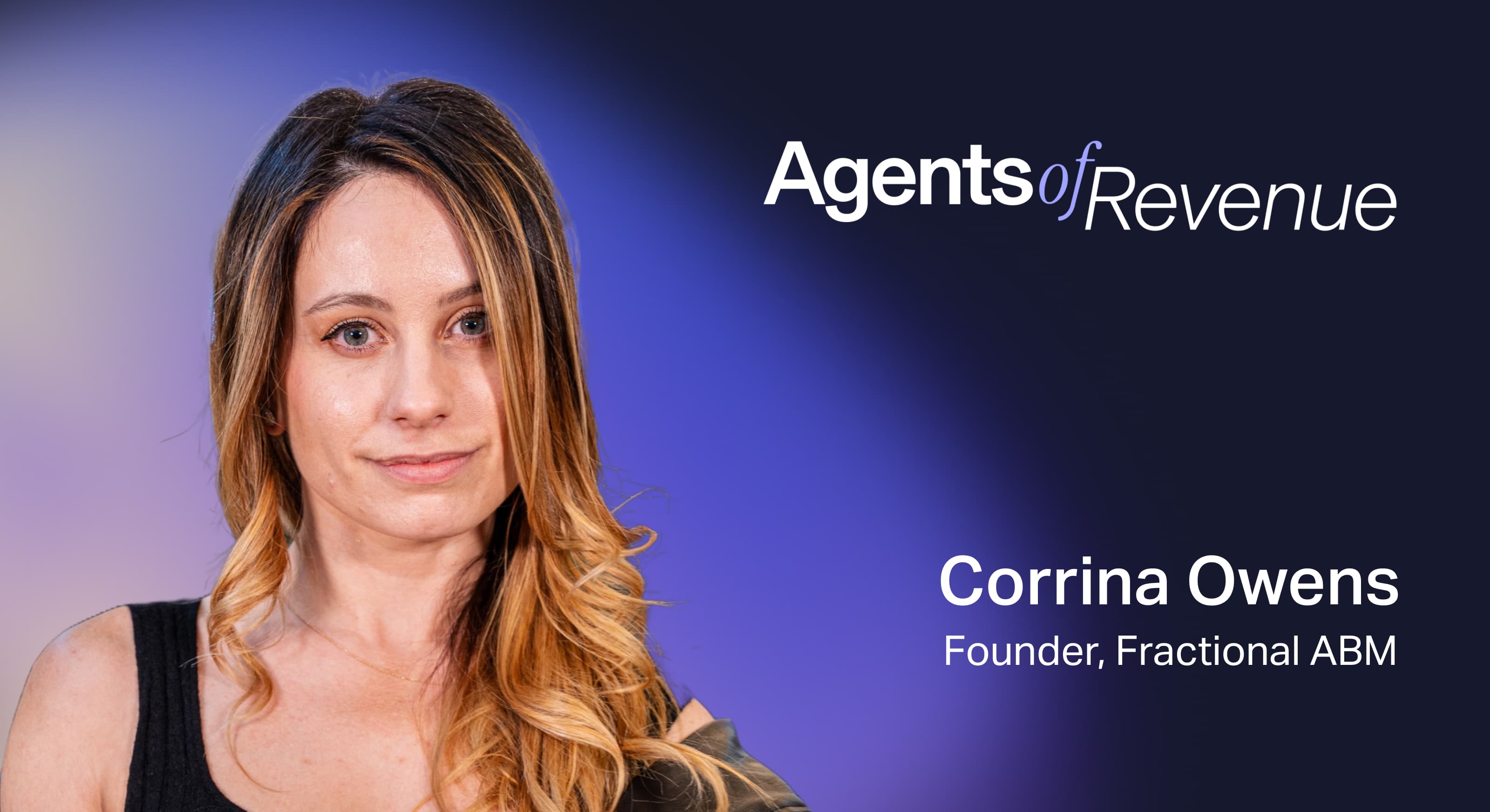
Corrina Owens on fixing what's broken in GTM
Corrina Owens shares how to streamline your GTM motion by fixing lead routing, simplifying buyer segmentation, focusing on high-impact signals, and embedding marketing in the deal cycle.
Feb 11, 2026
•
6 min read
Sign up for the latest from Spara
Subscribe to get more GTM insights straight to your inbox.